The Conquest of Naples by Charles of Durazzo by Master of Charles of Durazzo
This late 14th-century panel, "The Conquest of Naples by Charles of Durazzo" by the Master of Charles of Durazzo (c. 1391), visually decodes the political power plays behind Charles III of Naples's seizure of the city. The painting uses symbolic objects to communicate allegiance and authority beyond mere depiction.
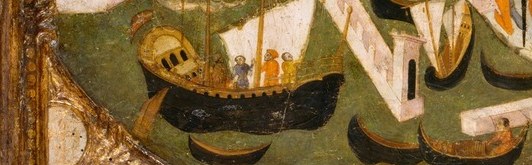
Look closely at the royal banner and the figure with the red and white striped sleeve; these details signal loyalty to Naples. The heraldic shield reveals Charles's complex claims to power, divided and contested. Even the ship in the harbor and the vibrant orange tunic of a key figure contribute to the narrative, signifying arrival and importance.
Created less than a decade after the actual conquest in 1382, this work served as a contemporary visual document. Charles III deposed his cousin, Queen Joanna I, in a violent succession struggle. This painting validates his claim and commemorates a crucial political transition.
The Master of Charles of Durazzo's skillful use of symbolism transforms a historical event into a coded message for those who understand its language of power.
Details
Transcript
This painted banner means more than royalty. Red and white stripes signal loyalty to Naples. His shield shows a divided claim to power. The ship signifies arrival by sea. This vibrant tunic marks a key figure. Charles III conquered Naples in 1382. The whole scene celebrates his victory.