Anonymous Woman by American 19th Century
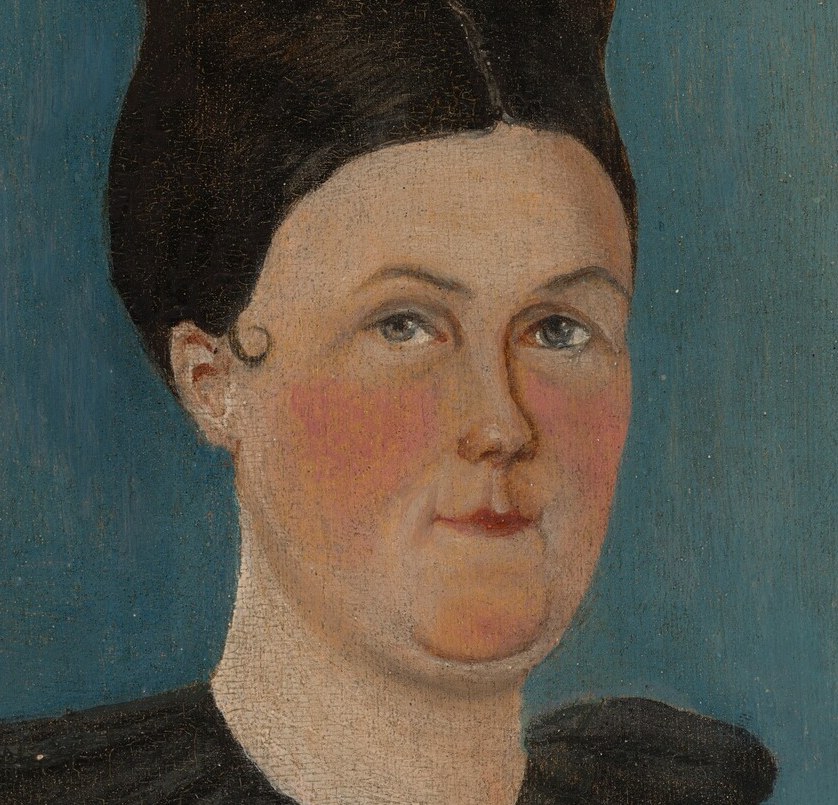
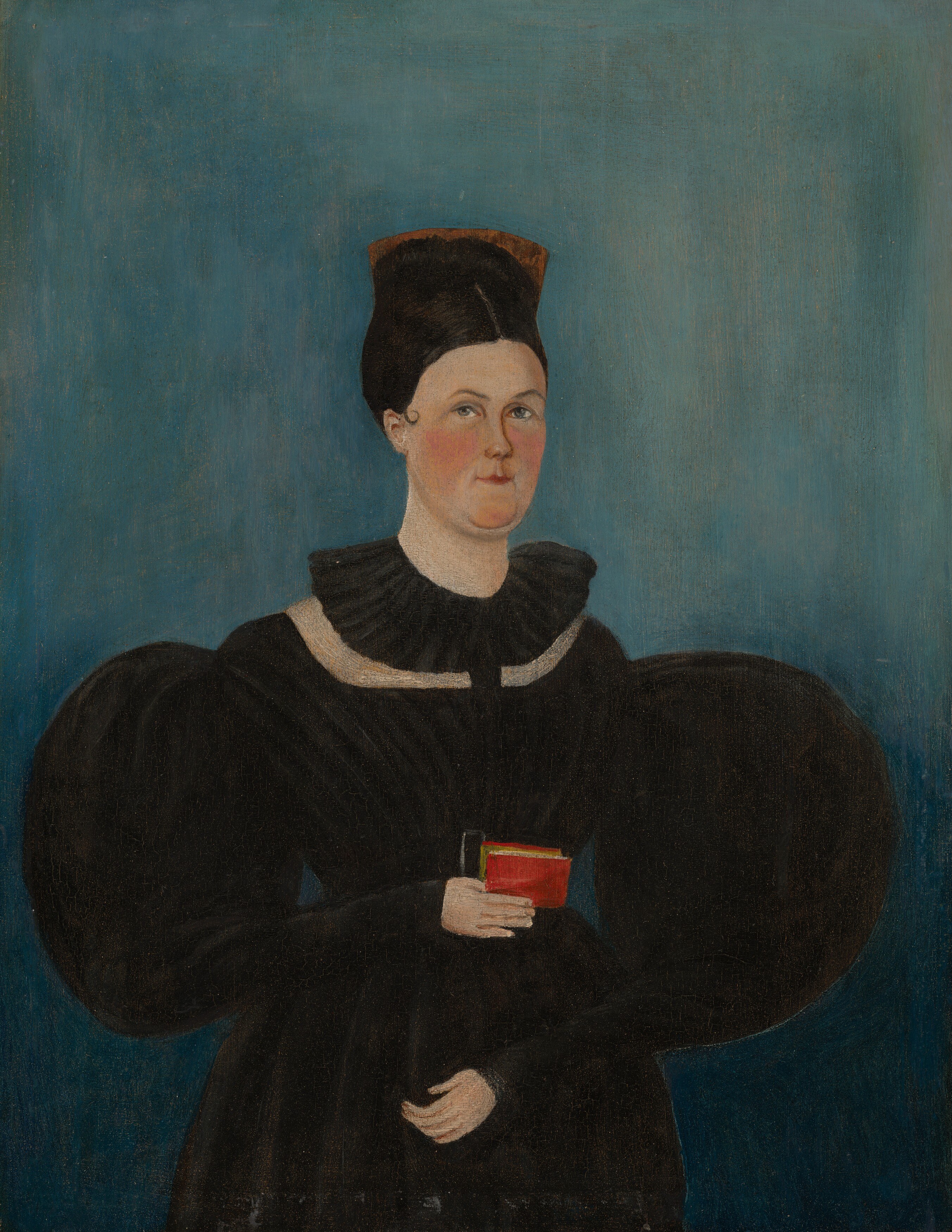
This is "Anonymous Woman," painted around 1830 by an unknown American artist. It lives in the quieter corners of art history, a portrait not of a patron, but of an ordinary person. Its power is in the small, deliberate choices: the stark blue background, the unadorned clothes, and that single flash of red in her hands.
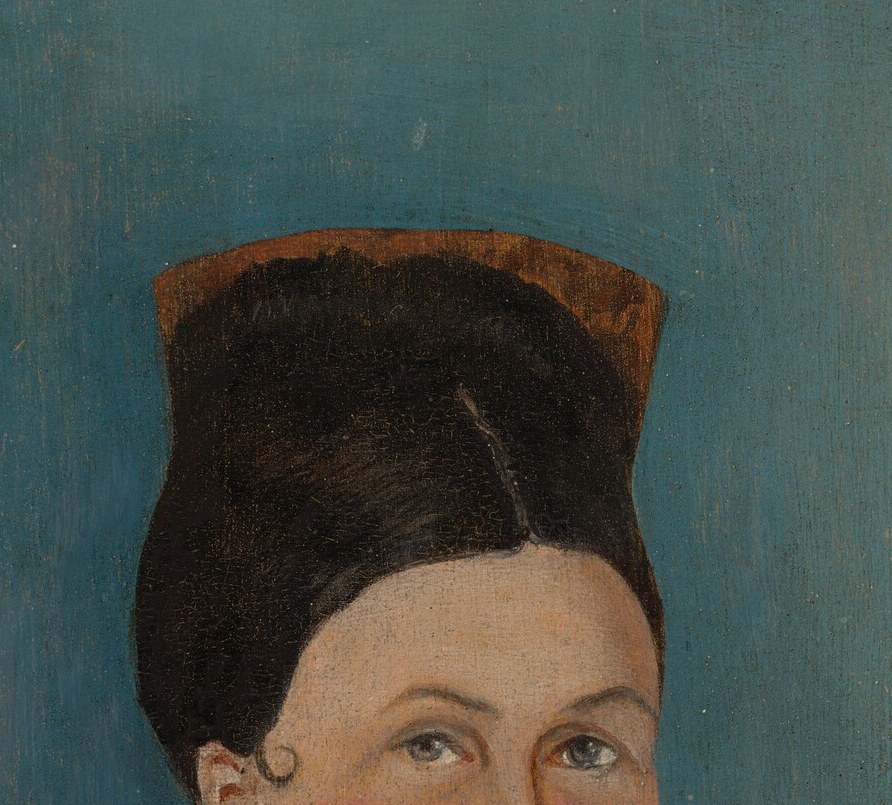
The painting is almost entirely a study in darkness and restraint. Her face is plain, her posture modest, her dress a broad, dark silhouette. The artist used brisk, unfinished brushstrokes that make the edges of her form feel almost alive. But the focal point is the small red object she holds, likely a book or a small box. It's the only warm color in the frame.
In the 1830s, a portrait with a book made a quiet statement. Female literacy rates were rising in the United States, and a book in a painting could signify piety, intellect, or a personal, interior world separate from domestic duty. For a woman without a name, painted by an artist lost to history, this one detail becomes her entire biography: she was someone who could read, and therefore someone who could think.
We know almost nothing about this painting's journey or its sitter. It's a relic of early American realism, a moment when ordinary people began to appear on canvas. What do you think she's holding, and what did it mean to her?
Details
Transcript
A woman with no name, from a painter history forgot. Her face tells us nothing. She's meant to be a type, not a person. Now look at what her hands are holding. A small red book. The single spot of color in the whole painting. In 1830s America, a woman holding a book meant she could read. Literacy was a quiet claim to an interior life, a mind of her own.