Landscape at Le Pouldu by Gauguin, Paul

This is Landscape at Le Pouldu, painted by Paul Gauguin in 1890. For a few weeks in 2003, it was evidence in a London theft investigation.

In June of that year, a man entered a Cork Street gallery, used a knife to cut the canvas from its frame, and walked out with it under his coat. The gallery had no CCTV and no floor guards. The painting simply disappeared.

The Metropolitan Police had no leads. The gallery hired a private investigator, who spent weeks working auction-house contacts and informants. The break came when the painting surfaced at a low-end auction house, listed with a reserve price of a thousand pounds. The thief had no idea what he was holding. Police recovered the work, and it was quietly returned to the market.

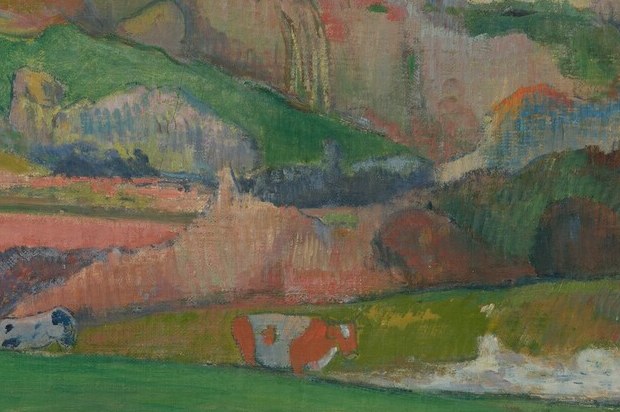
Look at the lower right corner of the canvas. The brushwork there is built up in thick, directional strokes, an impasto Gauguin applied in Brittany and never varnished over. You are seeing exactly the surface the thief cut from the frame, and exactly the surface Gauguin left behind.

#arthistory #gauguin #artcrime

Details
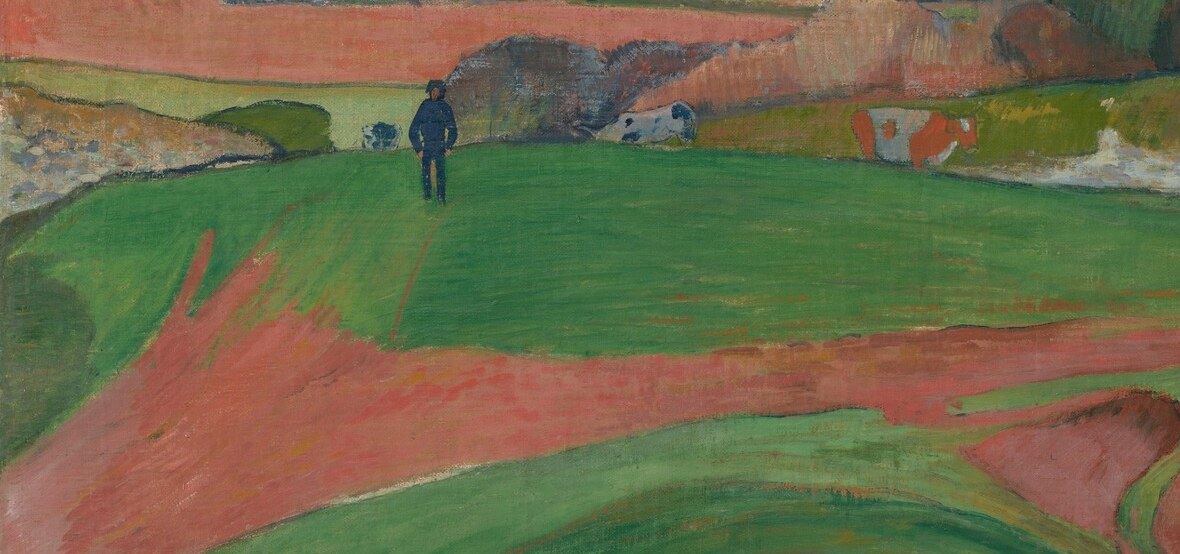
Gauguin's non-naturalistic chromatic choice: Breton soil was not this red. The intense colour signals emotional truth over optical fact, a hallmark of Synthetism.
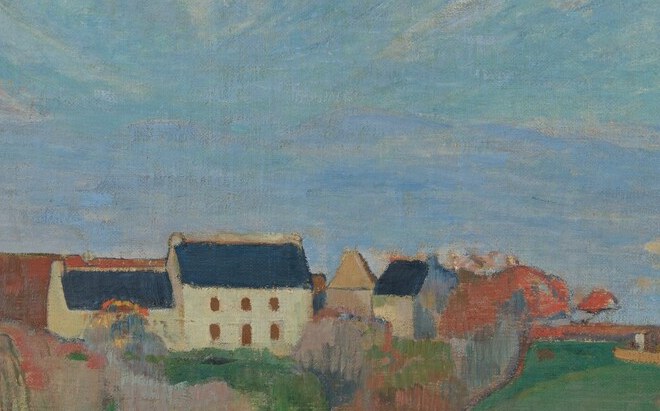
The crisp white walls anchor the composition and draw the eye across the undulating fields; they represent Breton domesticity amid Gauguin's flattened, decorative landscape.
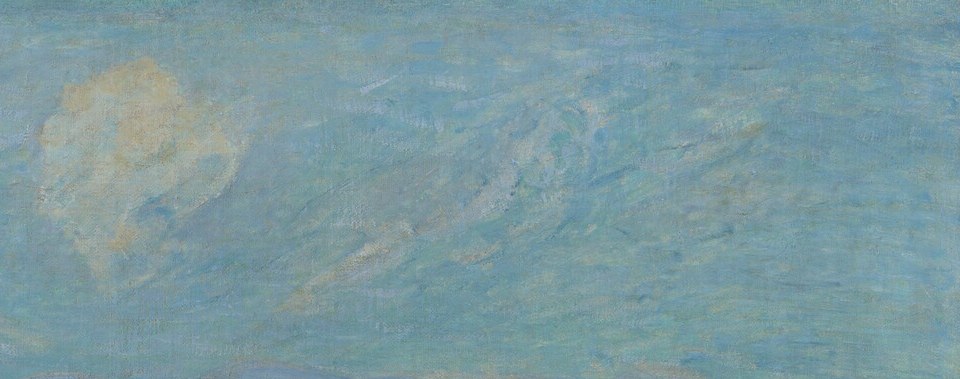
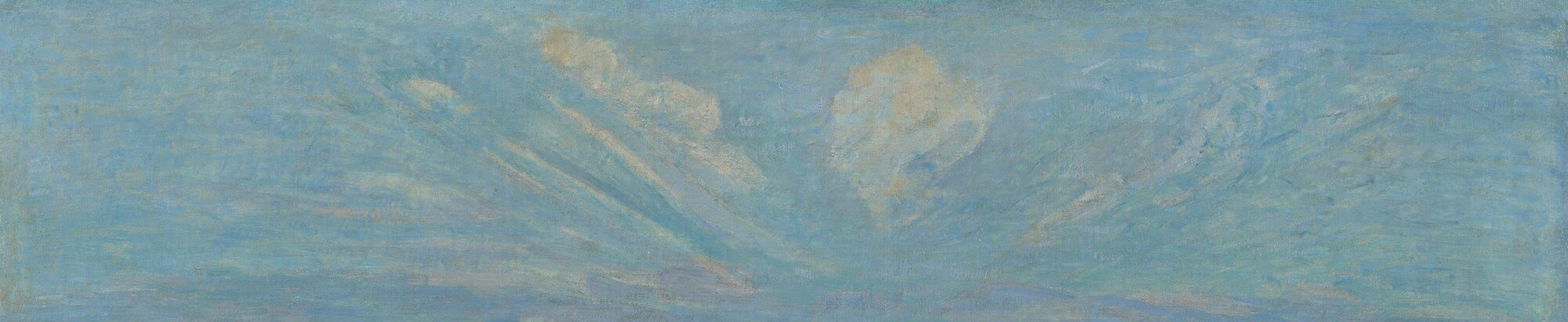
The cloud is rendered with bold, visible brushwork and occupies a large share of the canvas, giving the sky a sculptural weight unusual for a landscape of this format.
A brooding, near-black mass that creates strong tonal contrast with the red-orange fields; its ambiguous form , earth, thatch, or rock , is a signature Gauguin flattening of nature.
The cool, almost pastel sky contrasts with the warm fields below; its flatness, with minimal atmospheric recession, is an early signal of Gauguin's move away from Impressionism.
Transcript

In 2003, a thief walked into a London gallery with a knife. He sliced this canvas from its frame and vanished. The gallery had no cameras, no guards on the floor. It was gone for a month. The trail went cold. A private investigator tracked it to a low-end auction. The thief had listed the real painting for a thousand pounds. Now look at the lower right: the paint is still raw and thick. Gauguin built this Breton field in layers of impasto, untouched since 1890.