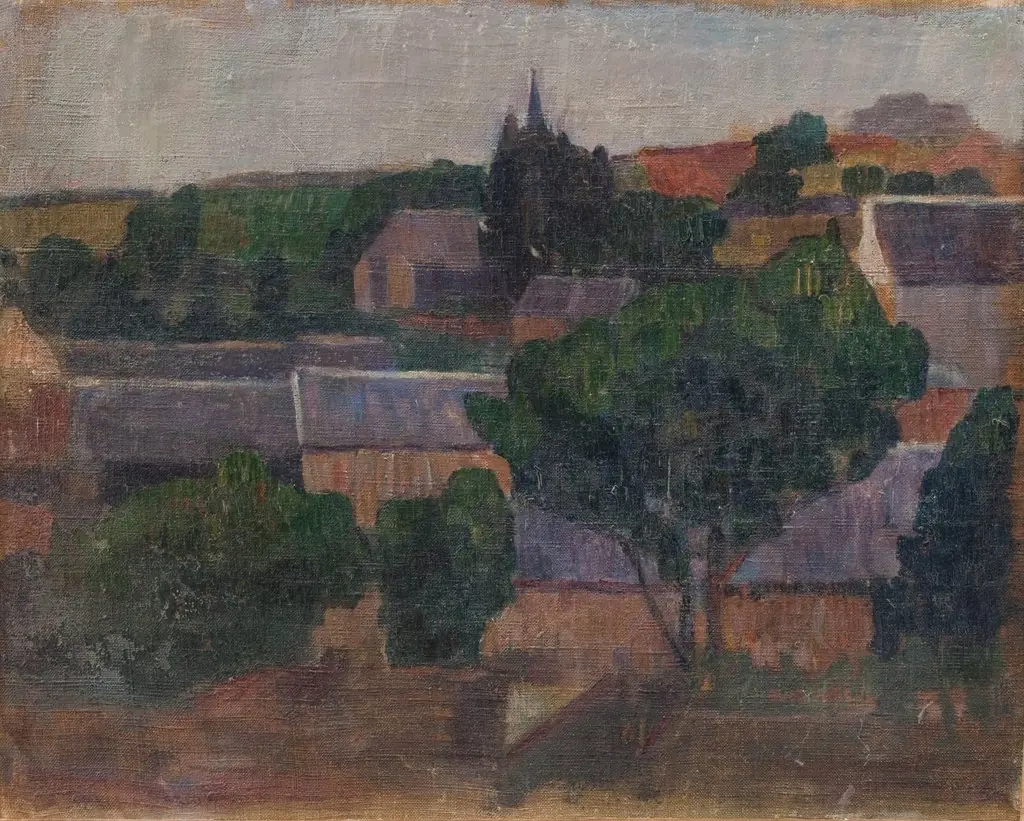
Artwork
Landscape at Le Pouldu
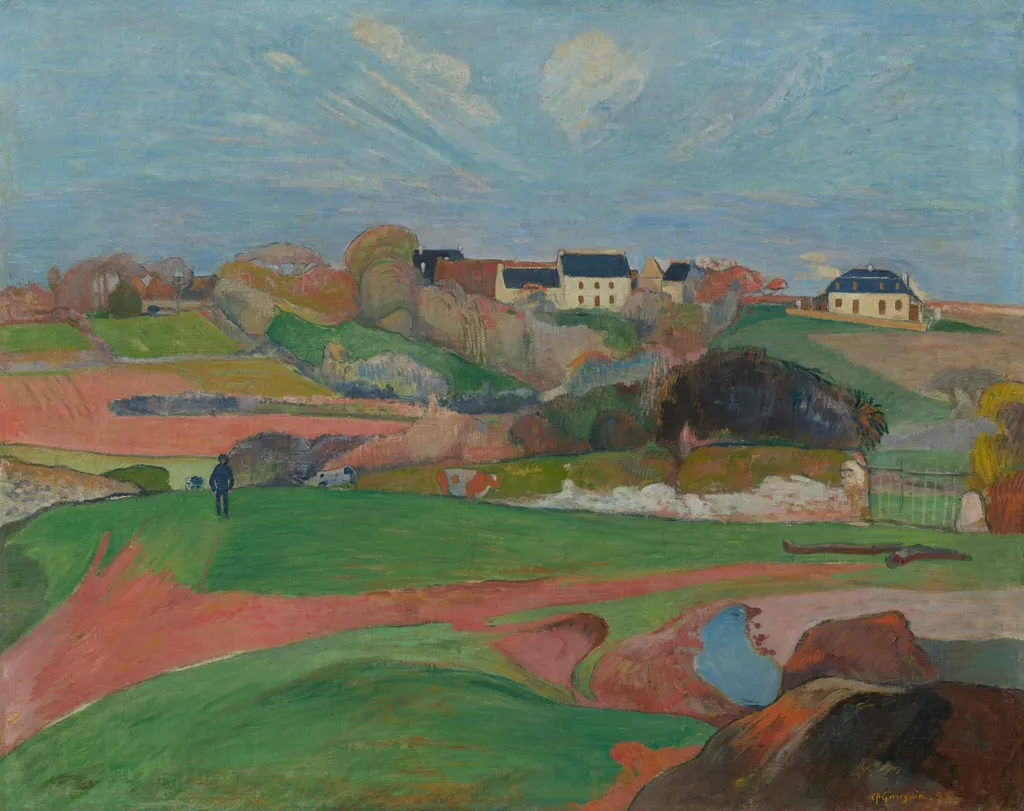
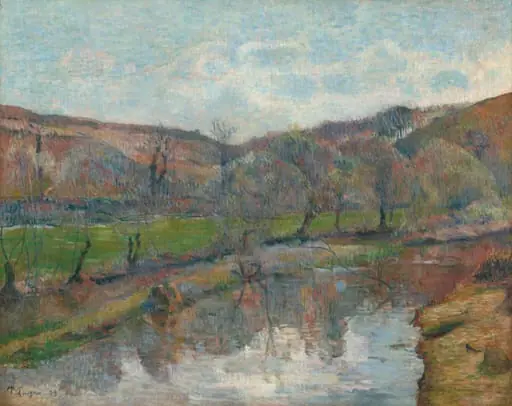
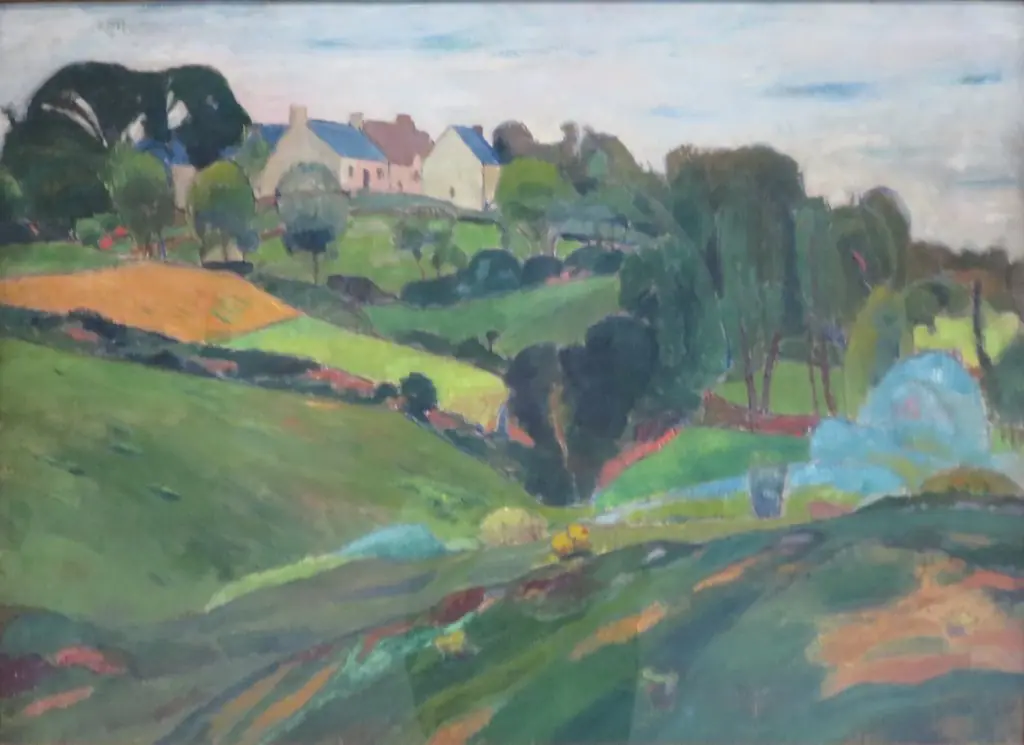
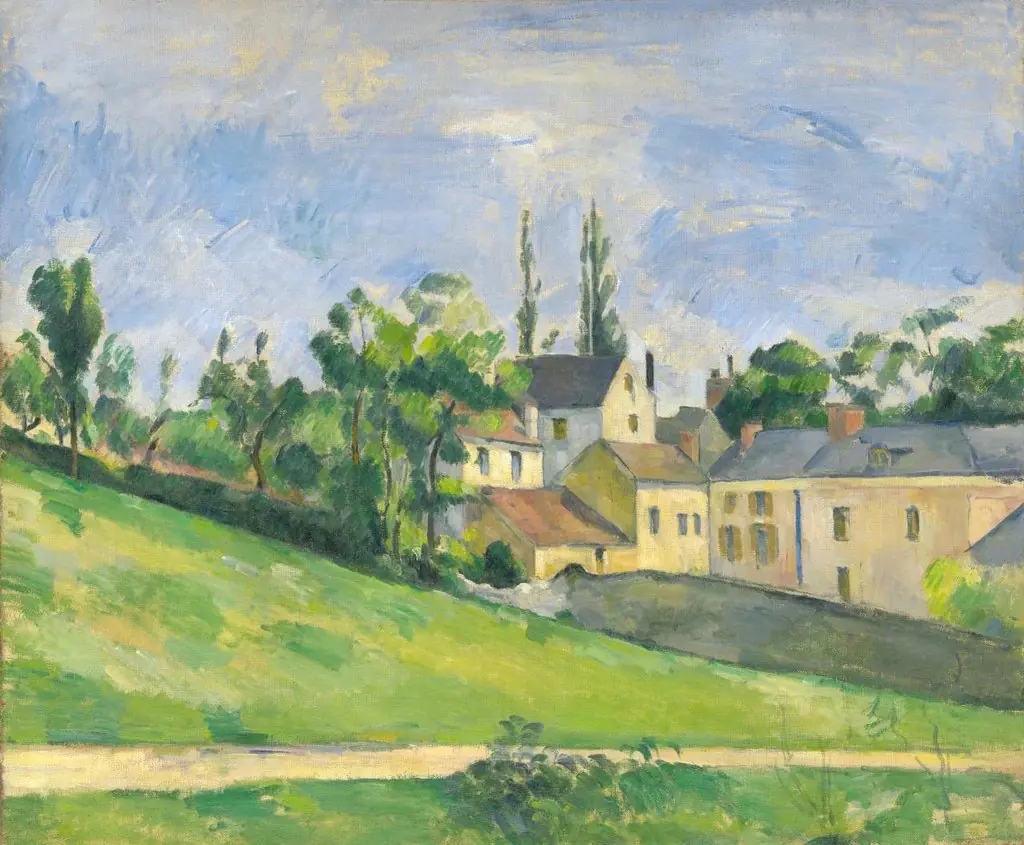
Landscape at Le Pouldu is an oil painting by the Impressionist artist Paul Gauguin. It dates from 1890 and is held in the collection of the National Gallery of Art.
- Inscription
- Inscribed:lower right: P. Gauguin. 90-
About this work
Subject & Meaning
The canvas presents a quiet Breton hamlet at Le Pouldu, identified as Clohars‑Carnoët, featuring a modest stone house set against a small tree and a hint of shoreline. Gauguin’s choice of this humble locale underscores his fascination with rural Breton life and its perceived primal authenticity, a theme he linked to the symbolic language of the local landscape. The solitary tree and the weathered façade function as iconographic markers of stability and the passage of time, while the subdued palette evokes a sense of melancholy and contemplation.
By rendering this everyday scene with deliberate compositional flatness, Gauguin elevates the ordinary into a statement about the spiritual resonance of provincial France.
History & Provenance
Following its creation in 1890, the work was purchased by Octave Maus in Brussels and subsequently held by his wife, Madeleine Maus, until approximately 1945.
Painted in 1890, the work was acquired by the Brussels art dealer Octave Maus the same year. After Maus’s death it descended to his wife Madeleine Maus and then to their son-in-law Paul Fierens. Fierens lent the painting to exhibitions in Brussels (1947) and Basel and Paris (1949) before it was sold through Wildenstein & Co. in 1957 to Paul Mellon, who gifted it to the National Gallery of Art, Washington, D.C., in 1983.
Landscape at Le Pouldu is held in the collection of the National Gallery of Art in Washington, D.C., where it was accessioned in 1983 as a gift from Paul Mellon. Prior to this donation, the painting was acquired by Mellon in 1957 from Wildenstein & Co. Following its creation in 1890, the work was purchased by Octave Maus in Brussels and subsequently held by his wife, Madeleine Maus, until approximately 1945.
It then passed to Paul Fierens by inheritance. During the Fierens ownership, the painting was lent for exhibitions in Brussels in 1947, as well as in Basel and Paris in 1949. The work remains part of the National Gallery of Art's permanent holdings.
Legacy
After Gauguin's death, Landscape at Le Pouldu remained in the Maus family, was lent to exhibitions in Brussels (1947) and Basel and Paris (1949), and entered the National Gallery of Art in Washington, D.C. through Paul Mellon's 1983 gift. Its presence in a major public collection has kept the work accessible to scholars and the public, reinforcing Gauguin's reputation as a pivotal Post‑Impressionist landscape painter and contributing to his enduring legacy.
Overview
This oil on canvas, titled Landscape at Le Pouldu, depicts a secluded village scene. A modest house stands beside a prominent tree and a winding road, rendered with a subdued palette. The composition evokes a sense of quietude, yet also possesses an ethereal quality, suggesting an internalized vision rather than a direct observation. It reflects Gauguin's exploration of subjective experience through landscape.
Technique & Style
Gauguin employed oil paints to create a distinctive surface texture in this work. The colors are muted and gentle, departing from sharp or vibrant tones, contributing to the painting's introspective mood. In certain areas, the artist applied the pigment thickly, allowing the paint to build up on the canvas. This impasto technique adds a tactile dimension, giving the colors a physical presence beyond their visual impact.
Context
This landscape was created during Paul Gauguin's period of residence in Brittany, a region in northwestern France. His stay in this area, particularly in villages like Le Pouldu, was significant for his artistic development. The distinct culture and rustic environment of Brittany provided a setting for Gauguin to further refine his Post-Impressionist style, moving towards more symbolic and less naturalistic representations.
Own this work as a print
Artist & collection
Artist
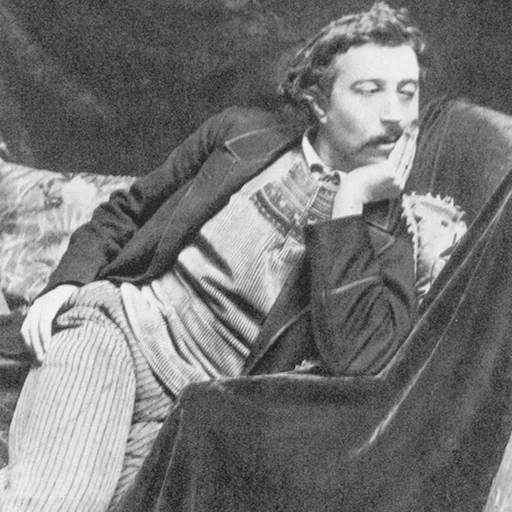
Eugène Henri Paul Gauguin (; French:; 7 June 1848 – 8 May 1903) was a French painter, sculptor, printmaker, ceramist, and writer, whose work has been primarily associated with the Post-Impressionist and Symbolist movements.