Adoration of the Magi (Triptych) by Hugo Van der Goes
Hugo van der Goes's *Adoration of the Magi* (c. 1460) in the State Hermitage Museum, tells a familiar story with subtle, poignant hints of deeper narratives.
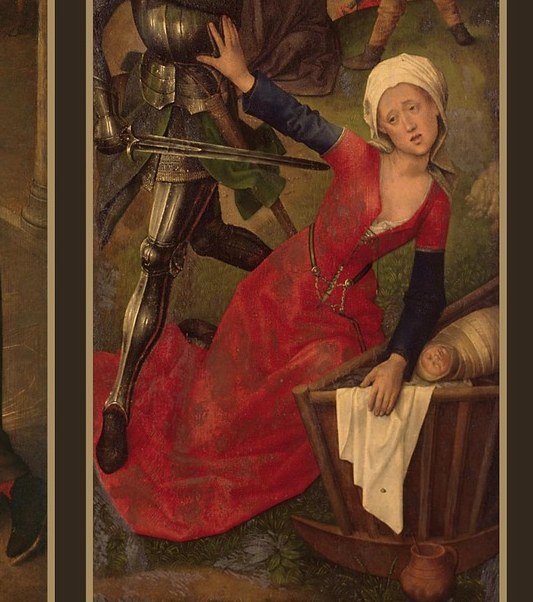
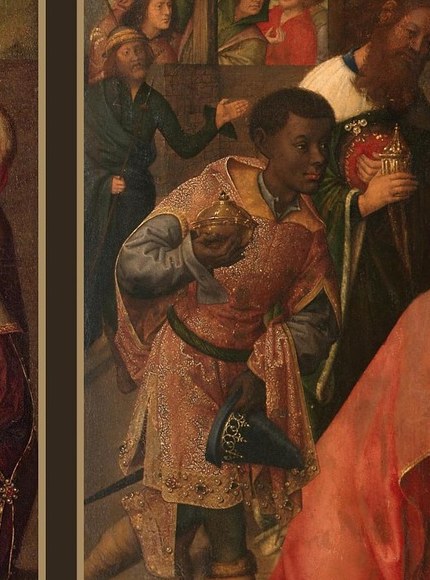
While the central panel focuses on the serene adoration of the Christ Child by Mary and the Magi, the artist includes other scenes. Look closely at the figures on the right, where a woman's distressed expression and a nearby crib allude to the tragic Massacre of the Innocents.
Van der Goes, a leading Early Netherlandish painter, was known for his monumental style and his ability to weave complex narratives. By linking the infant's vulnerability with later events, he underscores themes of divine protection and human suffering.
This triptych is a powerful example of how a single work can hold multiple emotional layers. What other details do you notice that add to its profound story?
Details
Transcript
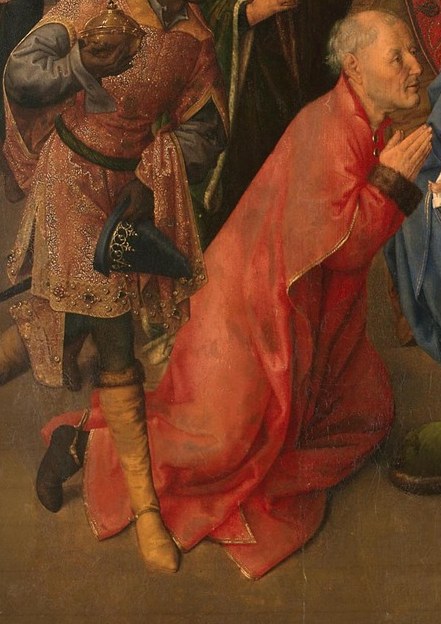
This painting tells a familiar story, but with hidden depths. Mary gently holds the infant Jesus, a moment of quiet love. The first king kneels, his rich robes a testament to his reverence. But look closely, there are other stories unfolding here. To the right, a woman's distressed face hints at future sorrow. This painter often linked vulnerability with messianic prophecy. He was among the most significant Flemish painters of his time.