Christ Blessing by Grifo di Tancredi
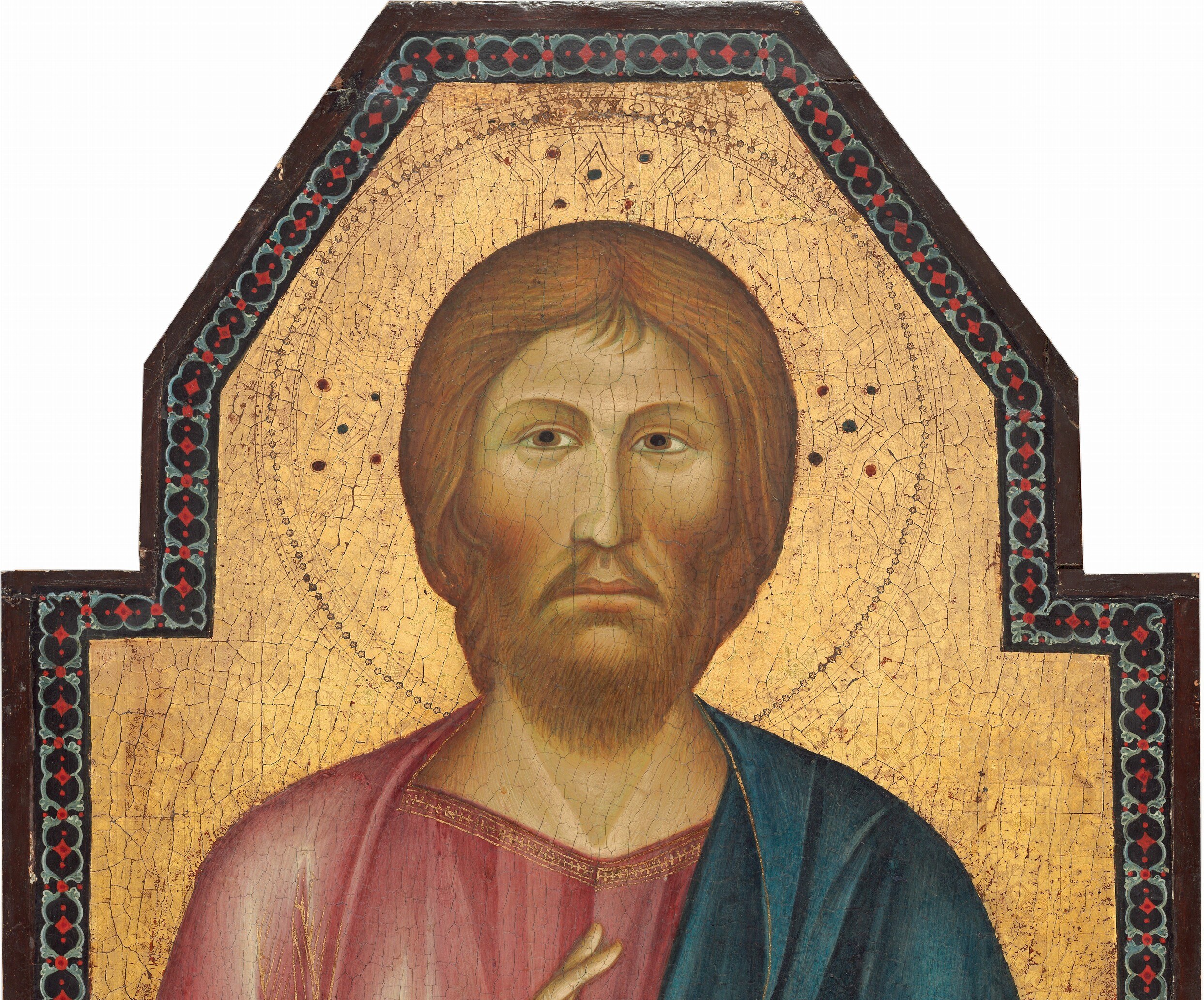
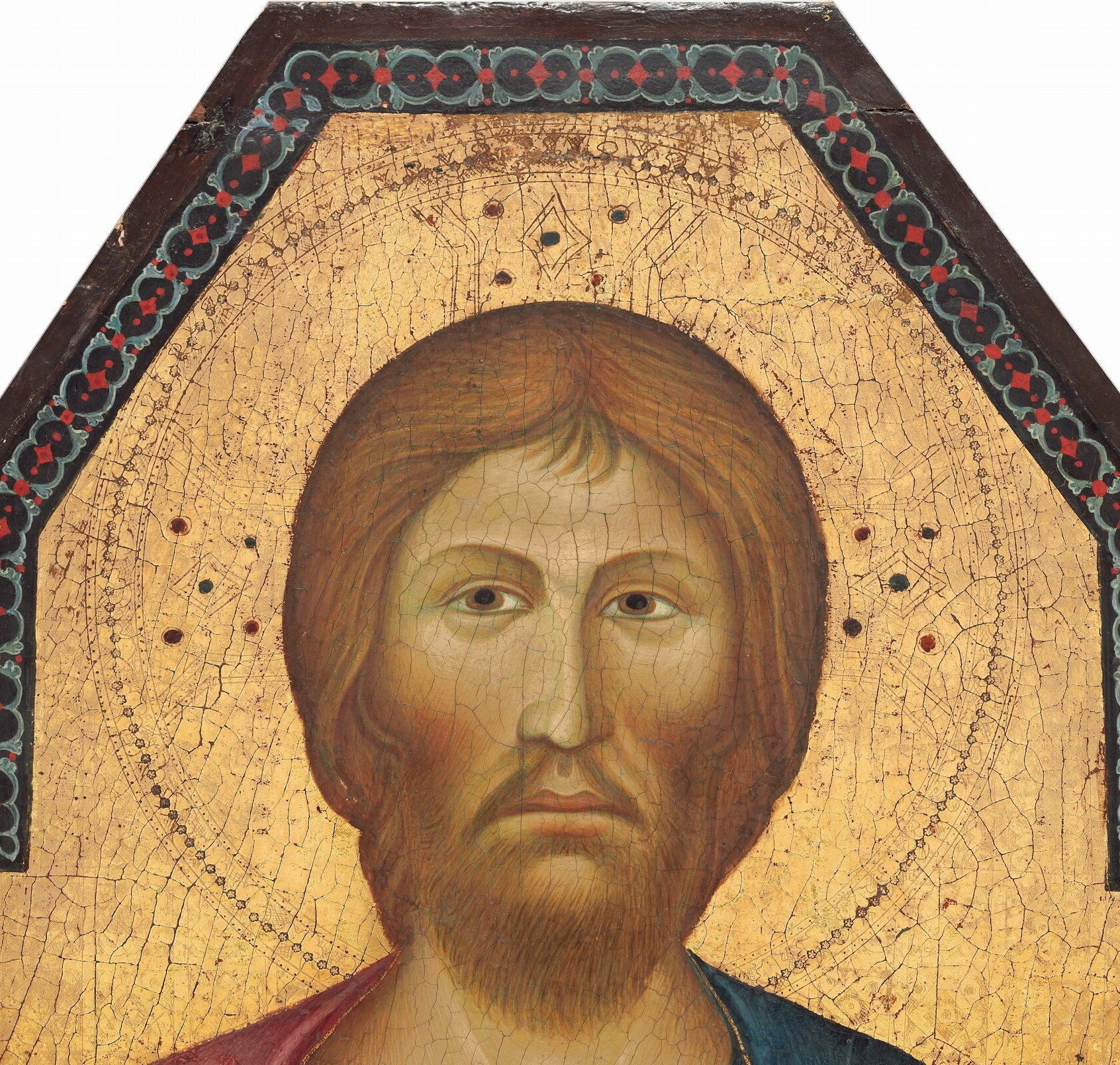
Christ Blessing, a small tempera panel by Grifo di Tancredi, was painted around 1310 and now hangs in Gallery 50B at the National Gallery of Art in Washington, D.C. It came to the museum unsigned and unattributed, acquired from a dealer in Paris in 1937. For centuries its maker was a mystery.
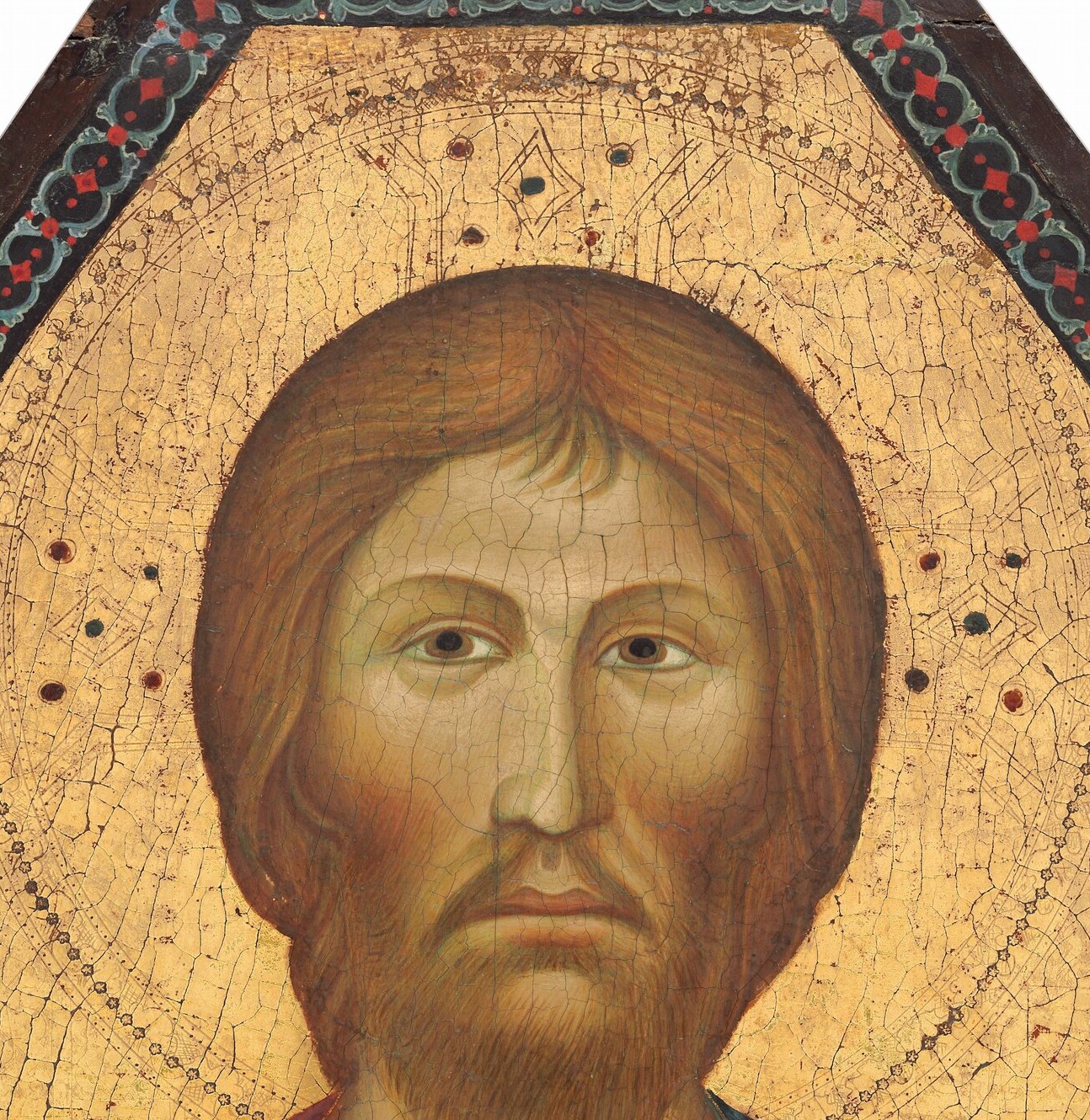
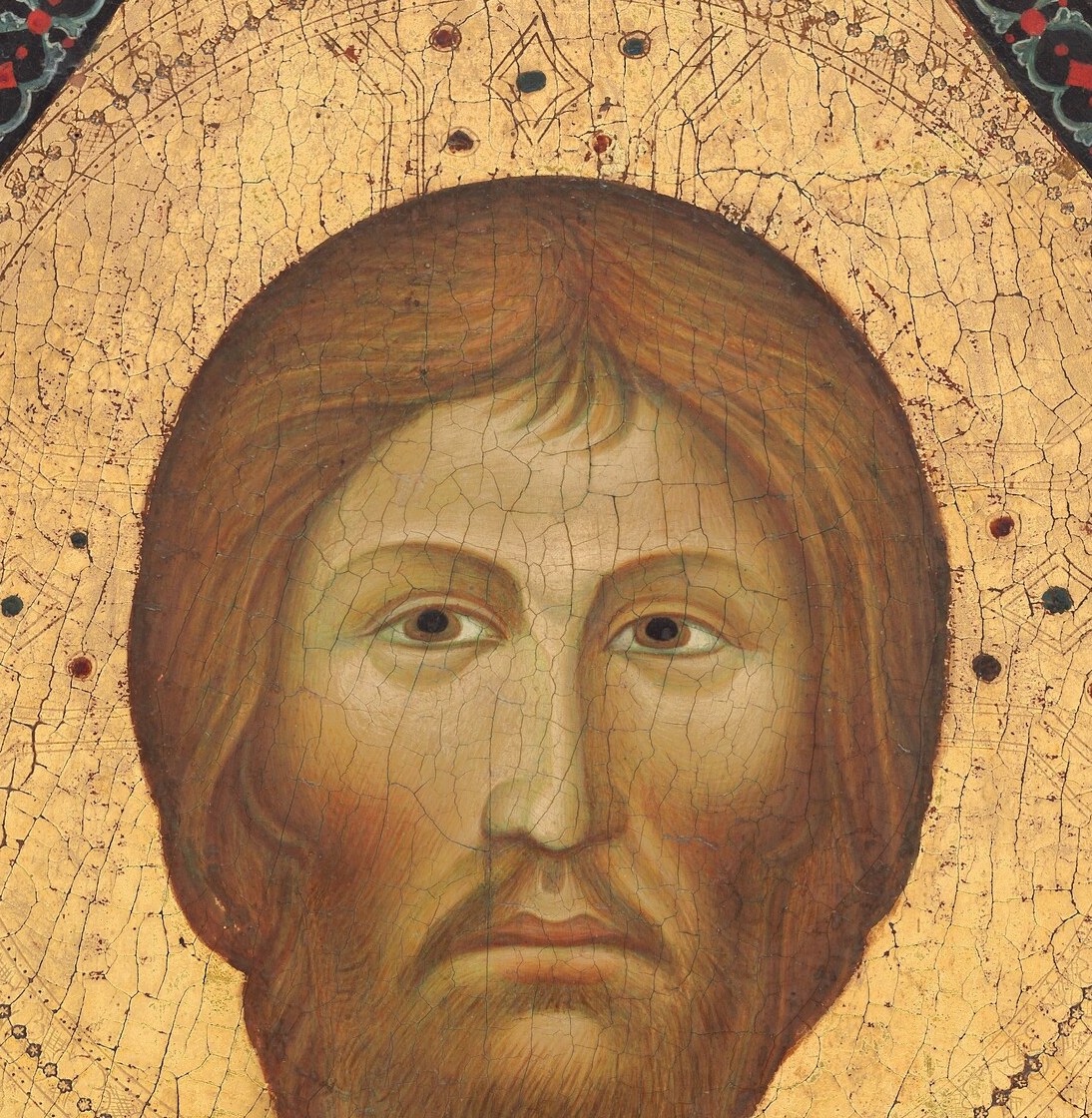
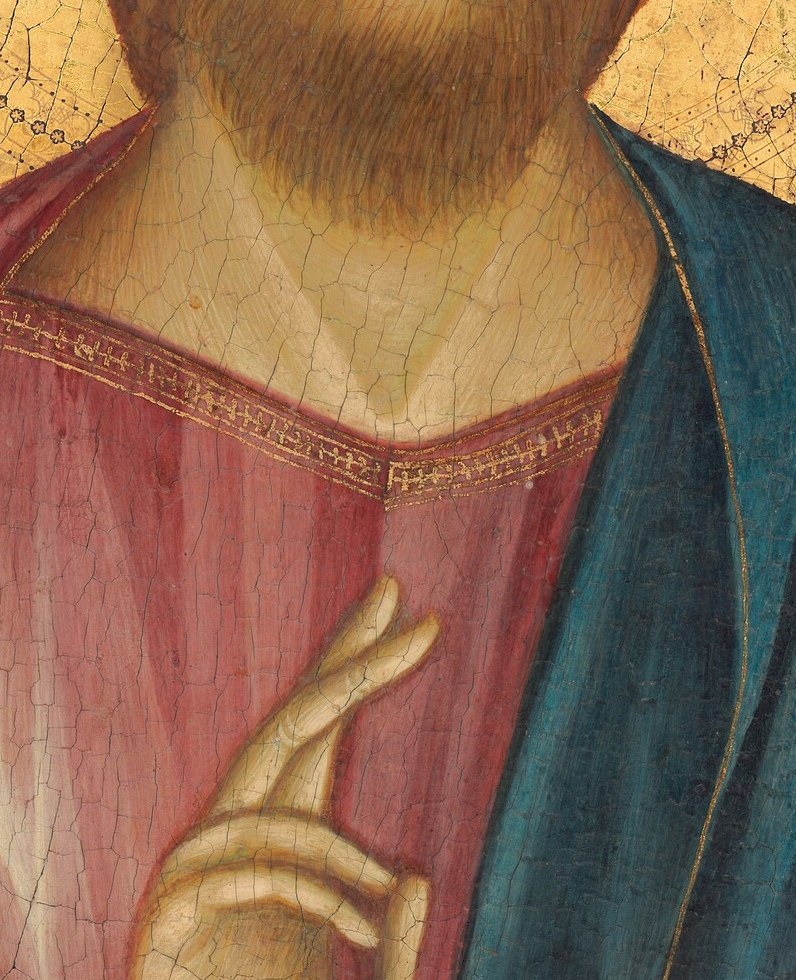
Look closely at the face, particularly the transition between the brown hair and the flesh tones. The olive-green shadow you see beneath the ochre surface is verdaccio, a traditional Byzantine underpainting technique that Florentine artists adapted into the early Renaissance. That distinctive brushwork, combined with the precise rendering of the eyes and the incised gold halo, gave scholars a forensic trail back to one name.
Grifo di Tancredi is not a household name. No signature on a panel survives. But his hand is known through a small group of devotional works like this one, each marked by the same luminous tempera handling and the same solemn, hieratic gaze lifted from Byzantine models. The panel's pointed Gothic arch was made to fit an altarpiece niche, not a museum wall: it was built for ritual.
A painting that was once an object of private devotion, lost to the market, now sits in public view. What do you see in that direct, unblinking gaze from seven centuries ago?
Details
Transcript
For six hundred years, no one knew who painted this. It surfaced in a Paris shop in 1937, unsigned. The gold background flattened time. The face stared outward, unchanged. But the brushwork gave him away. The green shadow under the skin, verdaccio, unmasked an itinerant Florentine. Layer by layer, the tempera told scholars exactly whose hand held the brush. Grifo di Tancredi. Now in a room in Washington.