Grevens Fejde by Peter Hansen
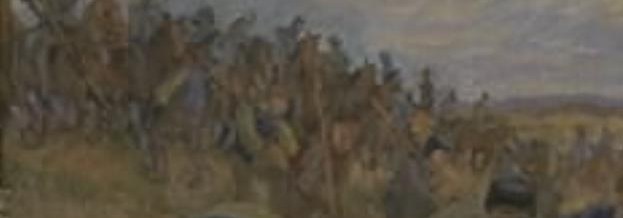
Peter Hansen's 1918 oil painting, "Grevens Fejde" (Count's Feud), held at the Statens Museum for Kunst, draws you into a historical conflict through the lens of everyday life.
Look closely at the figures gathered in the barren field and the central bundle of grain. These elements hint at the agrarian disputes at the heart of the "Count's Feud," a significant local conflict.
Hansen completed this work shortly after World War I, aligning with a broader artistic movement in Denmark to portray national history through realist depictions of ordinary people. The painting captures themes of communal resilience amidst feudal strife.
It's a subtle way to tell a big story, focusing on the human impact of historical events. What details stand out most to you?
Details
Transcript
This painting, made in 1918, shows a historical Danish feud. The conflict, called 'Count's Feud', involved agrarian disputes. Notice the bundle of grain, a key to the era's struggles. The slumped posture of these figures suggests hardship and defeat. But their close gathering also suggests communal solidarity. The artist humanized history, focusing on ordinary participants.