The Dark Mountain, No. 1 by Marsden Hartley
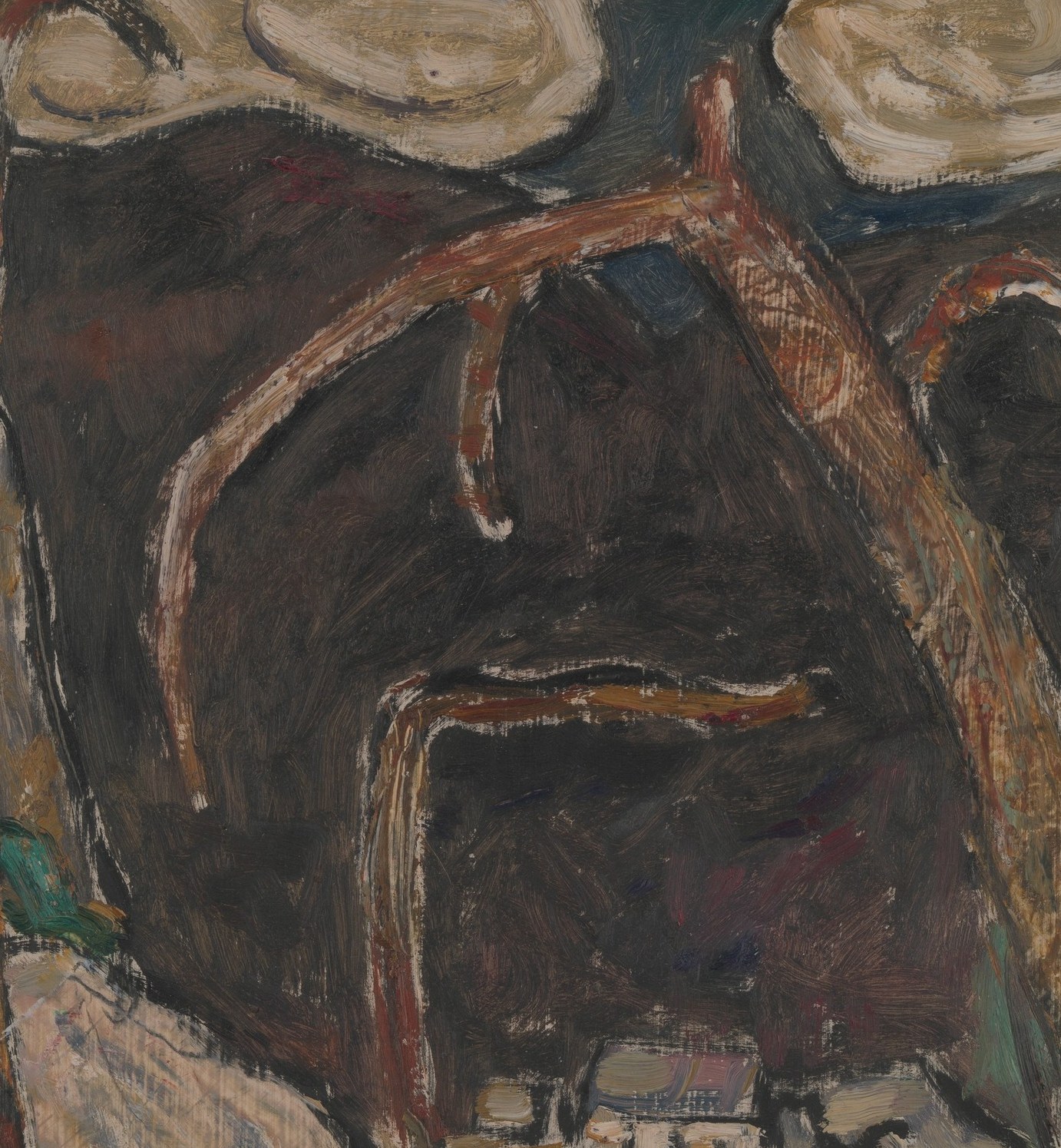
Marsden Hartley's 1909 painting, "The Dark Mountain, No. 1," is an early exploration of expressive forms, conveying a palpable sense of tension.
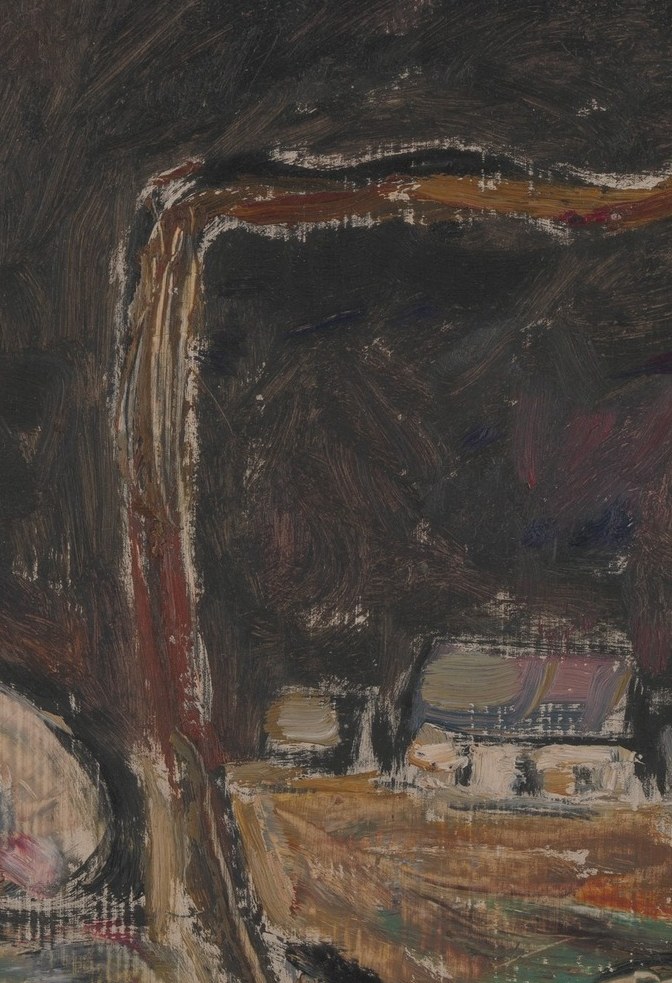
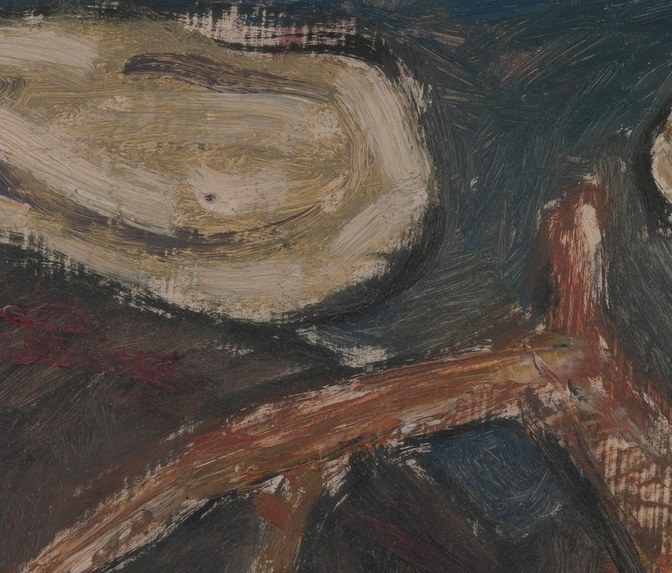
Look closely at the hunched figure and the two pale, eye-like forms above it. These elements, combined with the turbulent sky and vast, desolate mountain, create a powerful mood of unease and isolation.
Hartley, an American Modernist, often imbued his landscapes with psychological depth. He applied paint with force, using thick, uneven brushstrokes to enhance the raw energy of the scene.
The painting is a profound statement on human vulnerability against the backdrop of an untamed world, offering a glimpse into Hartley's artistic development. What feelings does this work evoke in you?
Details

Transcript
This painting holds a hidden meaning, if you know where to look. The hunched figure in the center carries a hidden burden. Above the figure, two pale forms seem to watch. These shapes are often interpreted as eyes, adding unease. Far below, a tiny house hints at human presence in desolation. This mountain landscape reveals a soul's tension and foreboding.