A Girl with a Broom by Dutch 17th Century
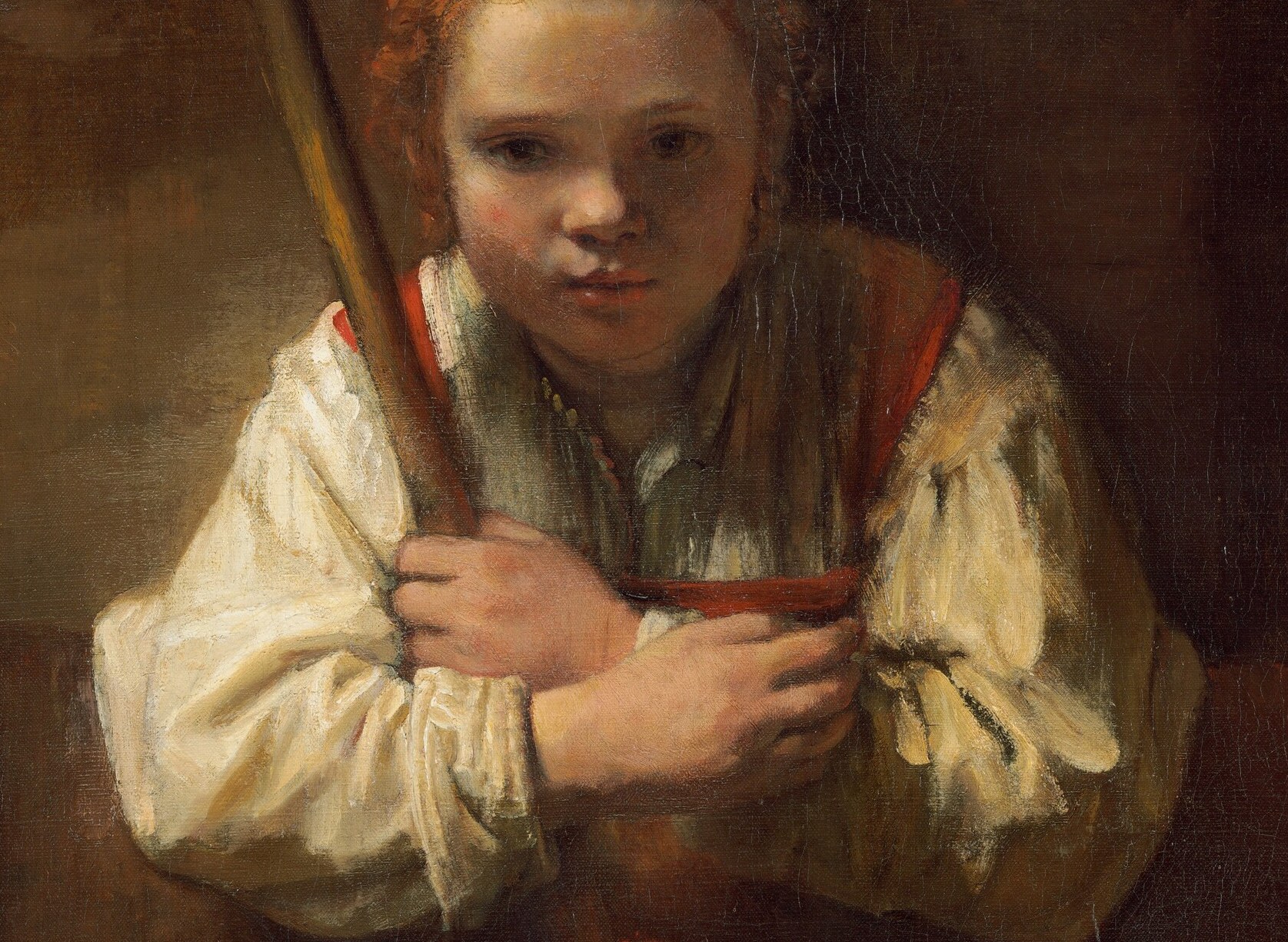
A Girl with a Broom, painted by an unknown Dutch artist around 1651, now hangs in the National Gallery of Art in Washington. It looks like a straightforward study of a working child, but to its first owner, every object in it would have scanned as a line of moral instruction.
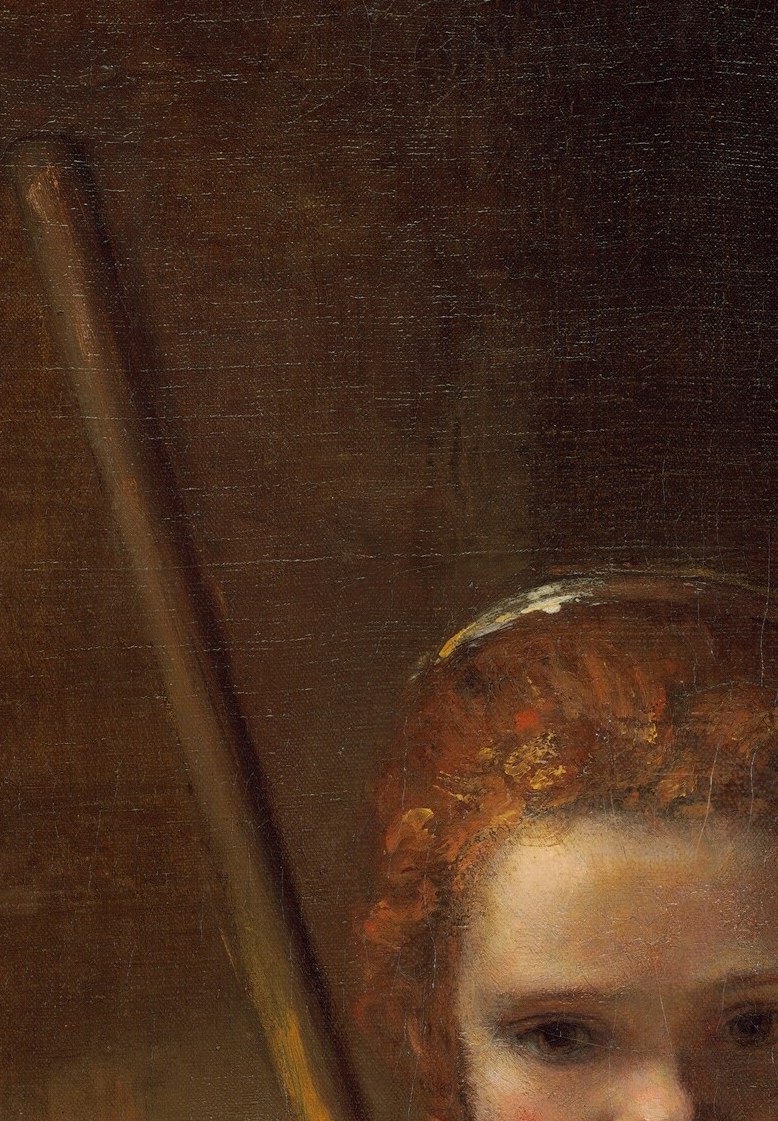
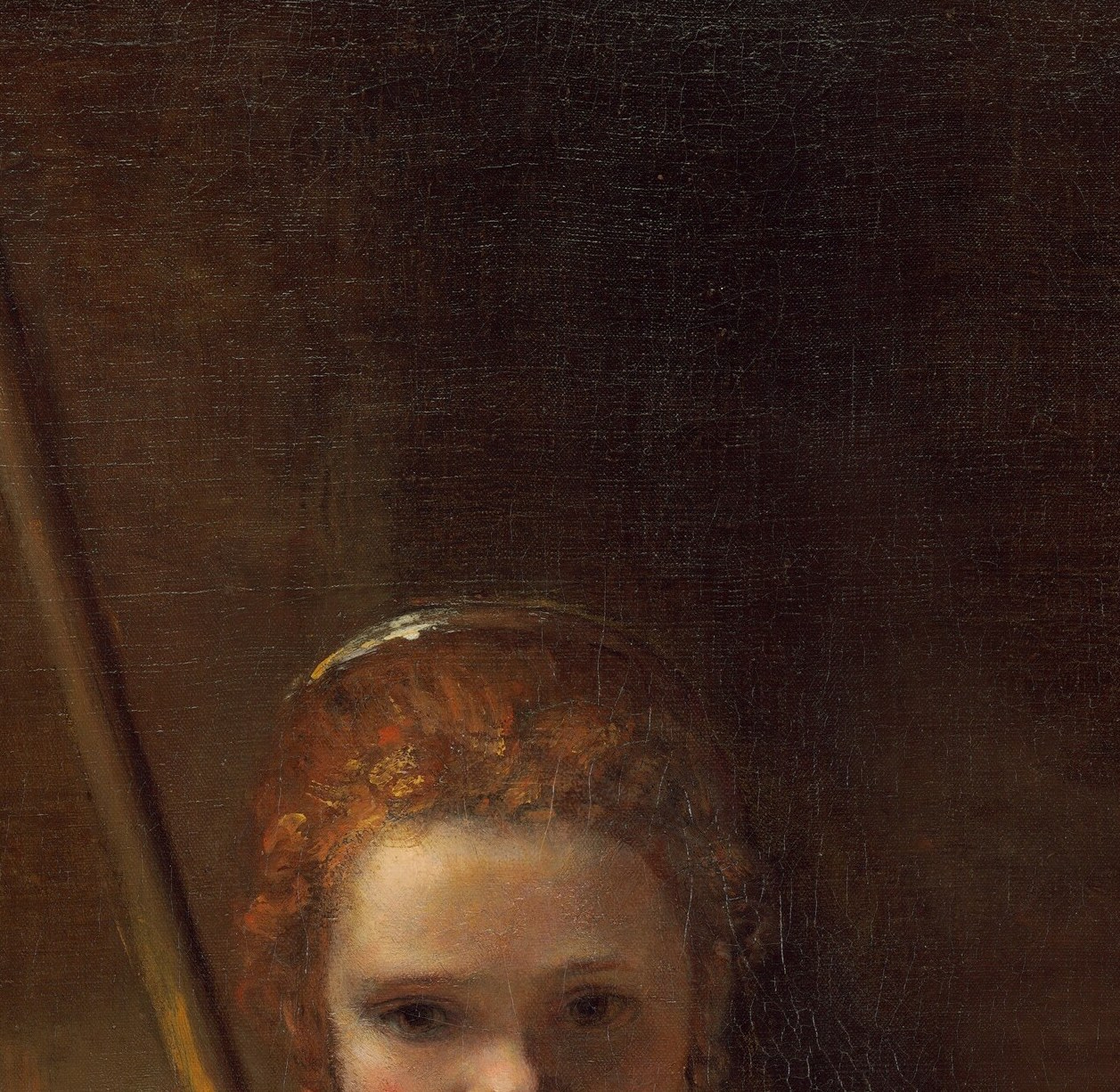
Look first at how the painter uses light. The girl's white collar and blouse are the brightest passage in the entire canvas, glowing against a background that is almost black. In the visual language of the Protestant Netherlands, bright white on a dark ground was not just a painterly choice, it was a signifier of spiritual cleanliness. Now look at the left side of her face, swallowed in shadow. This is textbook Rembrandt-school chiaroscuro: half the face obscured, half illuminated, a way of saying the soul has depths you cannot fully see.
The broom was one of the most widely understood symbols in Dutch genre painting. A well-swept floor stood for a well-ordered soul, and a girl absorbed in sweeping embodied the ideal of quiet, cheerful industriousness. This is not a portrait of a specific child; it is a picture of a virtue. A prosperous merchant would have hung it in a room where his own children could see it, a daily reminder that labor is not shame, that dignity lives in the doing.
The facts were lost for centuries. What we have is a date range, probably begun in 1646 or 1648 and finished in 1651, and a clear debt to Rembrandt's circle. The painter may have worked in his workshop, or simply absorbed the master's method of deep shadow and sudden light. The girl's downward gaze is the real argument of the piece: she is not looking at you. She is not performing. She is simply at work, and that is the whole point.
Details


Transcript
A girl sweeps a floor. Ordinary enough. But in a Dutch home, this image was not decoration. It was a lesson. The broom was the symbol of domestic virtue. Clean house, clean soul. Her white collar isn't just light. It's moral purity made visible. Half her face is in shadow. A Rembrandt-school trick for the inner life. The real message is in her face. She doesn't perform. She works. A merchant hung this to remind his daughters: dignity is found in diligence.