清 葉欣 白鶴嶺圖 冊頁|White Crane Mountain, leaf from Album for Zhou Lianggong by Ye Xin
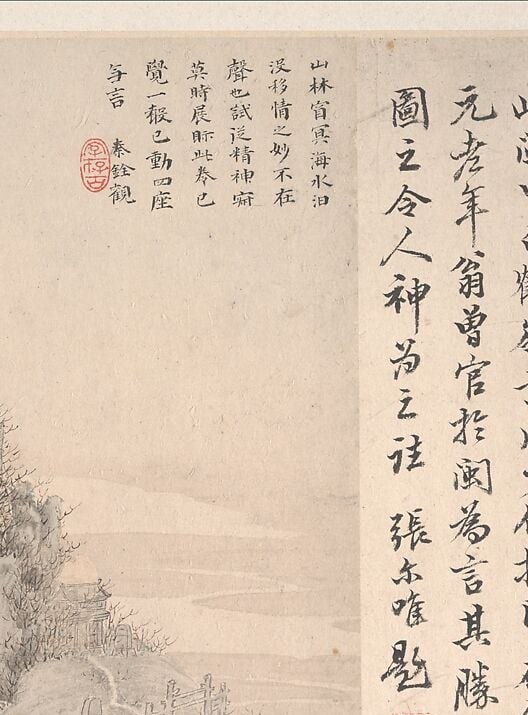
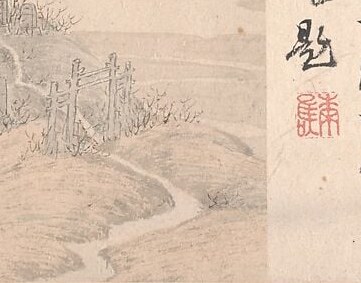
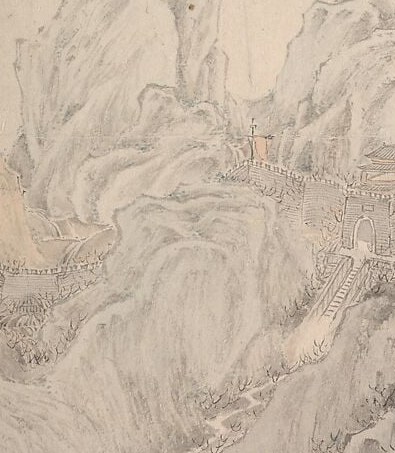
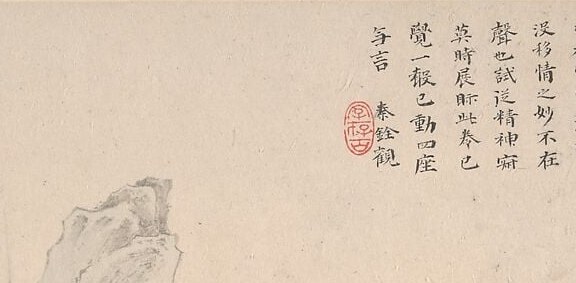
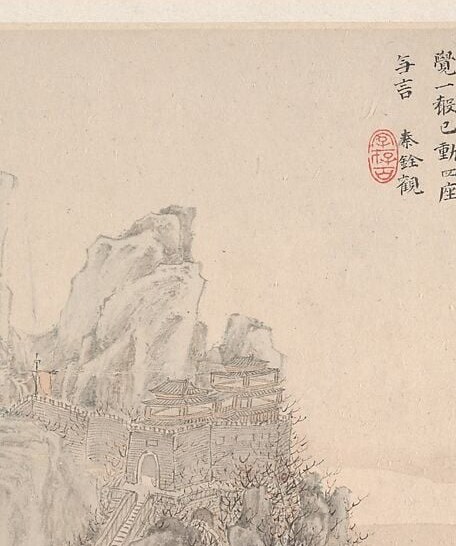
This is White Crane Mountain, a leaf painted by Ye Xin around 1654, now in the collection of the Metropolitan Museum of Art. It looks like a serene landscape, misty peaks, a lonely pine, a few white cranes. But it was made as a gift for a man whose life was in constant danger.
Zhou Lianggong was a prominent scholar-official under the new Qing dynasty who was imprisoned twice on charges of corruption and treason. His books were burned. To associate with him was to invite scrutiny. Yet a group of artists, including Ye Xin, compiled an entire album of leaves for Zhou, a gesture of solidarity performed quietly, in ink.
The mountain itself carries the argument. The pine tree gripping the cliff edge was a Confucian emblem of steadfastness in crisis. The white cranes, nearly lost in the mist, symbolized Daoist immortals, spirits that move above the polluted affairs of state. Ye Xin painted Zhou a landscape he could enter, where the only company was loyal and clean.
It is a small thing, this leaf, about nine by twelve inches. But every brushstroke was a risk, and every risk was a declaration: you are not alone.
Details
Transcript
A peaceful mountain view. Nothing more. But the painting is addressed to a hunted man. Zhou Lianggong, a high official accused of treason. He was jailed, twice, and watched by the secret police. Giving him a gift like this was a dangerous act of loyalty. So the artist wrote his message in symbols. A lone pine on the edge: moral courage when the ground gives way. And white cranes: souls untouched by the filth of the world.