Three Selish Indians by Catlin, George
George Catlin painted "Three Selish Indians" in 1862, a rare oval oil portrait on card, now in the Smithsonian American Art Museum. A lawyer turned painter, Catlin made five westward journeys to document Native American life before it was irrevocably altered by expansion.
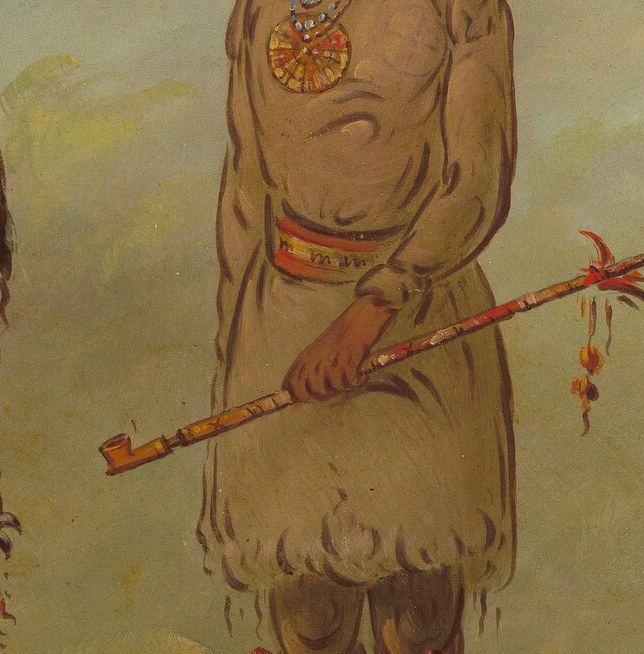
Three Salish men stand together in ceremonial dress. Their regalia is precise and direct. The central figure holds a feathered rattle and a horizontal pipe, both objects of spiritual and social significance. On the left, one man meets the painter’s eye and smiles, an expression that feels immediate across more than a century and a half.
Catlin worked quickly in the field, applying oil to card rather than canvas, which let him record faces, textiles, and objects with a journalist’s urgency. This painting comes from his final western trip in the early 1860s. Unlike many of his sitters, these men were never named in his notes, so the portrait itself became their primary historical trace.
What do you notice first: the smile, the rattle, or the sky that sets them apart?
Details
Transcript
Three men from the Salish tribe, painted on the frontier. The central figure holds a feathered rattle for ceremony. Catlin painted quickly, often finishing a portrait in a single sitting. His pipe is held horizontally, an emblem of welcome. Look at the leftmost man. He smiles openly at the painter. These specific men were never named, making the portrait their lasting record.