清 張賜寧 設色山水 卷|Landscape by Zhang Cining
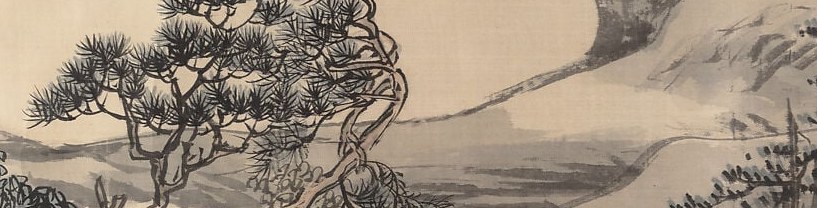
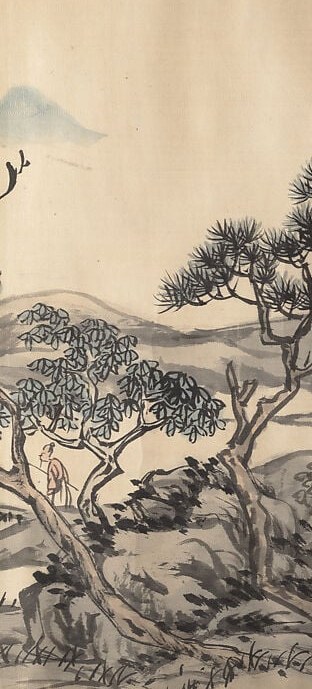
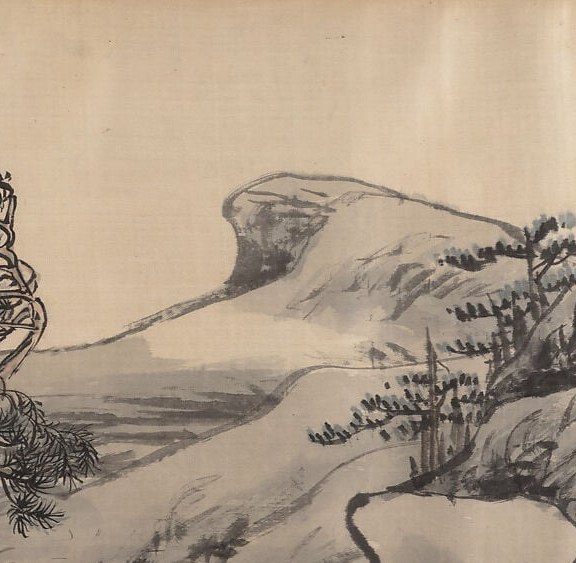
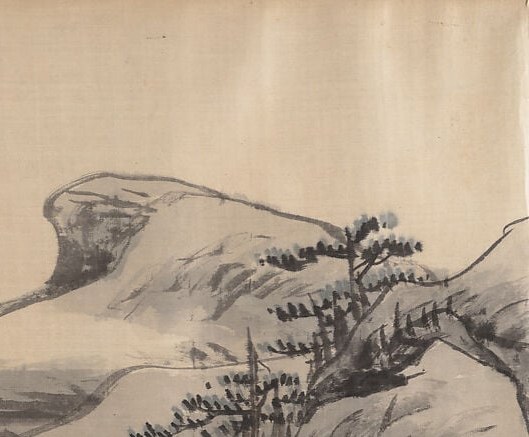
This is Zhang Cining's 'Landscape,' an 1807 handscroll in ink and color on silk, now in the collection of the Metropolitan Museum of Art. The painting has no signature, but scholars identified Zhang's hand in the distinctive brushwork, dry, split strokes and a particular restraint that set him apart from the rigid academic styles of early 19th-century China.
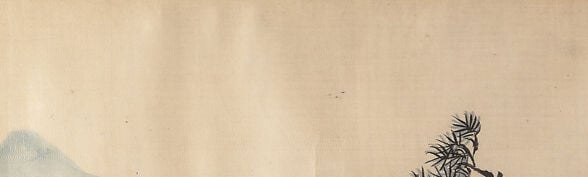
Notice the wide horizontal band of mist across the middle. It looks like fog, but it is actually the raw, unpainted silk itself. Zhang deployed this emptiness strategically: where his contemporaries filled compositions with mountains and waterfalls, he left space for the eye to rest and the mind to wander. The void is not a gap; it is the subject.
Above that band, a faint ink-wash sky fades imperceptibly into bare silk. You cannot see the transition unless you look very closely. Zhang dissolves his painted world into the physical material of the scroll, an idea that was quietly radical at a time when most painters were dutifully copying old masters.
Next time you see a Chinese landscape, look for the empty spaces. They are not afterthoughts. They are where the painting breathes.
Details
Transcript
You see a misty Chinese landscape, painted on silk in 1807. But look at this blank horizontal band. That is bare silk. The painter left it empty on purpose. In Chinese landscape, the void is not absence. It is atmosphere, distance, breathing room. Above, the sky fades from a whisper of ink wash into raw silk. Zhang Cining dissolved the painted world into the material of the painting itself.