Curious Grassy Bluffs, St. Peter's River by Catlin, George
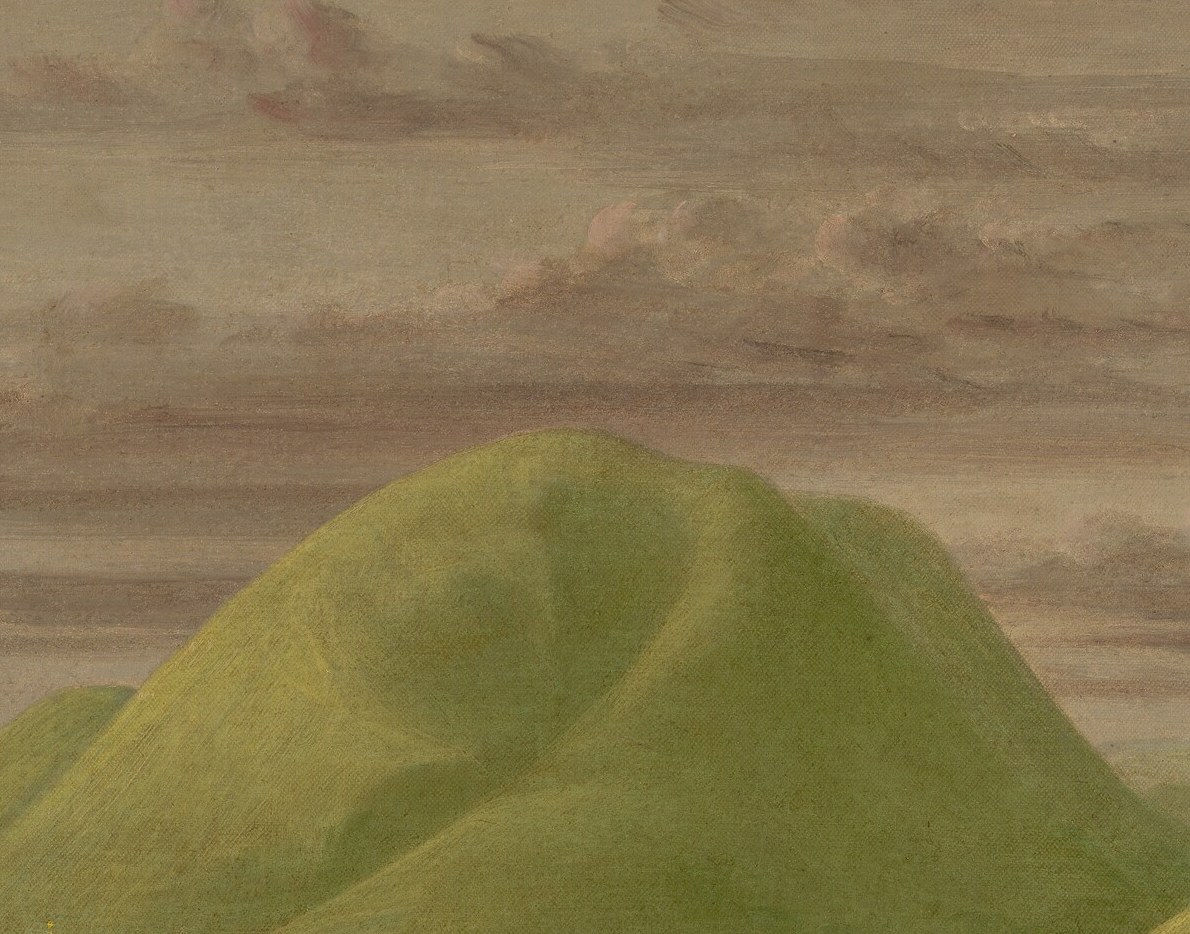
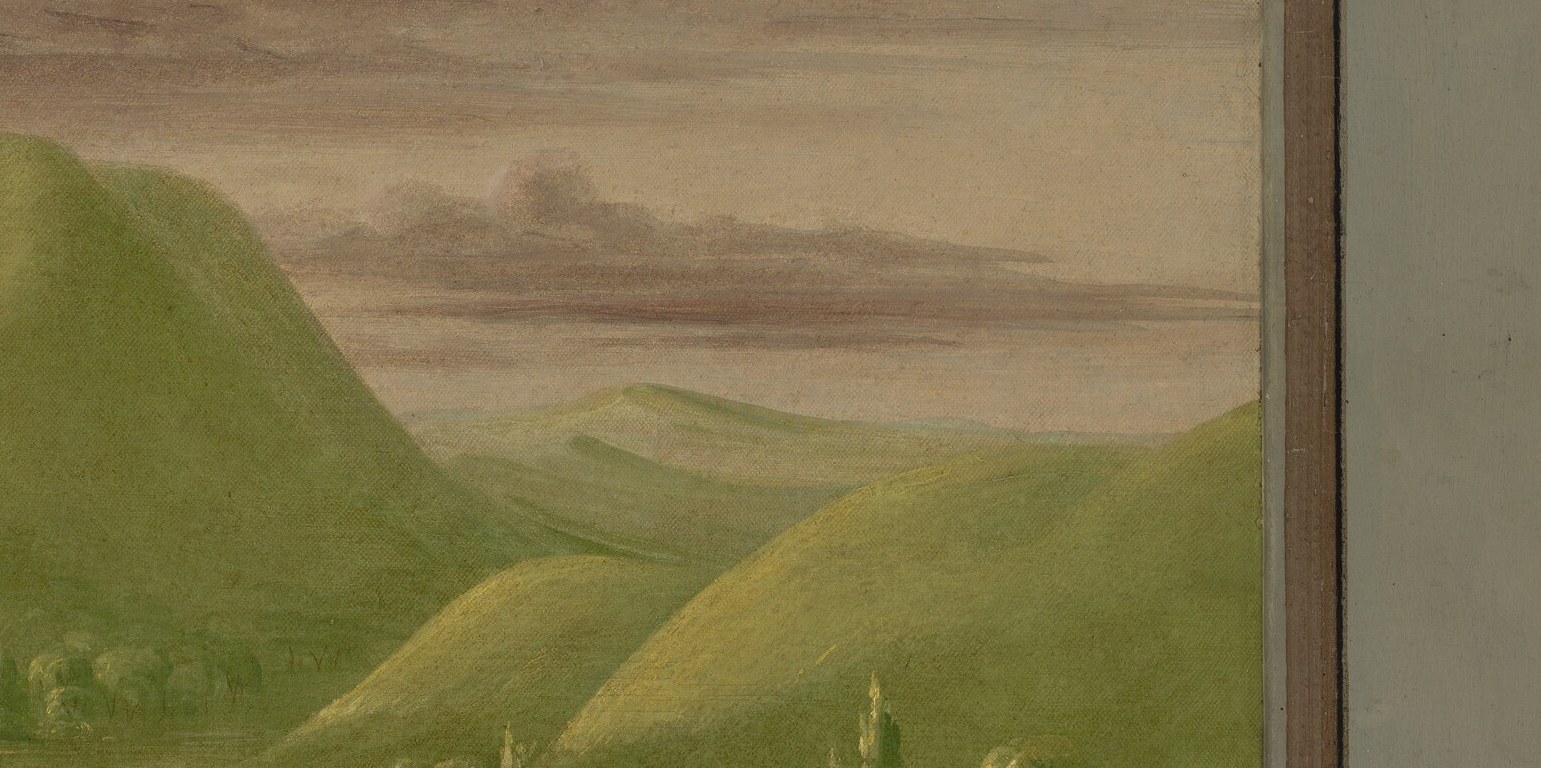
George Catlin's *Curious Grassy Bluffs, St. Peter's River* (1861/1869), housed at the Smithsonian American Art Museum, captures the expansive beauty of the American frontier. Catlin, a lawyer turned painter, dedicated his career to documenting the American West, its landscapes, and its Indigenous inhabitants.
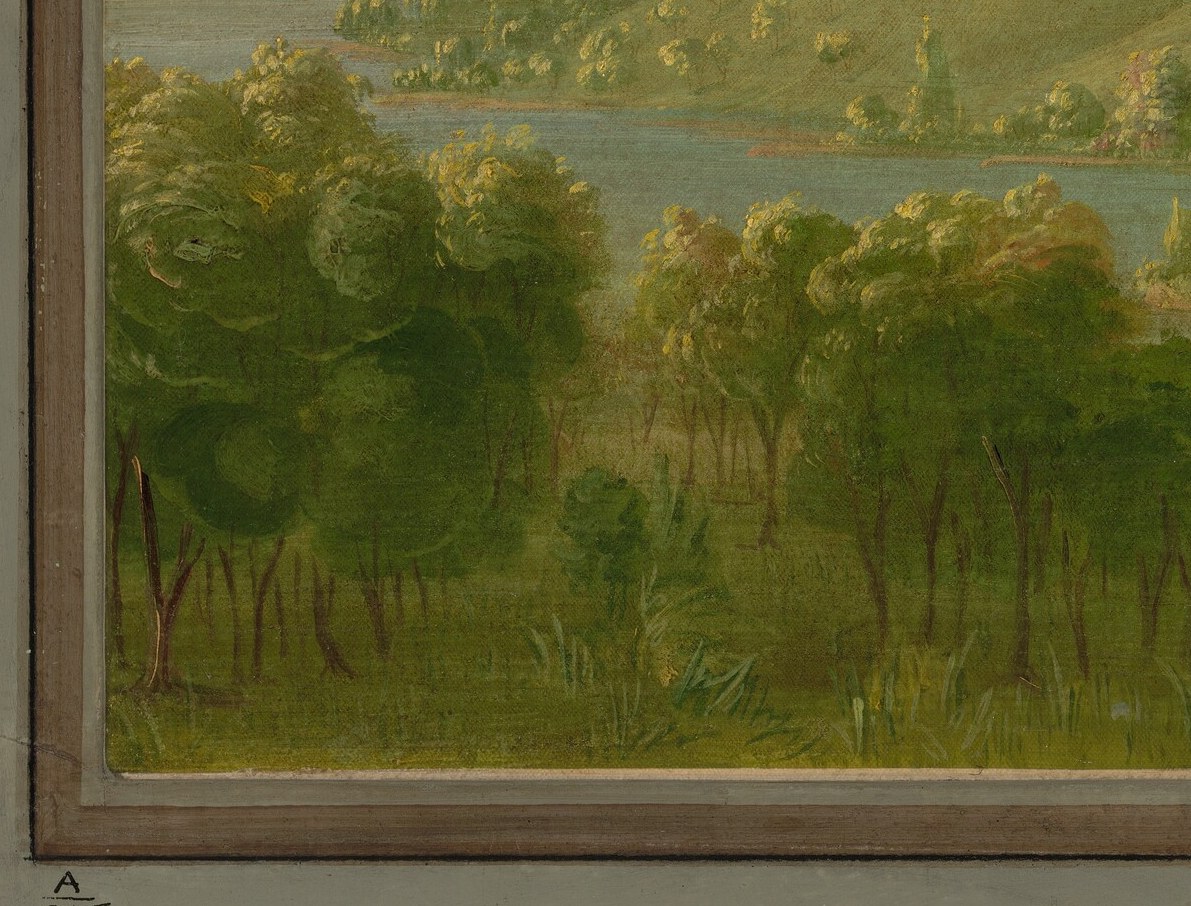
While the painting appears as a serene natural vista, a hidden detail in the lower left corner offers a glimpse into its past: Catlin's signature along with a collection number. This small inscription speaks to the painting's journey through various collections and its cataloging history.
Catlin made multiple expeditions across the American West in the 1830s, meticulously recording his observations through his art and writings. His work is invaluable for its early depictions of both the natural environment and the cultures he encountered, making him a significant figure in American art history.
What other overlooked details do you think tell a painting's story?
Details
Transcript
This painting captures the vastness of the American frontier. Its painter, George Catlin, documented Indigenous life and landscapes. He explored the West, sketching its natural beauty and people. Look closely at the lower left corner. His signature is here, along with a collection number. It's a small detail, but reveals the painting's history.