The Old Violin by Harnett, William Michael
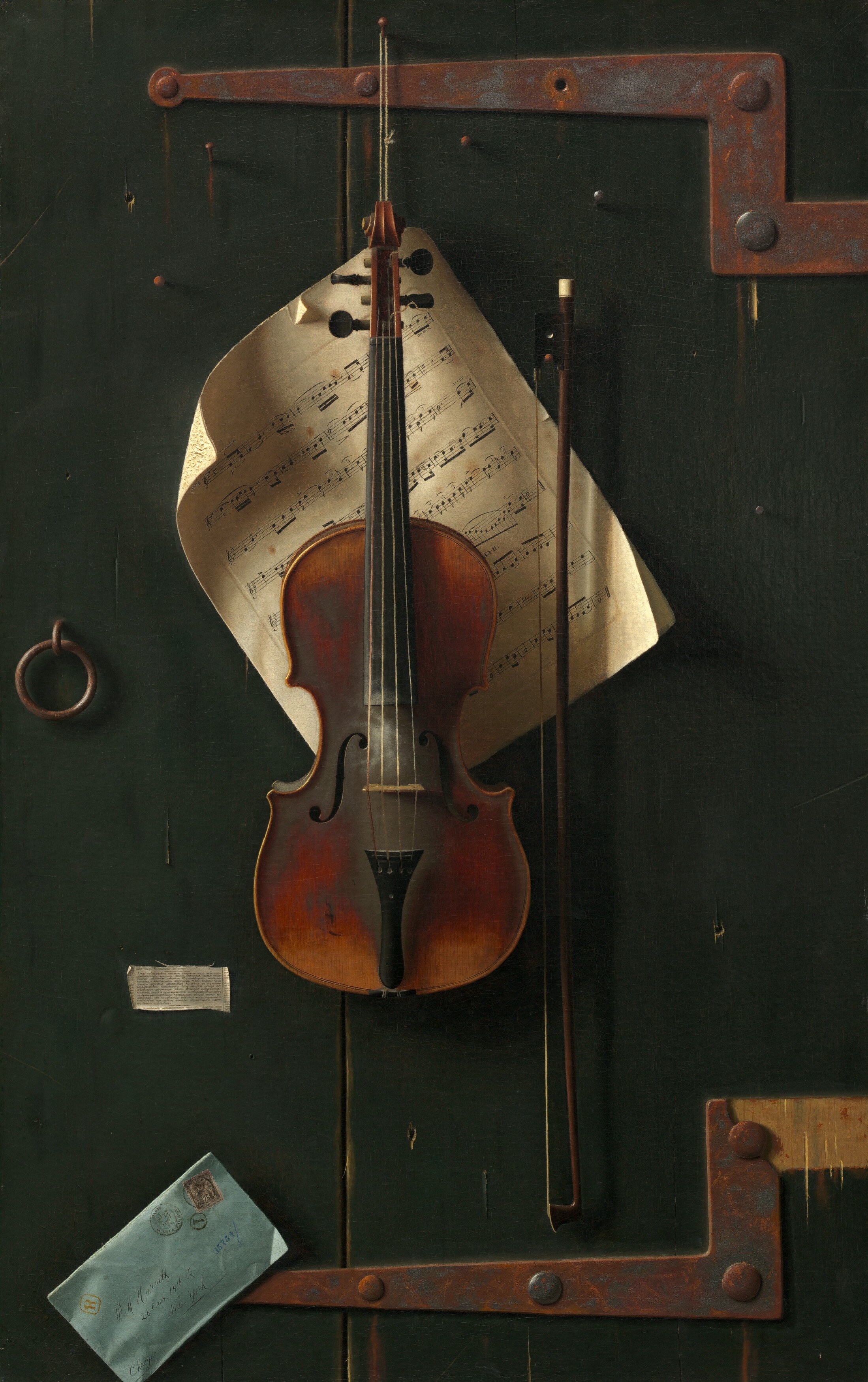
William Michael Harnett's "The Old Violin," painted in 1886, is a remarkable example of trompe l'oeil, a technique designed to deceive the eye into believing it sees real objects.
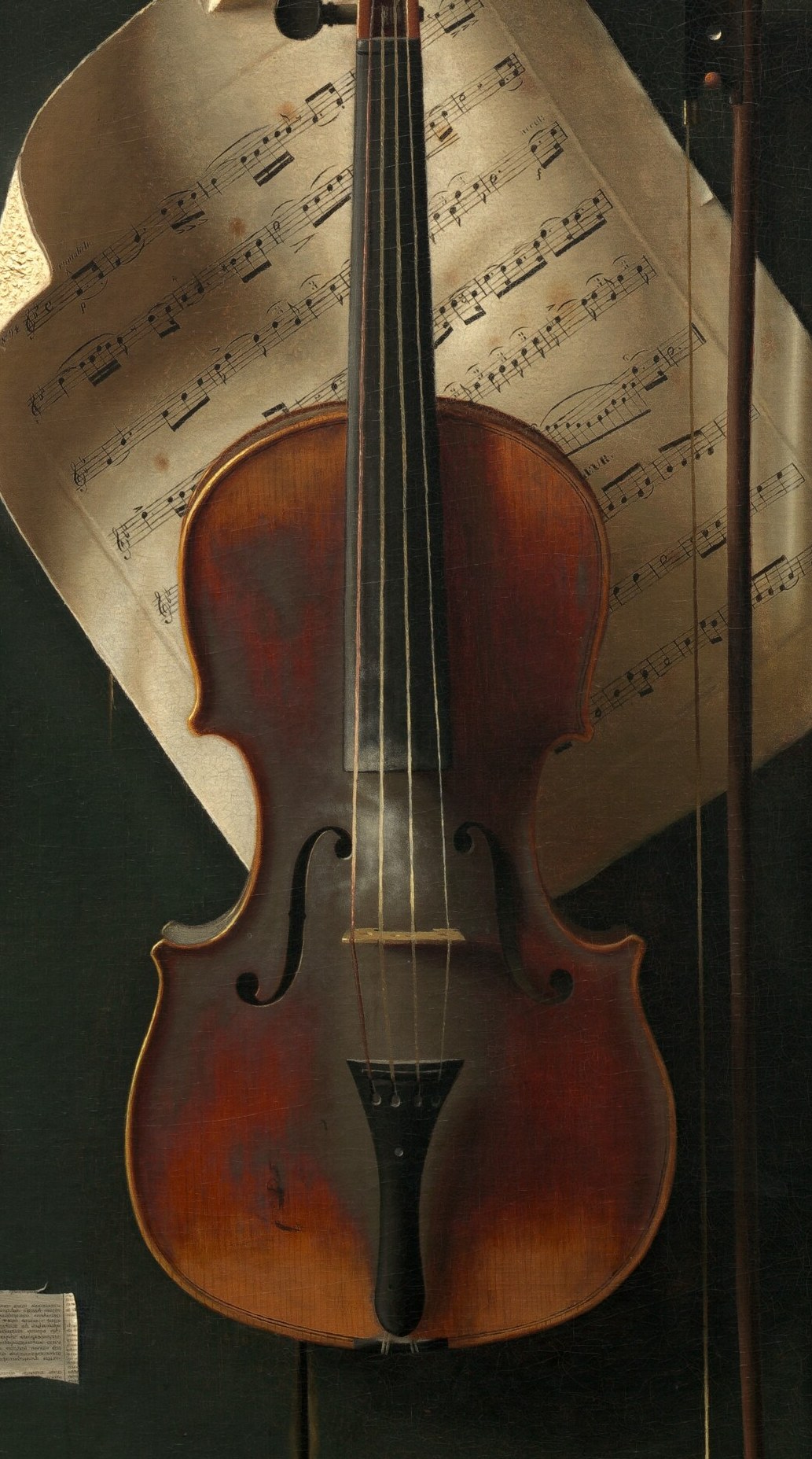
Look closely at the meticulously rendered details: the worn wood of the violin, the precise folds of the sheet music, and the delicate paper of the folded letter. Harnett's skill creates such an illusion that viewers often reached out to touch his painted objects, convinced they were real.
Harnett was celebrated for these still lifes, which brought him considerable fame. His work, now in the collection of the Metropolitan Museum of Art, invites us to pause and consider the quiet lives of objects and the human stories they imply, even in absence.
What stories do these silent objects tell you?
Details
Transcript
No person is here, yet a human story unfolds. This old violin, painted in 1886, was once a sensation. The painter worked slowly, building up layers of illusion. He was famous for making painted objects look real. Notice the small, folded letter tucked beneath the violin. It hints at a message, a memory, or a silent song.