The Penitence of Saint Jerome by Joachim Patinir
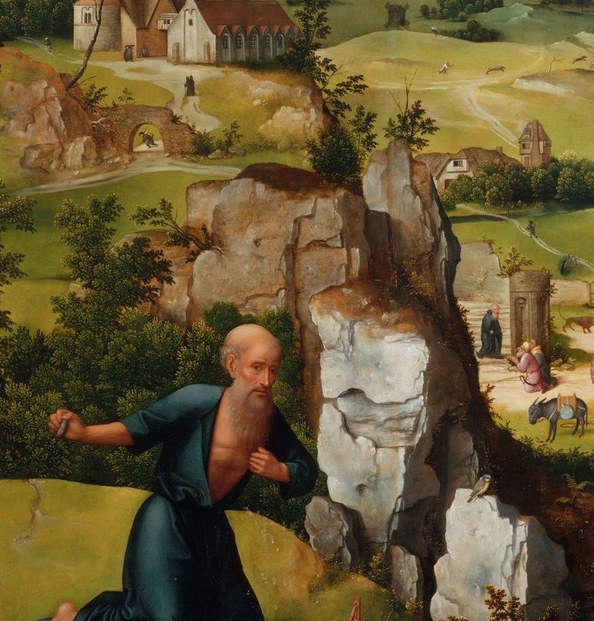
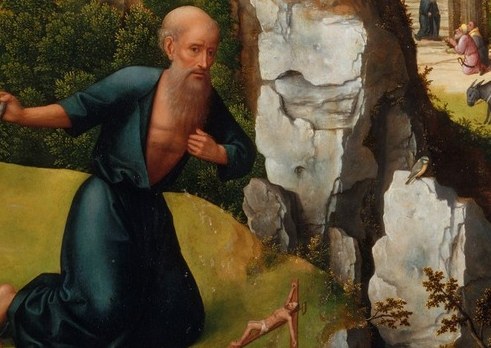
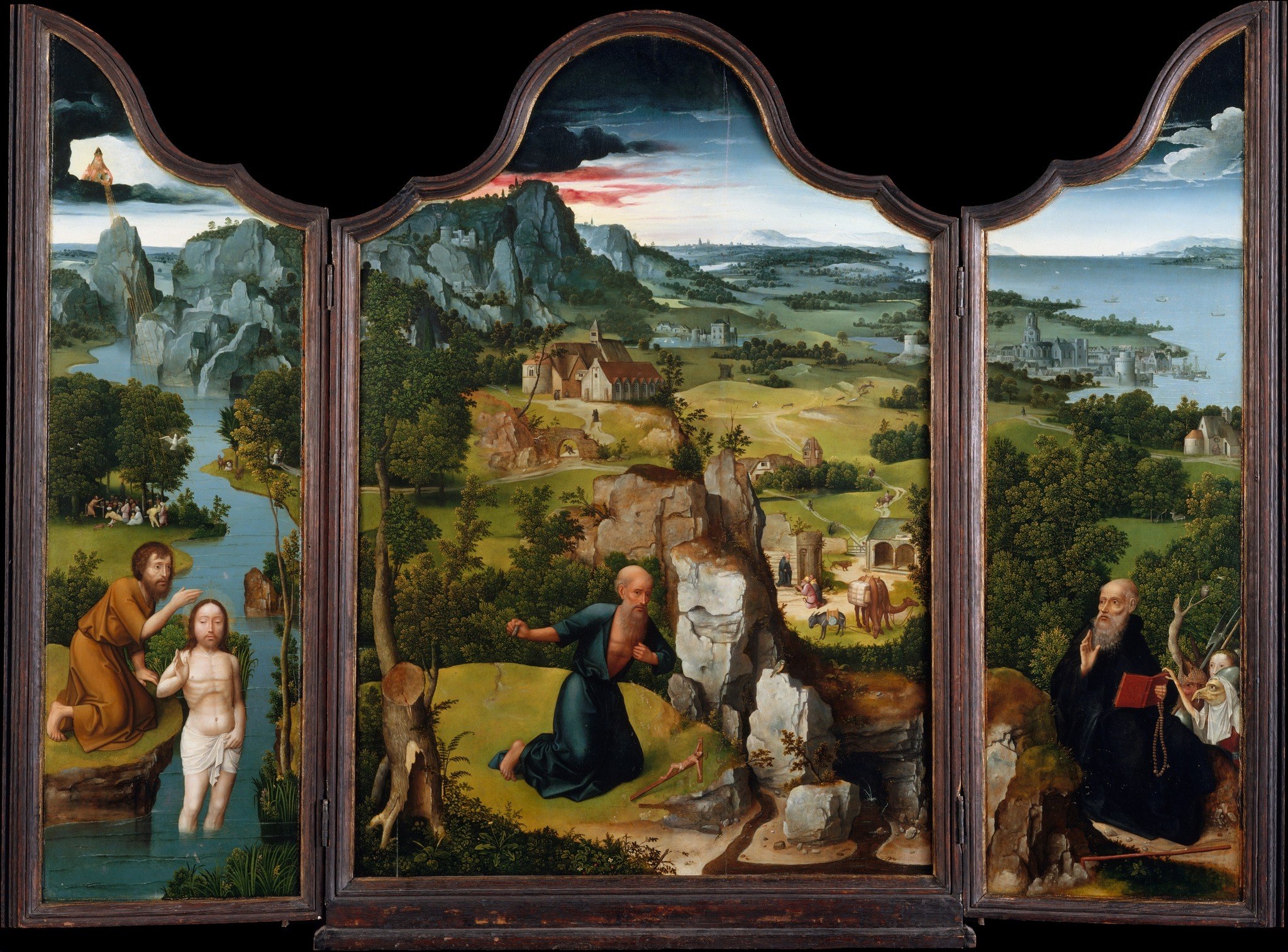
Joachim Patinir’s The Penitence of Saint Jerome, painted around 1513, hangs at The Metropolitan Museum of Art. It is a triptych disguised as a single sweeping vista, and the man at its center is beating his chest with a rock.
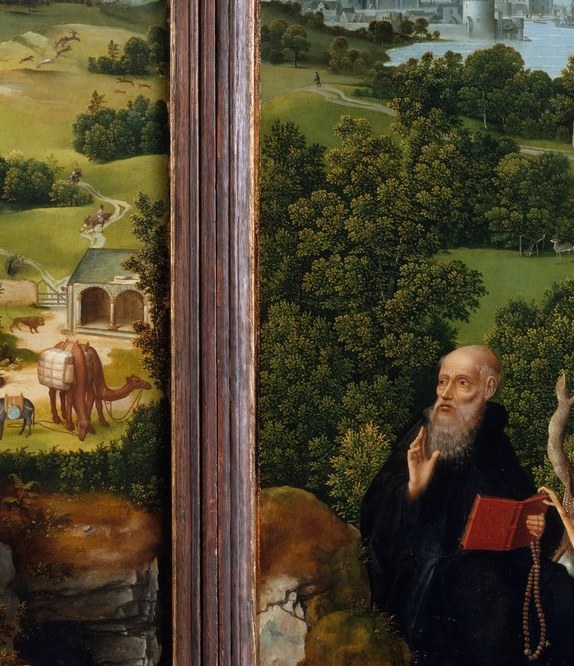
Look first at Saint Jerome, the bearded figure kneeling in the rocky foreground. His hand holds a stone mid-strike. Below him rests a lion: the animal he tamed, legend says, by removing a thorn from its paw. Now look into the distance. A river winds through blue-green hills toward a pale horizon. On the left, Christ is baptized. On the right, Saint Anthony reads. The world is vast and populated, but the three saints have each chosen solitude within it.
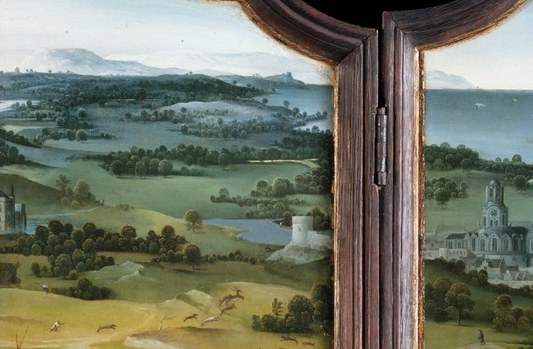
Patinir worked in Antwerp and is recognized as the first Flemish painter to treat landscape not as backdrop but as subject. The panoramic river valley here is an early example of the world landscape he invented: a high-angle view that recedes in atmospheric layers from warm brown earth to luminous gold sky. The altarpiece frame with its arched tops reminds us that this was made for quiet, private devotion.
He painted an entire world. Then he placed one man in the middle of it, inflicting pain on himself, hoping to be worthy of it.
Details
Transcript
A panoramic world, painted in Antwerp around 1513. A river winds toward a luminous horizon. Saints live alone in this landscape. A hermit reads. Another baptizes. But the center is Jerome, kneeling in the rocks. He beats his chest with a stone. This is penance. A lion waits at his feet, tamed by a kindness he once did. Patinir, who painted this, invented the world landscape.