A Vase of Flowers by Margaretha Haverman

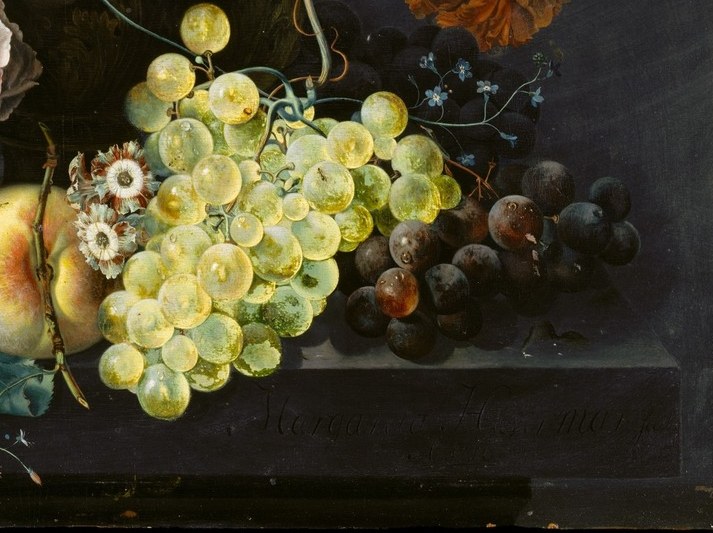
A single peach, bright against green grapes, is the painting’s quiet surprise. A Vase of Flowers (1716) by Dutch painter Margaretha Haverman hangs in the Metropolitan Museum of Art and is one of the earliest Dutch works to use Prussian blue and Naples yellow pigments.

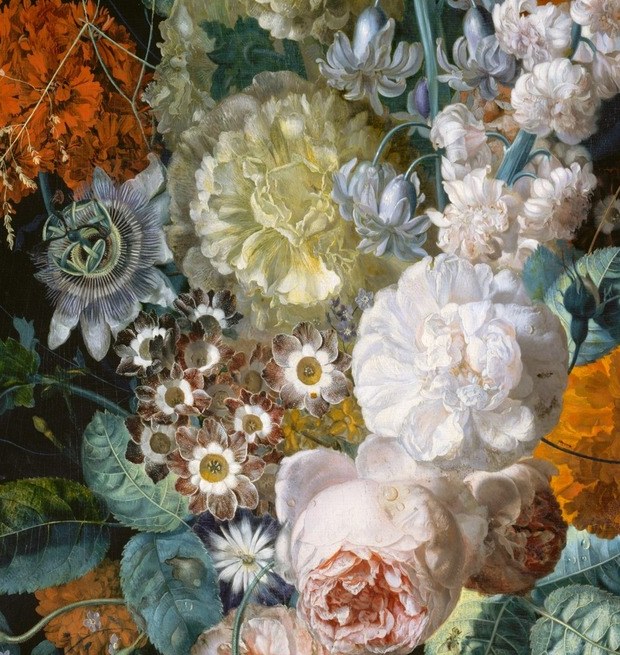
Look for the stone niche that frames the bouquet, the symmetrical flower arrangement, and the tiny peach nestled among the grapes. The delicate brushwork on each petal reveals her meticulous technique.

Haverman, a pupil of Jan van Huysum, signed and dated the canvas before it entered the Met’s collection, highlighting her skill at a time when women artists were rare. Only two of her signed paintings survive today.

What other small details might change how you read a still life?

#arthistory #MargarethaHaverman #DutchStillLife

Details
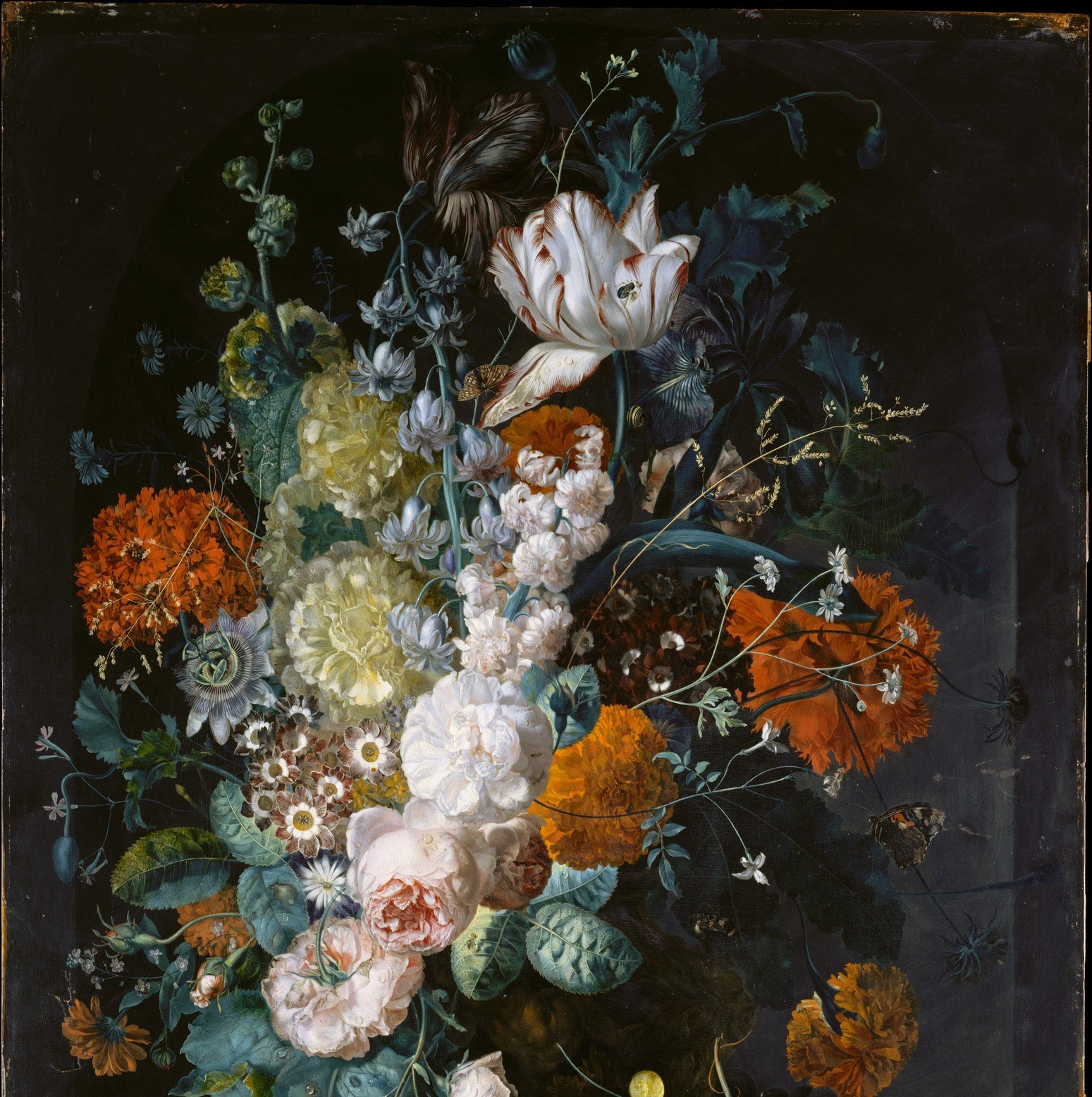
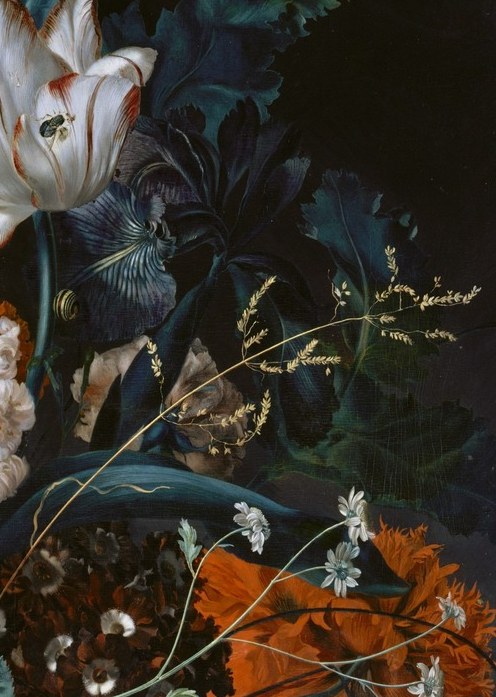
The near-black surround is calculated void: it maximizes the flowers' luminosity by contrast, borrowing a technique from Rembrandt's portrait lighting and common in Dutch vanitas still life.
The showpiece bloom: maximum petal count, full disclosure of the flower's interior , painted to demonstrate mastery of layered translucent oil glazes.
Translucent skin, surface bloom, and each individual highlight push oil paint to its optical limits; grapes also carry Eucharistic symbolism in vanitas tradition.
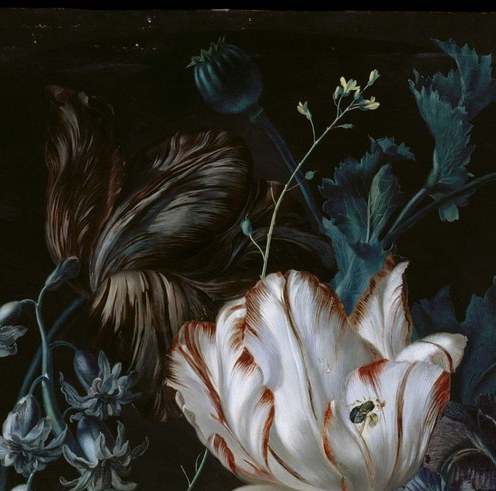
Tallest bloom crowns the composition; its upward reach and luminous white against deep black anchors the vertical axis and is the first element the eye finds.
Vivid orange-red creates maximum chromatic tension against the dark ground; tulips were still luxury commodities in 1716 and their inclusion signals collector status.
Transcript

A quiet corner hides a burst of summer. The stone niche frames the blossoms like a stage. All these blooms never bloom together in nature. Notice the ripe peach tucked among the grapes. She mixed Prussian blue and Naples yellow on these petals. Signed and dated 1716, it entered the Met collection later.