The Roman Campagna by John Gadsby Chapman
John Gadsby Chapman’s The Roman Campagna, painted in 1864, is a landscape by a man who could not afford to go home.
Chapman was the first American artist commissioned by Congress. His Baptism of Pocahontas still hangs in the Capitol rotunda in Washington, D.C. After that triumph, he moved his family to Rome, intending to stay a few years. He never returned.
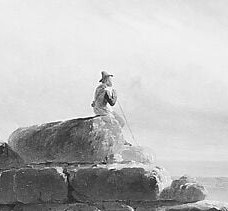
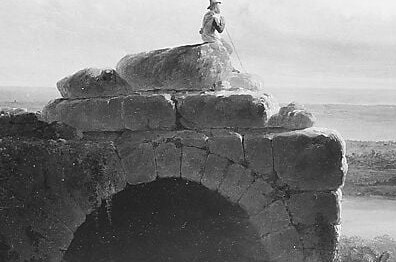
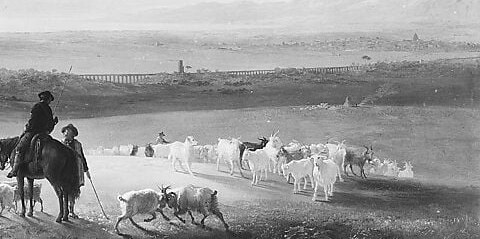
By 1864, when he painted this view of the Roman countryside, his money was gone. The Civil War had killed the American art market. The solitary figure on the stone outcrop, the crumbling arch, the vast hazy plain stretching to nothing, this is the Campagna Chapman walked, and it is hard not to read the emptiness as his own.
Chapman died in Rome in 1889, penniless. His children sold every painting he had left. The Capitol rotunda remembers him. This quiet field remembers him too.
Details
Transcript
Three decades. That is how long he worked on one painting. The Baptism of Pocahontas hangs in the U.S. Capitol rotunda. After that commission, John Gadsby Chapman moved to Rome and never left. He painted this empty plain in 1864. He was running out of money. A lone shepherd on the ruins. Chapman could not afford to go home. He died in poverty. His children sold every canvas he had left.