Alexander the Great or Hector of Troy (from The Nine Heroes Tapestries) by http://www.wikidata.org/.well-known/genid/c2839d6e1db67dc9aac59450cceea4cc
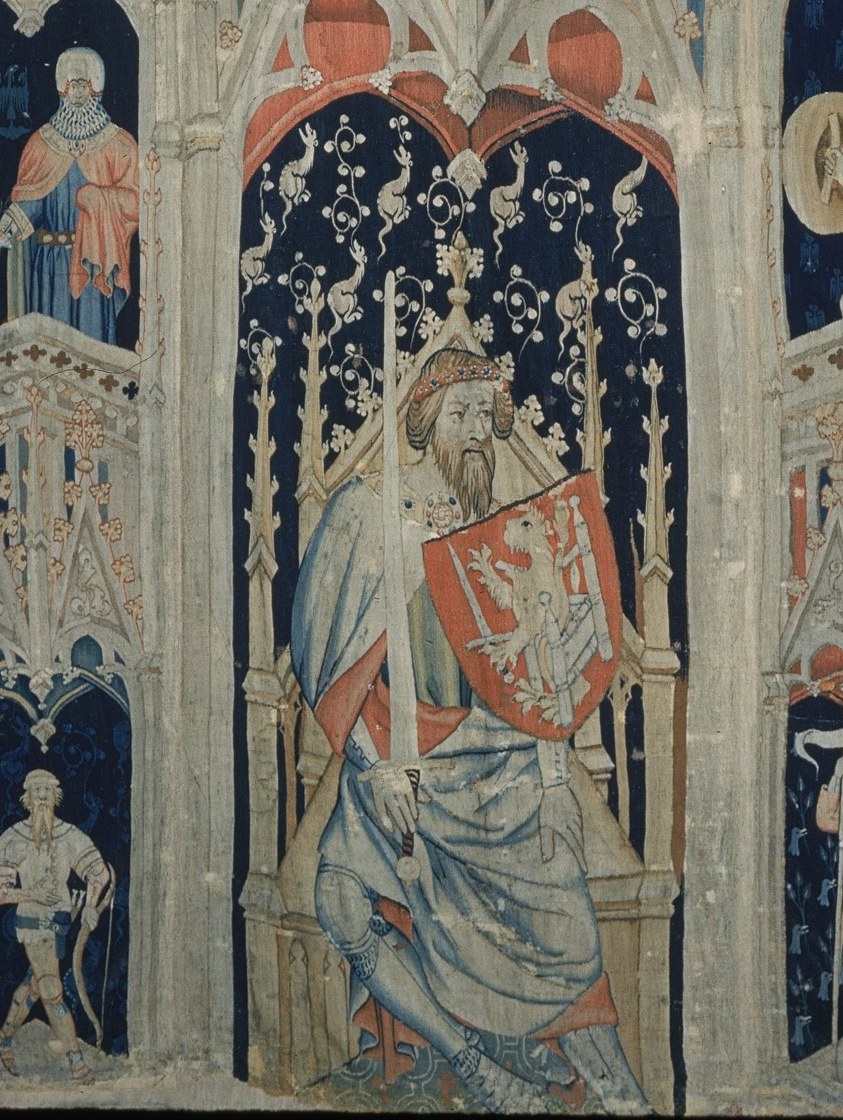
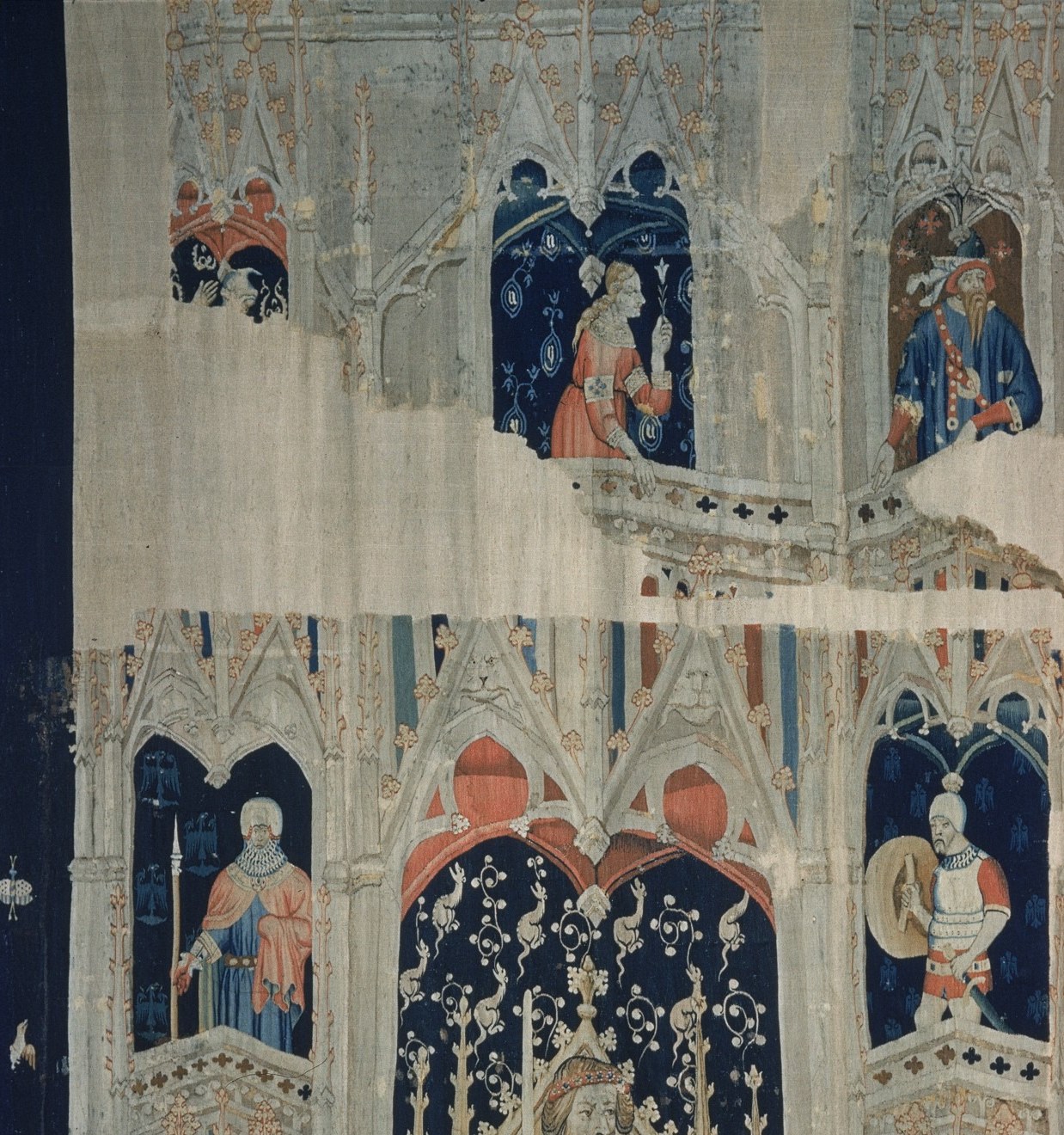
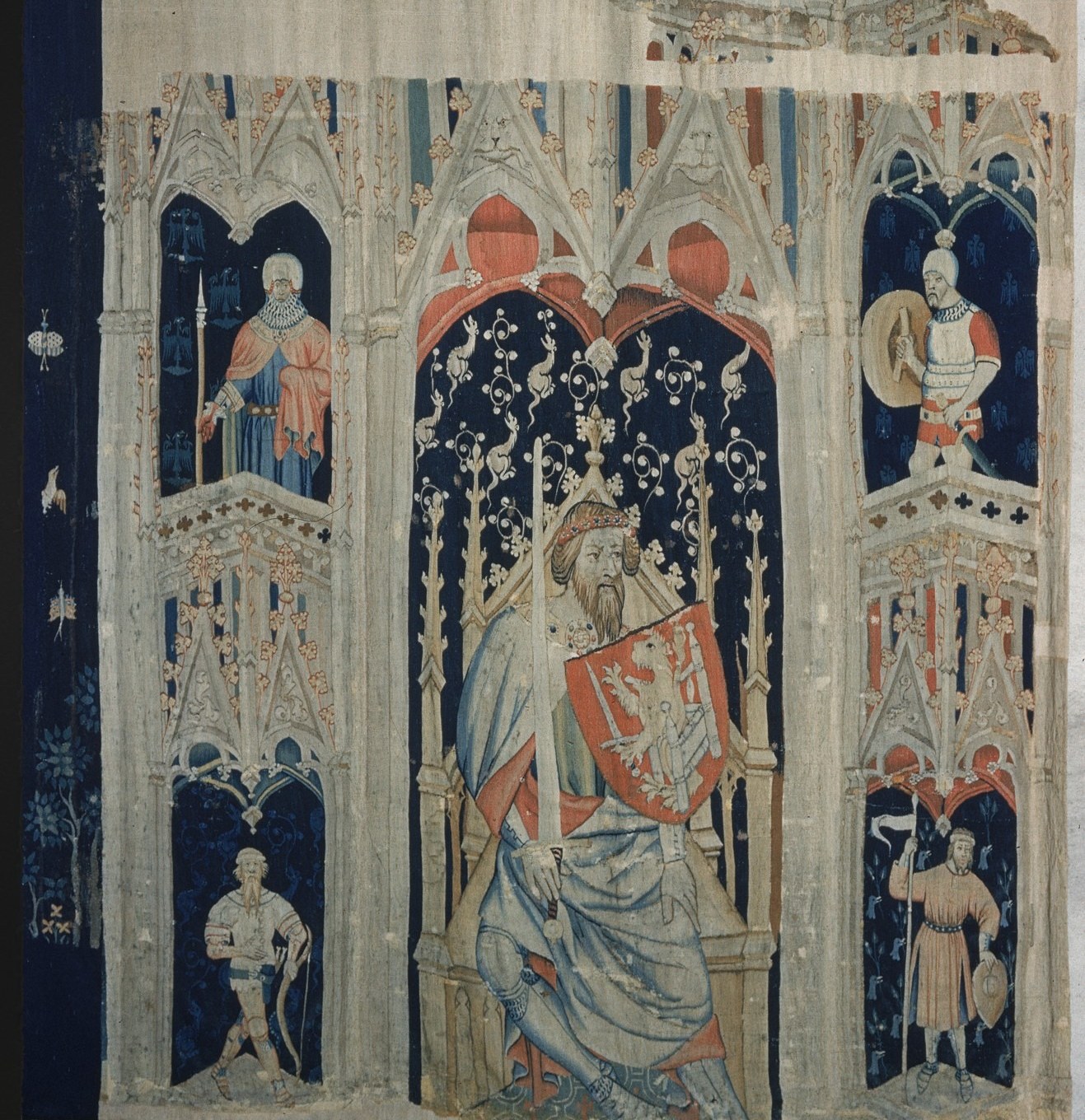
This is "Alexander the Great or Hector of Troy," a wool tapestry from around 1400, originally part of a larger series depicting the Nine Heroes, the great champions of pagan, Jewish, and Christian legend that medieval courts revered. It belongs to the International Gothic style and was likely woven in the Paris-Arras workshops that supplied aristocratic courts across northern Europe.
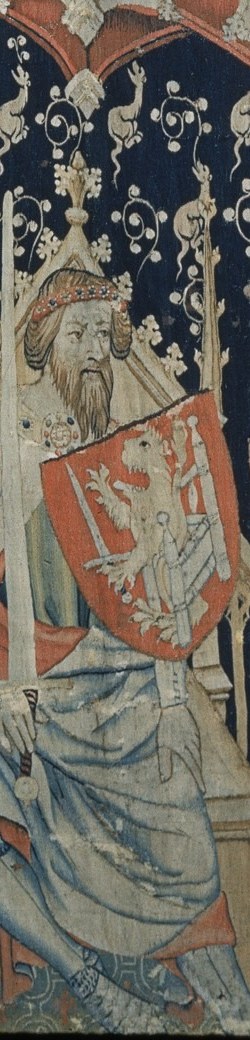
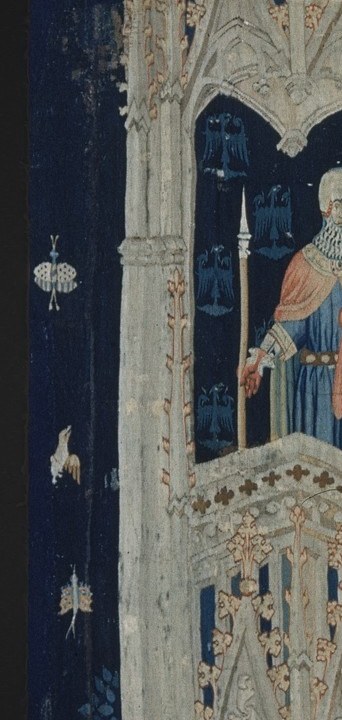
The central figure is the puzzle. His red fur-trimmed robe and enthroned posture mark him as a supreme hero, but the identity swings on two visual clues. The object he holds, scepter or spear, is the first. A royal scepter points toward Alexander; a warrior's spear points toward Hector. The second key sits nearly out of sight in the lower left margin: a small heraldic shield whose blazon originally signaled the specific hero to a courtly audience fluent in such devices.
The Nine Heroes tapestries were not merely decoration. They functioned as mirrors of princely virtue for a society that traced its own legitimacy back to the great figures of antiquity. Owning a series like this meant aligning your house with the worthiest men who ever lived. The ambiguity around this figure may even be deliberate, a way to claim two lineages at once.
Spend a moment with that shield in the margin and the object in his hand. Everything you need to name him is still there in the weave.
Details
Transcript
A king in red. The Nine Heroes tapestries, circa 1400. He could be Alexander the Great. Or Hector of Troy. The difference is in what he holds. Look at the staff. A scepter means a king. A spear means a warrior. Now look at the tiny shield in the left margin. The blazon was meant to name him for anyone who could read it. That shield and that staff are the only keys to who this really is.