The Flight into Egypt by Carpaccio, Vittore
View the artwork: The Flight into Egypt →
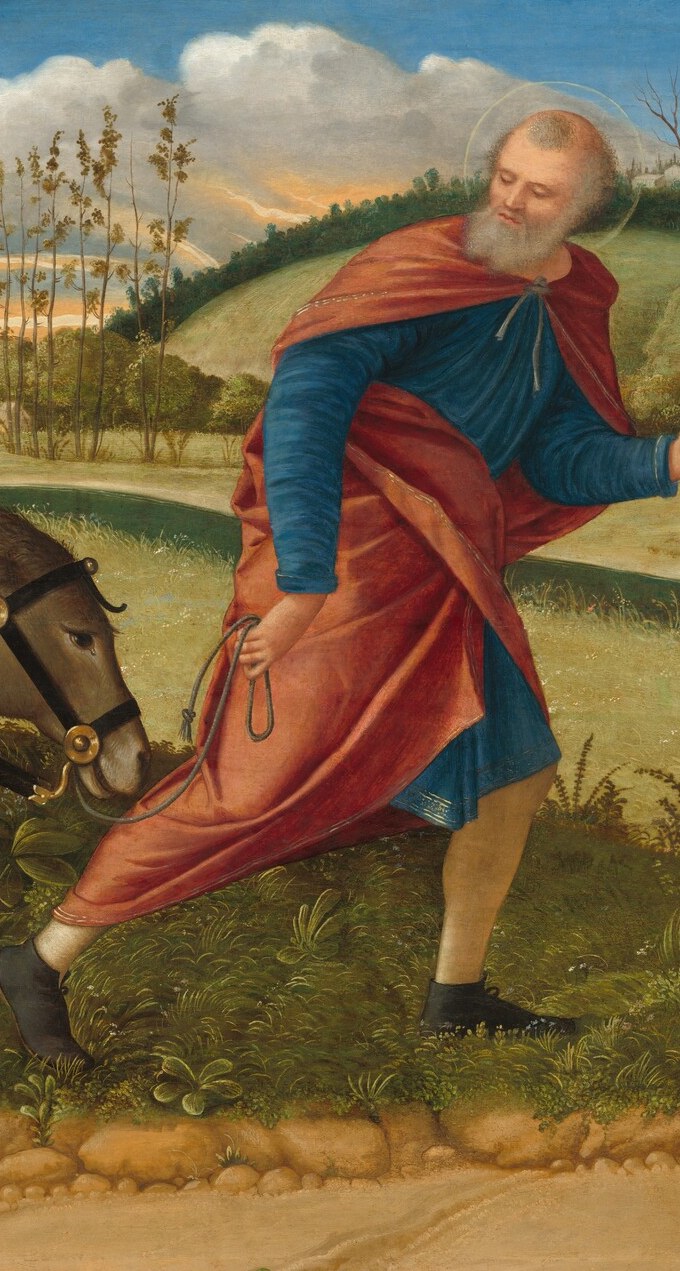
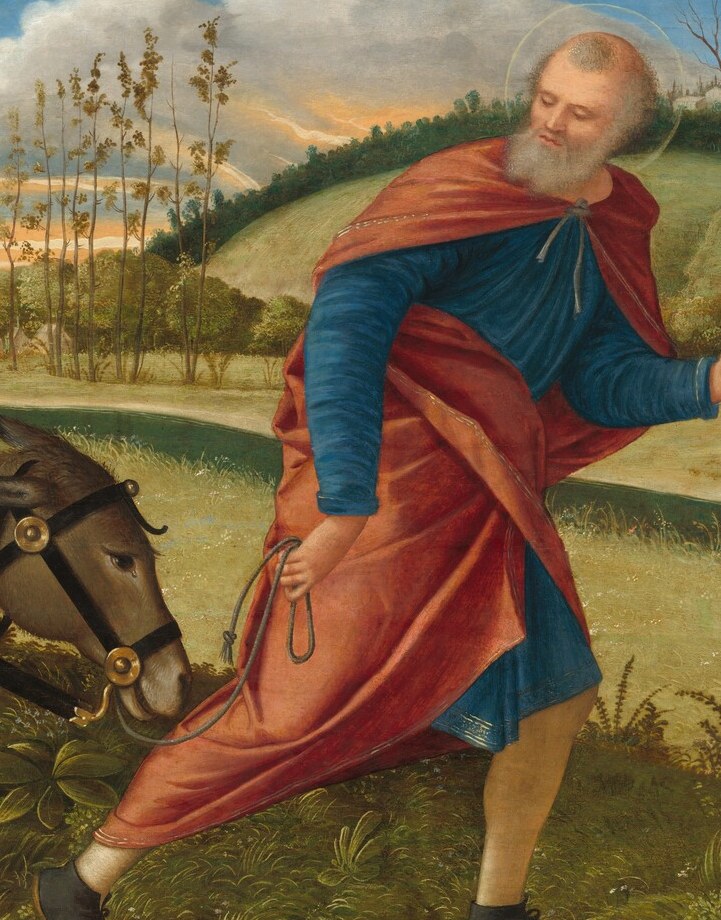
This is Vittore Carpaccio's 'The Flight into Egypt,' painted around 1515 and now in the National Gallery of Art. For much of the early twentieth century, major scholars could not agree on who made it. Bernard Berenson assigned it to Giovanni Bellini, and others argued for Antonello da Messina, before the panel was finally accepted as a mature work by Carpaccio.
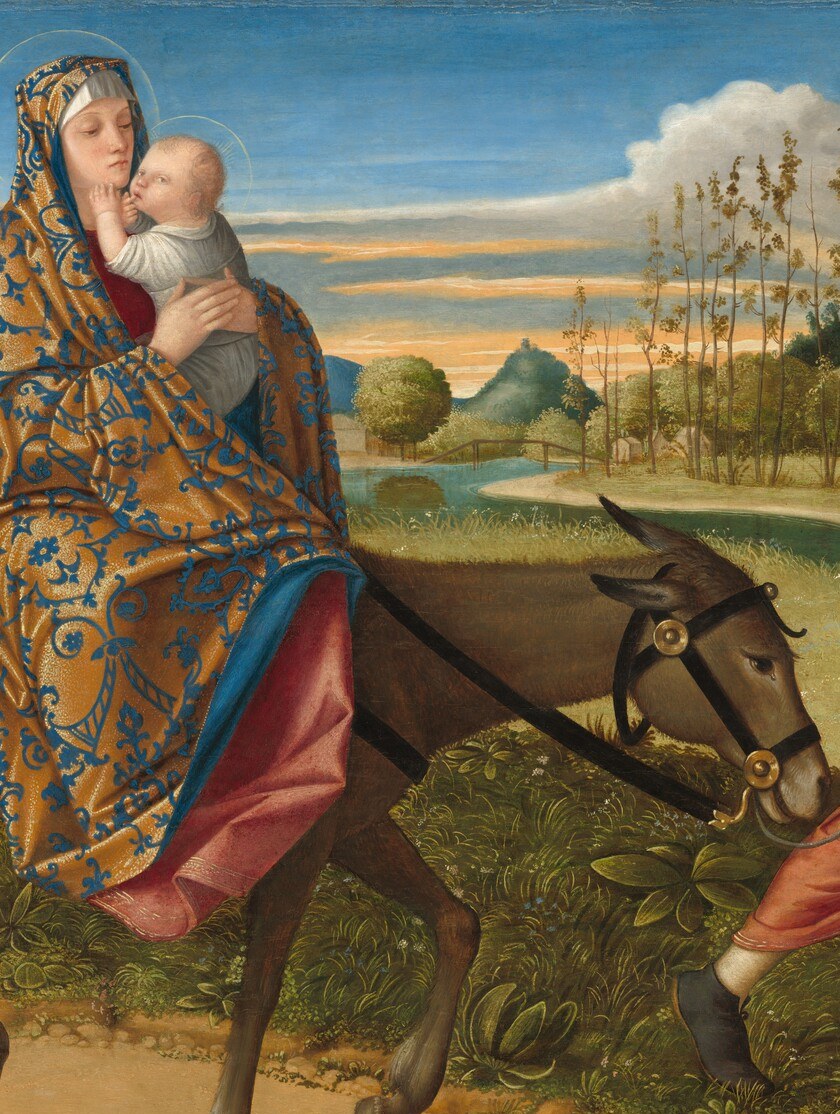
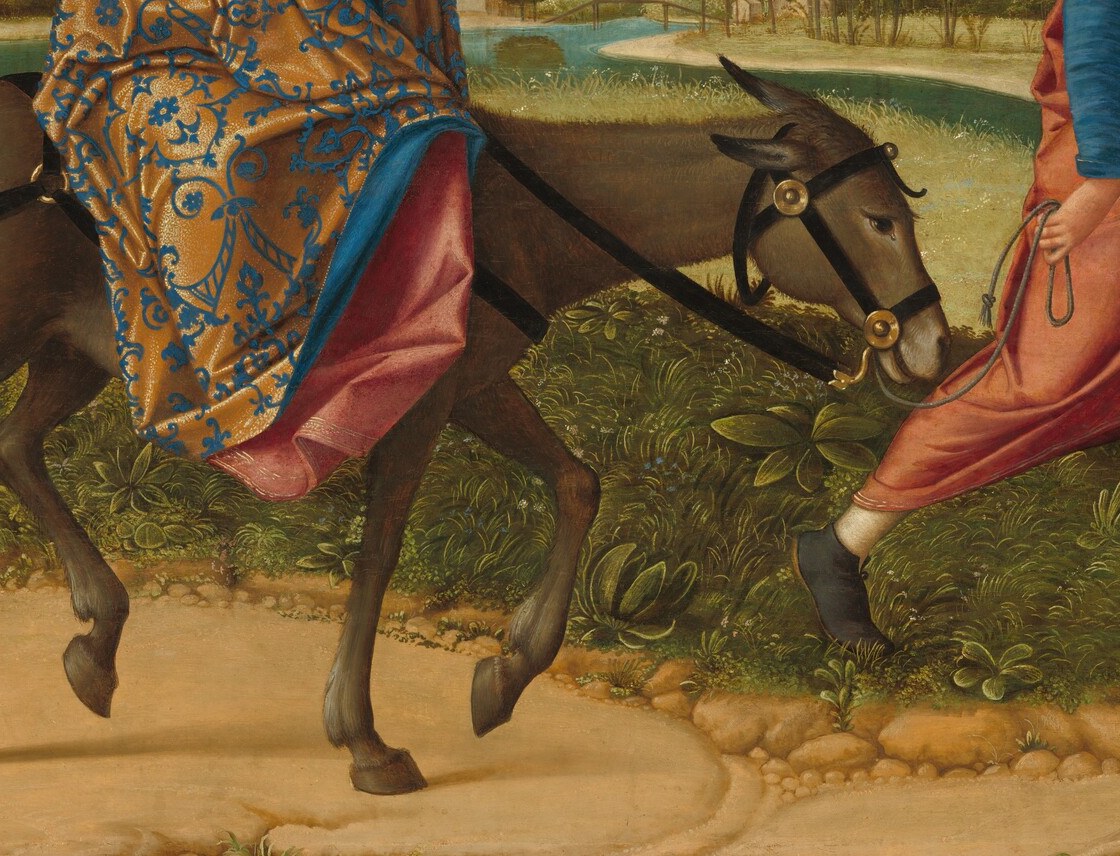
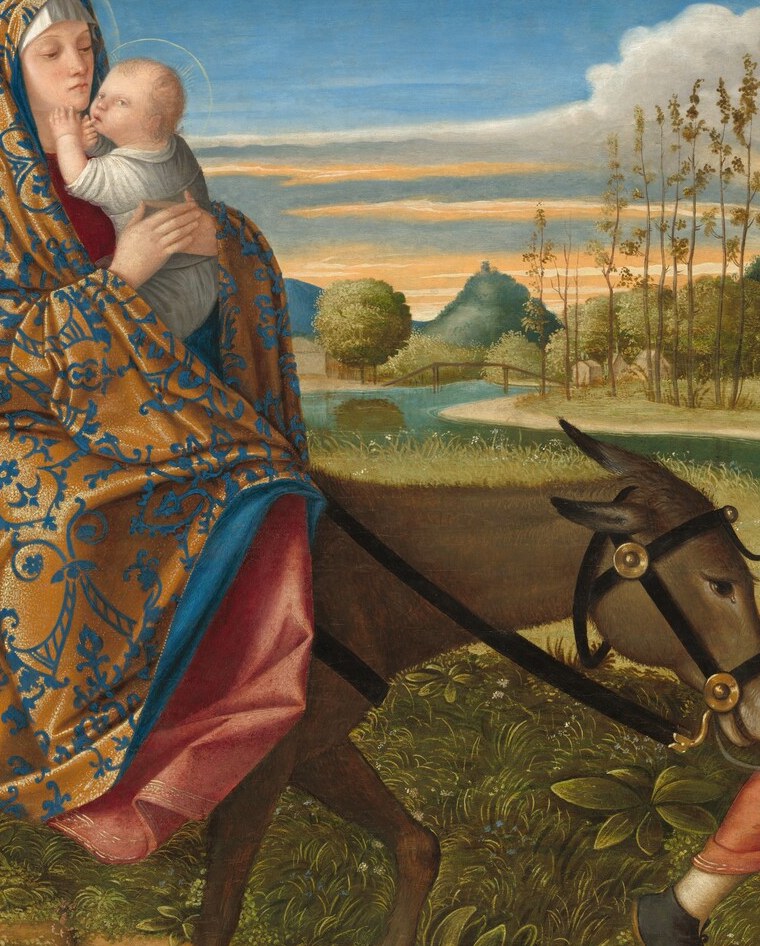
Look at Mary's mantle. The gold damask pattern laid over the deep Marian blue is a virtuoso passage of textile painting, and it is exactly the kind of layered luxury fabric that became a Carpaccio signature. That single detail helped settle the attribution. The landscape is equally deliberate: scholars identify the distant peaks as the Dolomites, a deliberate anachronism that transplants the biblical story into the Venetian viewer's own geography.
The painting's provenance reads like a history of the art market. It was acquired in Berlin by the British collector Edward Solly, entered the Königliche Museen in 1821, and remained there for a century. After 1924 it passed through the dealer Luigi Grassi, the financier Otto H. Kahn, and the legendary Duveen Brothers before Andrew Mellon's trust bought it in 1937 and donated it to the National Gallery that same year.
A 1995 conservation treatment confirmed that the original paint layer survives largely intact, refuting old speculation that the picture had been heavily repainted. The work starred in Carpaccio's first retrospective outside Italy, held at the National Gallery and the Palazzo Ducale in Venice in 2022 and 2023.
#arthistory #carpaccio #renaissance
Details
Transcript
For decades, nobody could agree who painted this. Bernard Berenson said Bellini. Others said Antonello da Messina. They were all wrong. This is pure Carpaccio. The gilded brocade alone is a signature no other Venetian could forge. It crossed from Berlin to Duveen Brothers to Andrew Mellon. Mellon donated it to the National Gallery in 1937, where it still lives.