Saint-Mammès, Loing Canal by Alfred Sisley
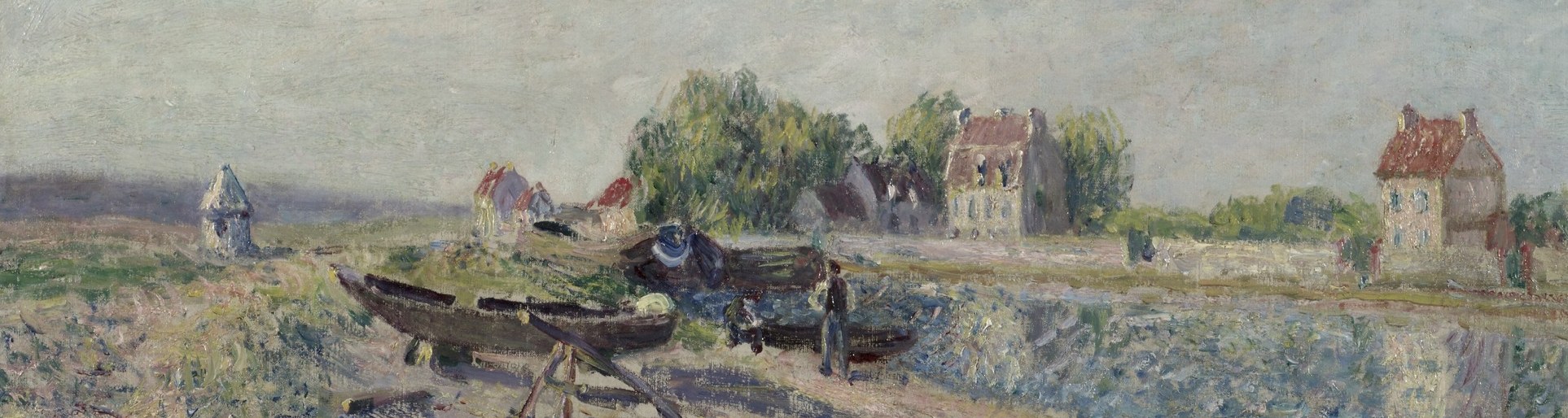
Alfred Sisley's 'Saint-Mammès, Loing Canal' is a masterclass in quiet observation, painted in 1885 and now held at the Musée d'Orsay. Unlike his contemporaries who chased modern life in Paris, Sisley planted his easel in the French countryside and rarely deviated, becoming the most dedicated plein air painter among the Impressionists.
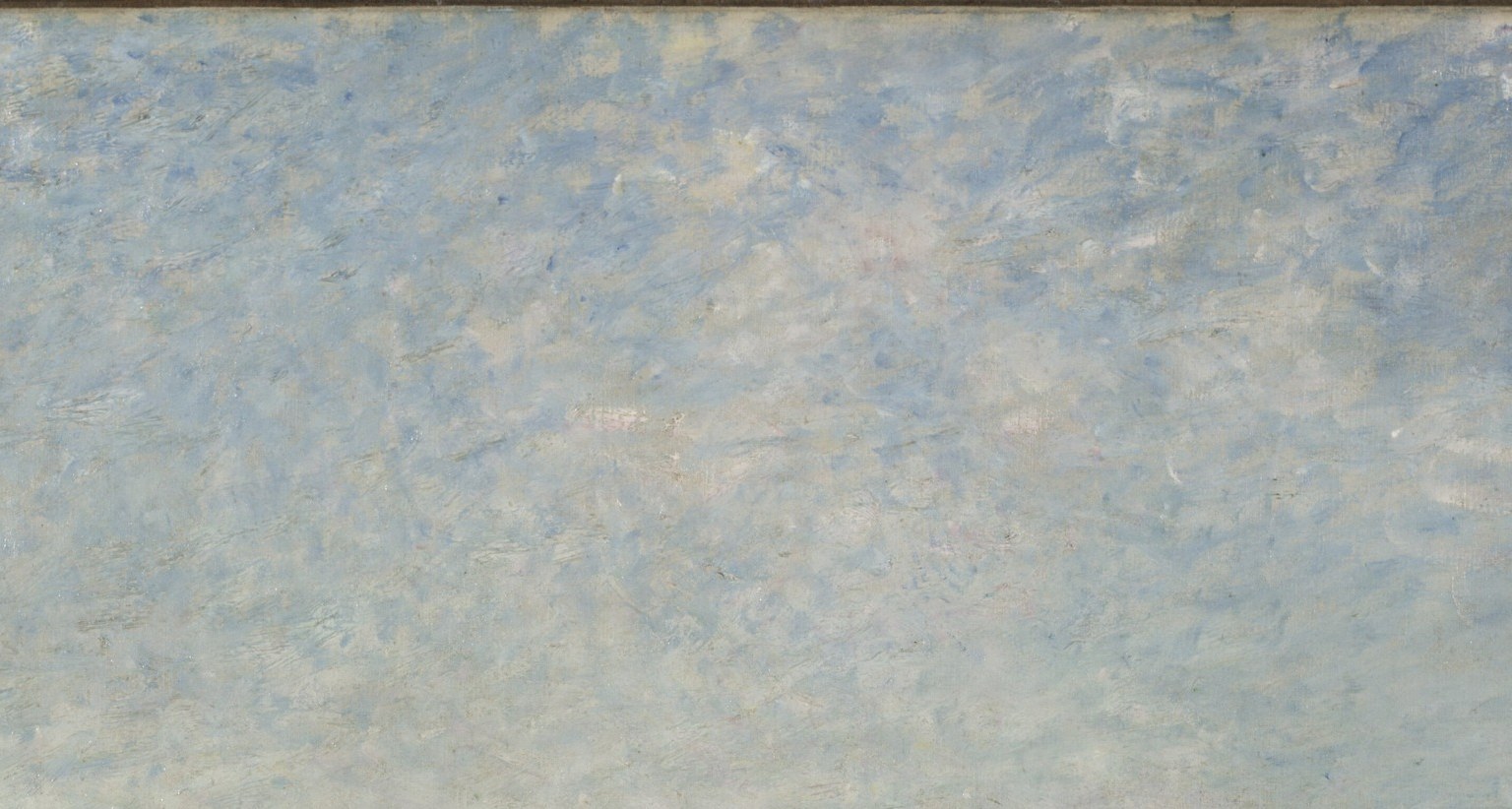
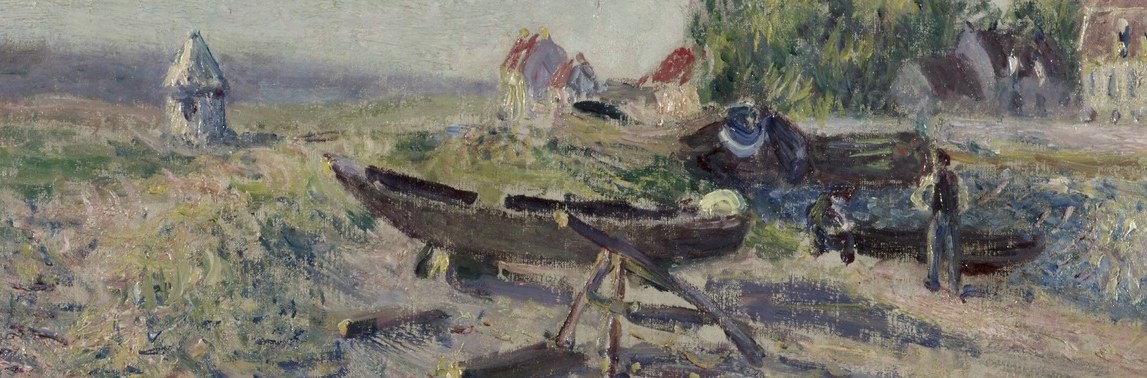
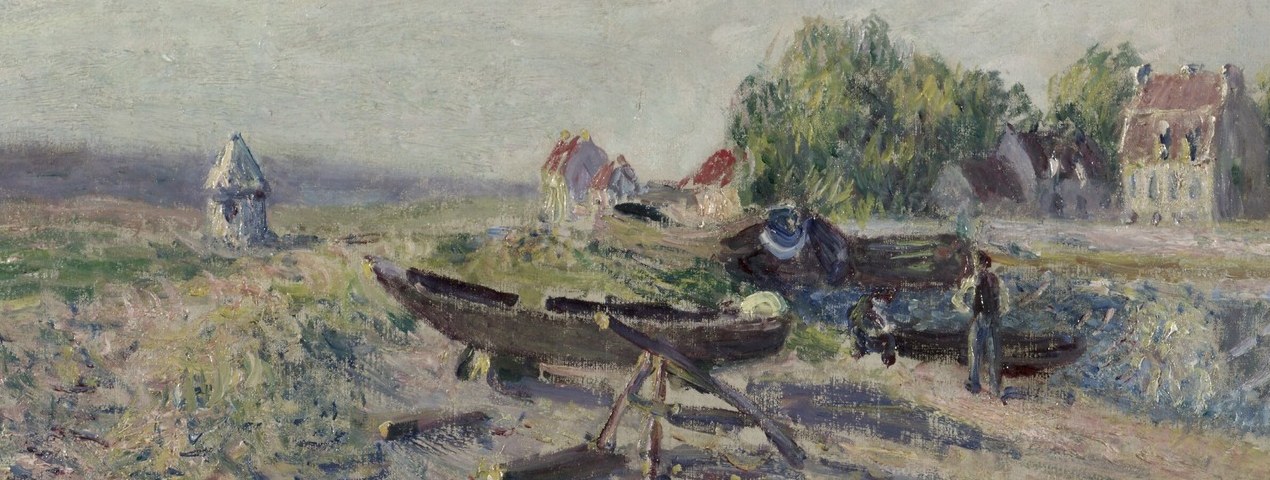
More than half the canvas is sky. Sisley treats the cloud mass as the painting's true protagonist, letting the canal below function almost as a second atmosphere, dissolving hull reflections into loose horizontal strokes. The result is a landscape where air and water hold equal weight, connected by the vertical punctuation of barge masts.
The tragedy underlying this serene image is the artist's life. Sisley was a British citizen born in France. While his friends Renoir, Monet, and Pissarro eventually found audiences and income, Sisley's work went largely unsold during his lifetime. He died in 1899, near Moret-sur-Loing, in poverty.
A painting this calm, made by an artist who could not afford to stop making it. Does knowing the hardship behind the image change how you see the stillness?
Details
Transcript
Alfred Sisley dedicated his life to painting outdoors. He rarely painted people. Light and water were his subjects. The sky isn't a backdrop. It takes over half the canvas. The water mirrors it so completely the canal reads as a second sky. His friends Renoir and Monet found fame. Sisley did not. He died in poverty in 1899, his work largely ignored.