Still Life by Pieter Claesz
Pieter Claesz's 'Still Life' (1637, Museo del Prado) is a masterclass in economic storytelling. During the Dutch Golden Age, when a speculative tulip bulb could bankrupt a family, artists like Claesz catered to a new kind of buyer: a merchant class who wanted their prosperity reflected back at them. This painting is a quiet inventory of luxury in a single frame.
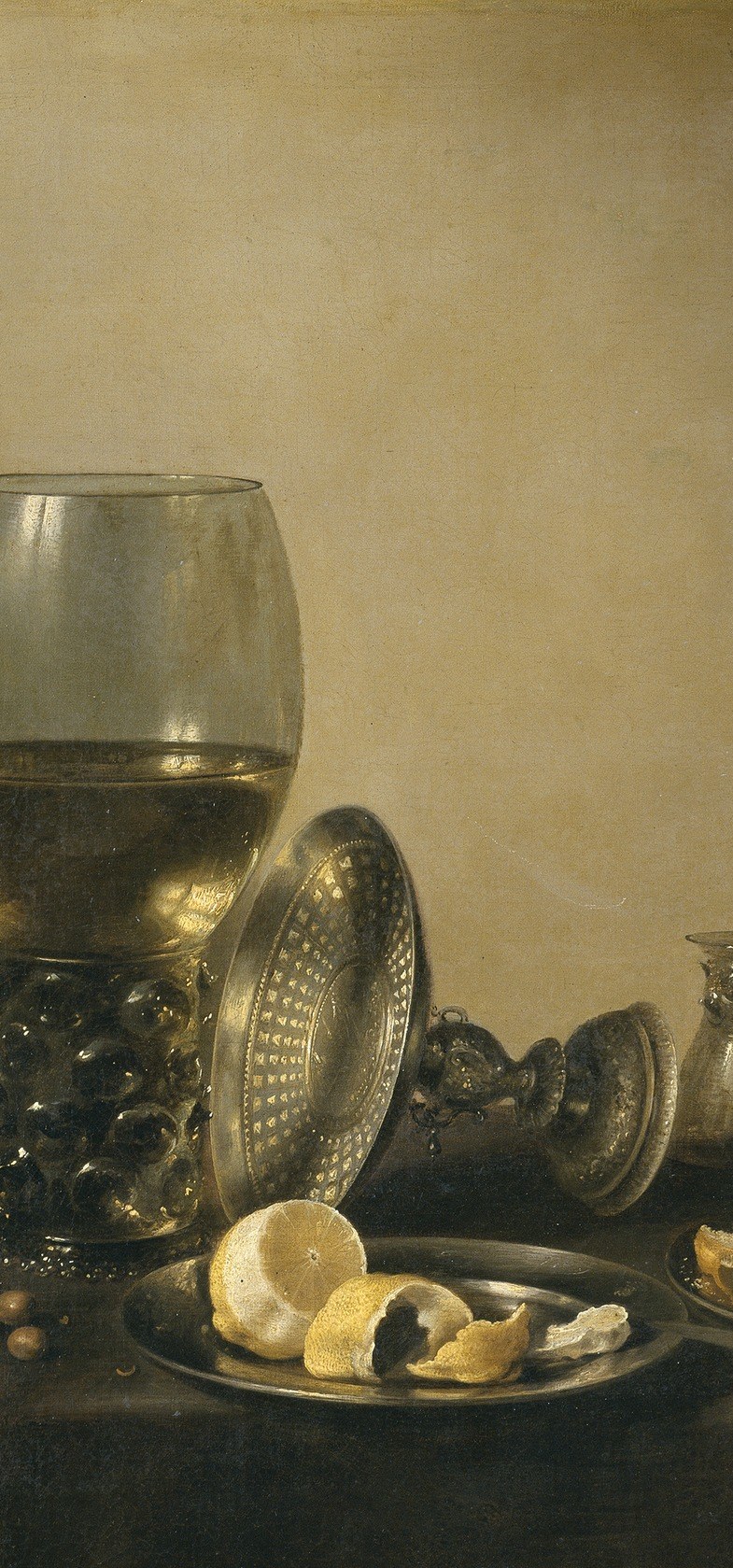
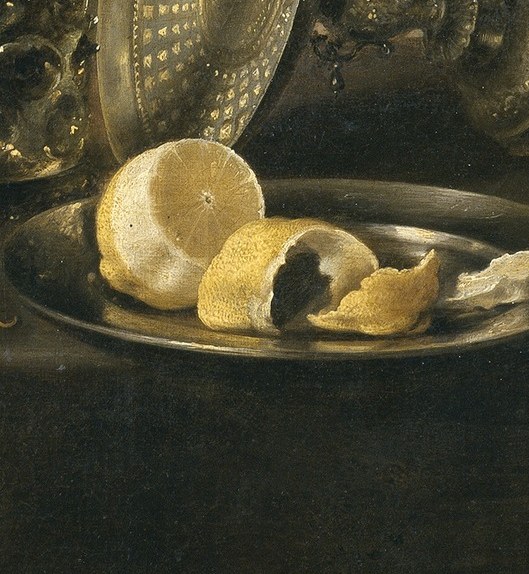
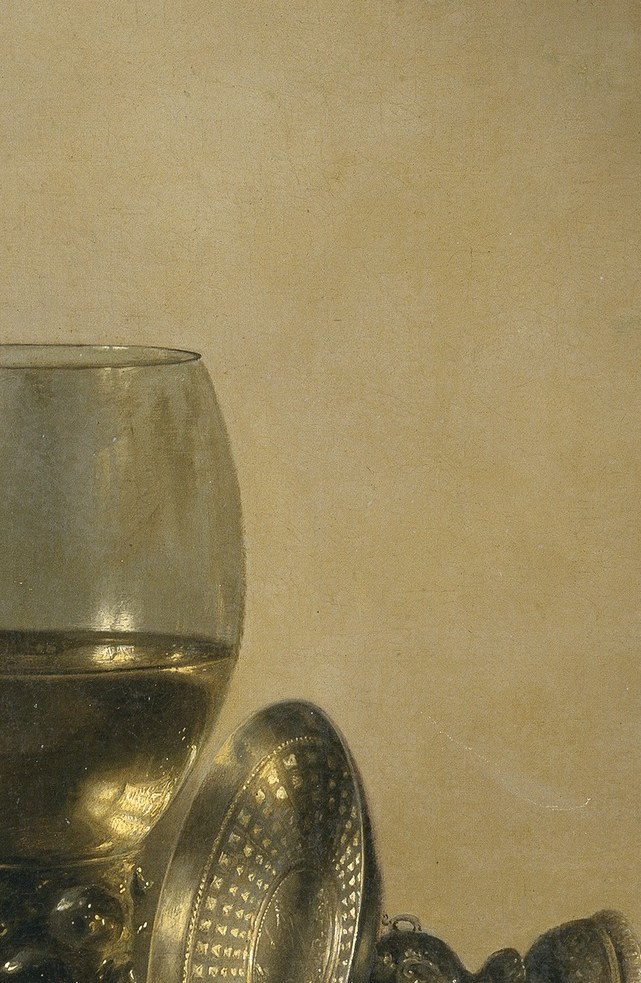
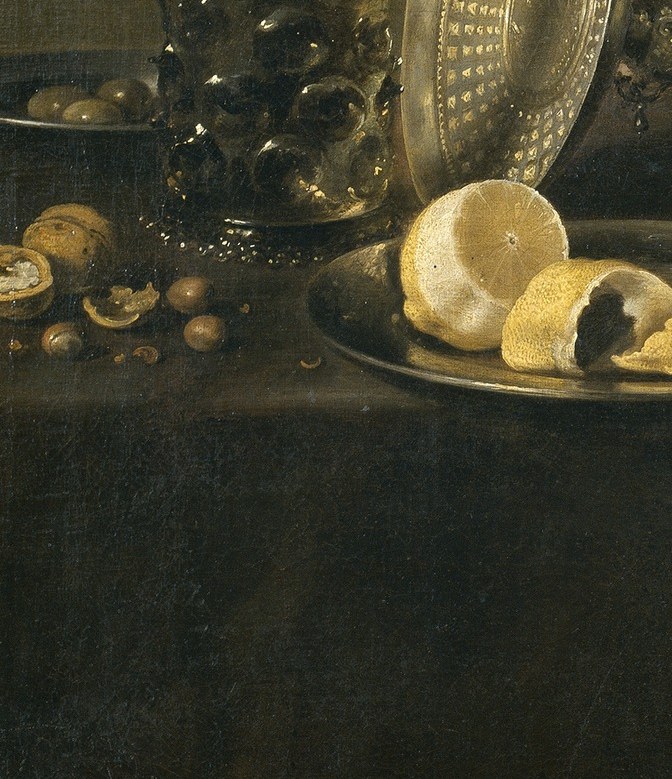
First, find the glass. It is a berkemeyer, a heavy German drinking vessel with a characteristic prunted stem. Now look inside the bowl. Claesz has painted an entire studio window into the liquid's curve, a virtuoso trick proving he could render refracted light as faithfully as a solid object. Then, find the lemon peel spiraling off the table's edge. It is a deliberate trompe-l'oeil; the peel is meant to feel closer to you than the canvas itself, blurring the line between painted space and real space.
The empty silver tazza and the bitten bread are vanitas emblems. They signal a meal interrupted and pleasures already consumed, a subtle moral woven into a display of wealth. Claesz worked in Haarlem and helped pioneer this monochrome banquet style, stripping color to focus entirely on the play of light on different surfaces. The painting was not just a decoration. It was proof of an artist's skill, and a mirror held up to a society in love with the material world.
What everyday object would you want an artist like Claesz to immortalize for you?
Details
Transcript
In 1637, a single tulip bulb could cost more than a grand Amsterdam house. This was the world Pieter Claesz painted for. Look at the glass. A berkemeyer. A luxury item from Germany, imported for a merchant's table. Its real price? The light caught inside. A studio window compressed into a single curved reflection. A painter's flex no money can buy. And the lemon peel, dangling over the edge. A test. Can paint reach into your space?