Still Life with Cheese by Floris van Dyck
Floris van Dyck's "Still Life with Cheese," painted in 1615 and held at the Rijksmuseum, is a stunning example of Dutch Golden Age still life painting, where everyday objects become extraordinary through masterful technique.
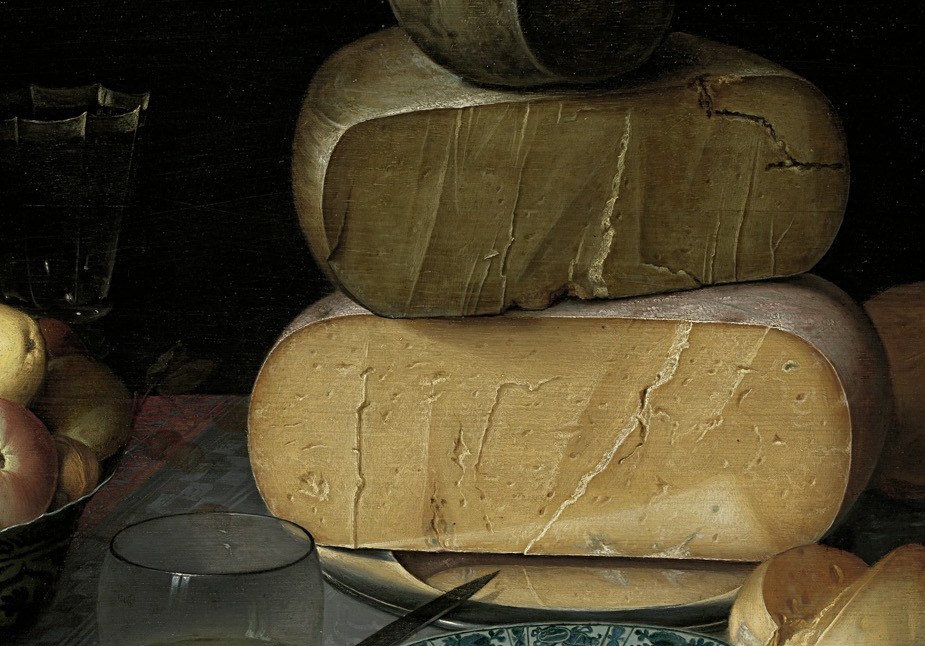
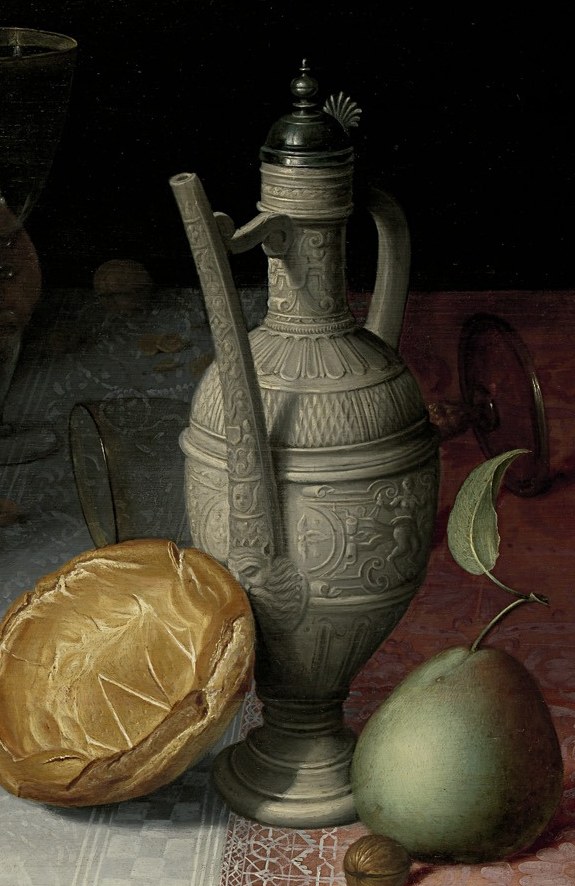
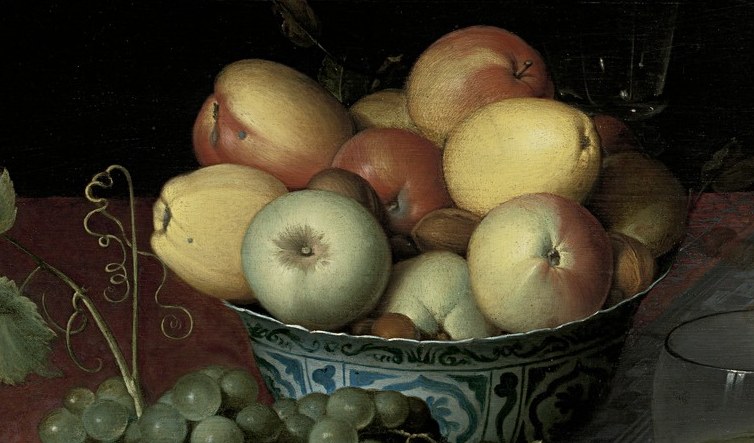
Look closely at how van Dyck rendered each texture: the rough, crumbly cheese, the shiny silver ewer, and the delicate, almost translucent skin of the grapes. Every surface is brought to life with incredible realism, showcasing the artist's virtuosity with oil paint.
Van Dyck was active in the early 17th century, a period when still life painting flourished in the Netherlands. His meticulous approach to detail and light transformed simple arrangements into captivating displays of domestic prosperity and the abundance of goods during that era.
This painting invites us to appreciate the beauty in the ordinary, elevated by an artist's remarkable skill. What texture do you find most impressive?
Details
Transcript
This painter turned humble food into a feast for the eyes. He was a master of capturing every different texture. See the crumbly, moist surface of the cheese. Then the smooth, polished gleam of this silver ewer. And the delicate, translucent skin of these grapes. Each surface is a triumph of oil paint.