Cestello Annunciation by Sandro Botticelli
The Cestello Annunciation, painted by Sandro Botticelli in 1489, is a stunning example of the artist's mastery of tempera painting. Commissioned for a Florentine monastery, this work now resides in the Uffizi Gallery.
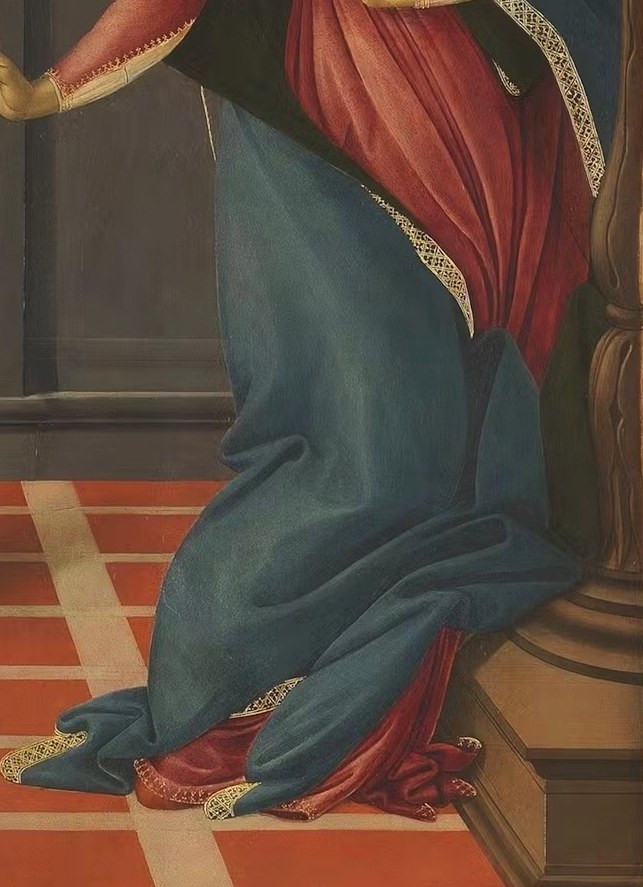
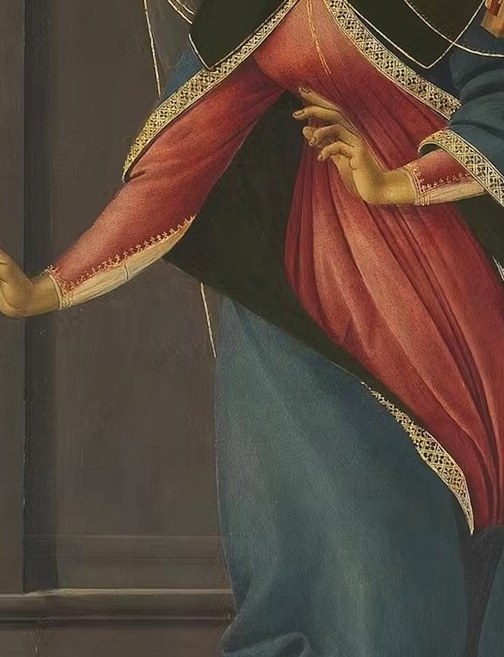
Botticelli's technique, using egg tempera, allowed for incredibly precise detailing and luminous colors. Unlike oil, tempera dries almost immediately, making blending difficult. Yet, Botticelli creates flowing, soft fabrics and dimensional forms.
Observe the rich blues of Mary's robe and the glowing reds of her dress. The subtle modeling and fine brushwork build up layers of color, giving the illusion of depth and light.
Botticelli's ability to achieve such delicate textures and vibrant hues with tempera is a testament to his skill during the Italian Early Renaissance. What detail in this painting catches your eye the most?
Details
Transcript
This painter used egg tempera, not oil, for luminous color. Look at the deep folds in Mary's blue robe. Tempera dried instantly, allowing little blending. Yet he makes the fabric feel soft, flowing, and dimensional. His delicate brushwork builds up layers of fine color. See how the reds glow, as if lit from within.