A Country Road by Salomon van Ruysdael
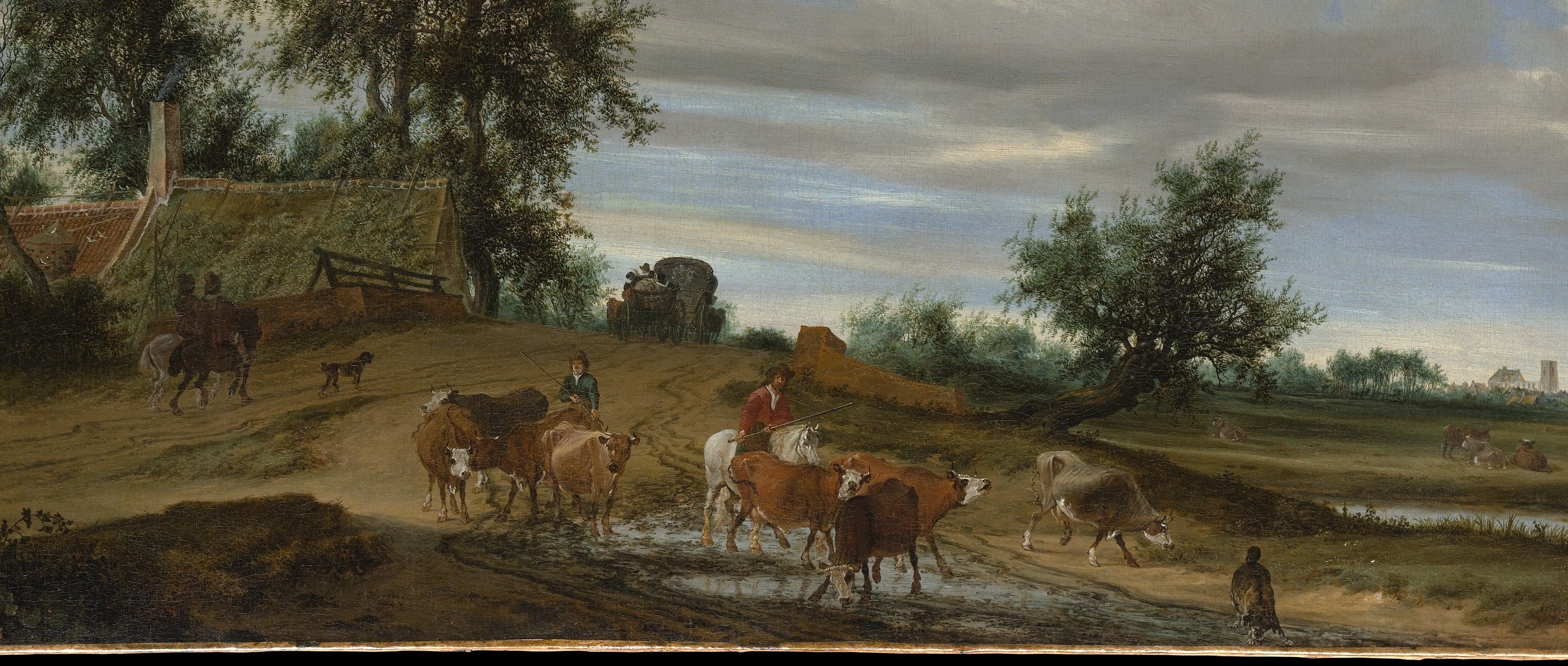
This is Salomon van Ruysdael's "A Country Road," painted in 1648. It now belongs to the collection of the Metropolitan Museum of Art in New York.
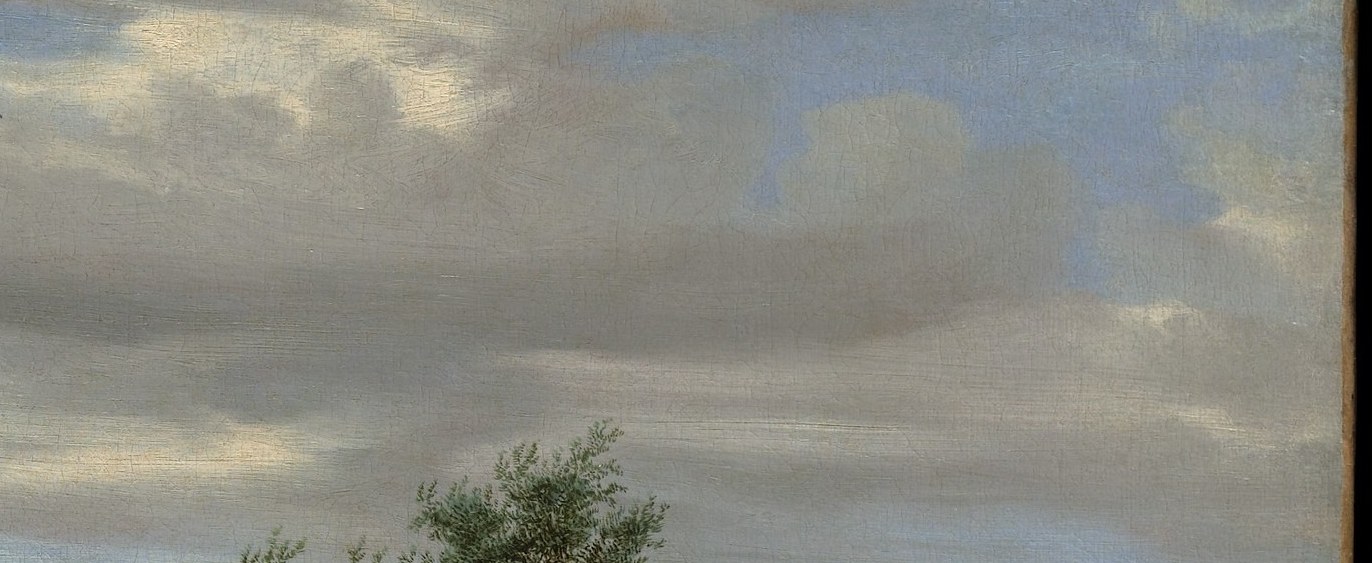
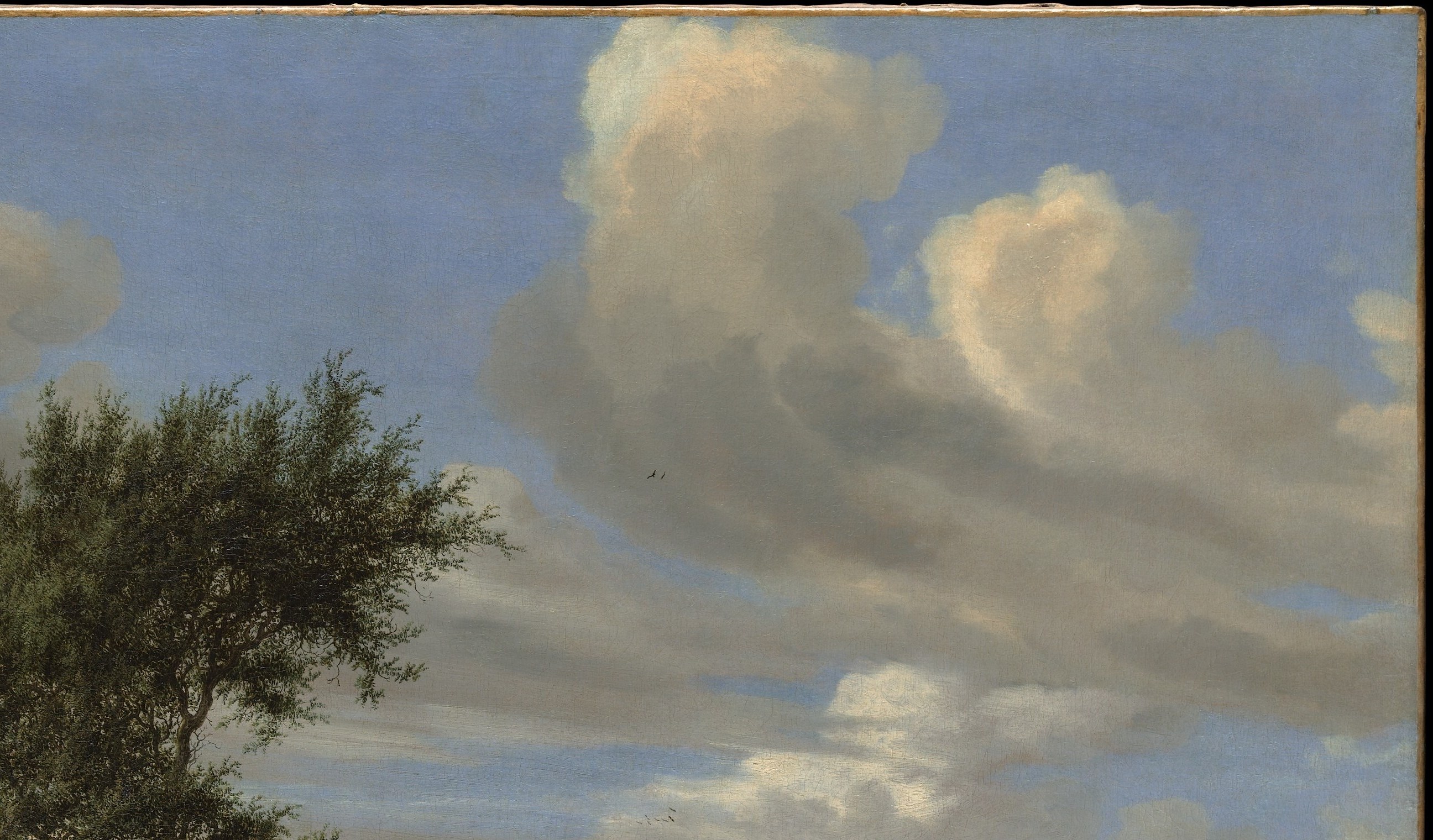
The painting is built on a simple S-curve, a dirt road that pulls your eye from the sandy foreground all the way to a sunlit horizon. Most of the canvas is sky. Van Ruysdael was a master of Dutch atmosphere, and here the billowing clouds do the emotional work: they make a routine cattle drive feel spacious, serious, and quietly dignified.
Van Ruysdael came from a family of frame-makers, not artists. He taught himself to paint and bought a modest house in Haarlem the same year he made this work. He specialized in river and road scenes, unglamorous, everyday views of the Dutch countryside, and he built a steady, respectable career painting what he saw. After his death in 1670, his reputation faded, eclipsed by his more famous nephew Jacob van Ruisdael. For nearly two hundred years, his name was barely mentioned.
Sometimes a painting that asks for nothing, no drama, no heroes, outlasts the noise. This road has been traveled for nearly four centuries now. What do you notice first: the herd, or that luminous break in the clouds?
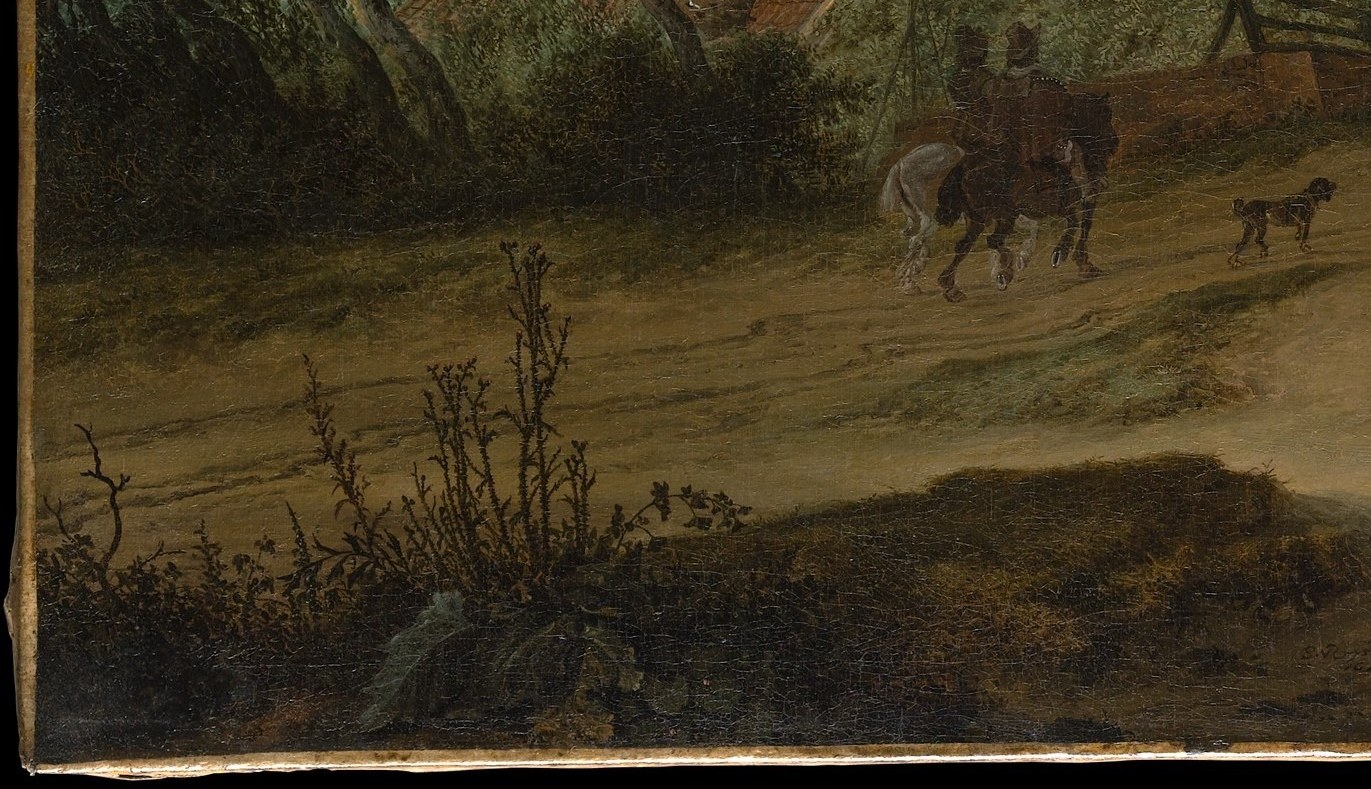
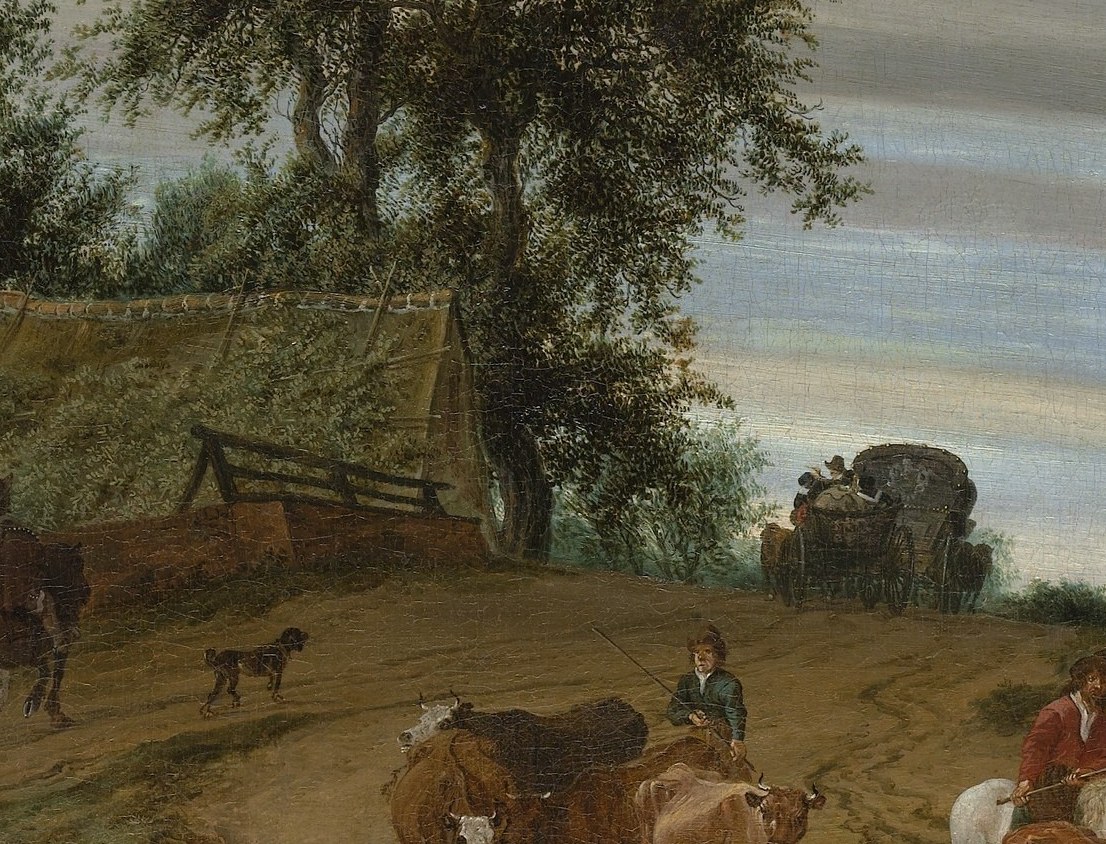
Details
Transcript
In 1648, a painter bought a small house in Haarlem. He had no family money. Just his hands and his eyes. Every road he painted, he had walked himself. He painted men like these, guiding cattle home before dark. Ordinary labor, set beneath an extraordinary sky. Salomon van Ruysdael was forgotten for two centuries after his death. Today, that quiet light shines in museums around the world.