Buffalo Chase, with Accidents by Catlin, George
George Catlin's 'Buffalo Chase, with Accidents' (1865) is less a celebration of the hunt and more a raw, unvarnished record of a vanishing way of life. Painted on a modest piece of card, it hangs as a document of the American frontier just before that frontier closed.
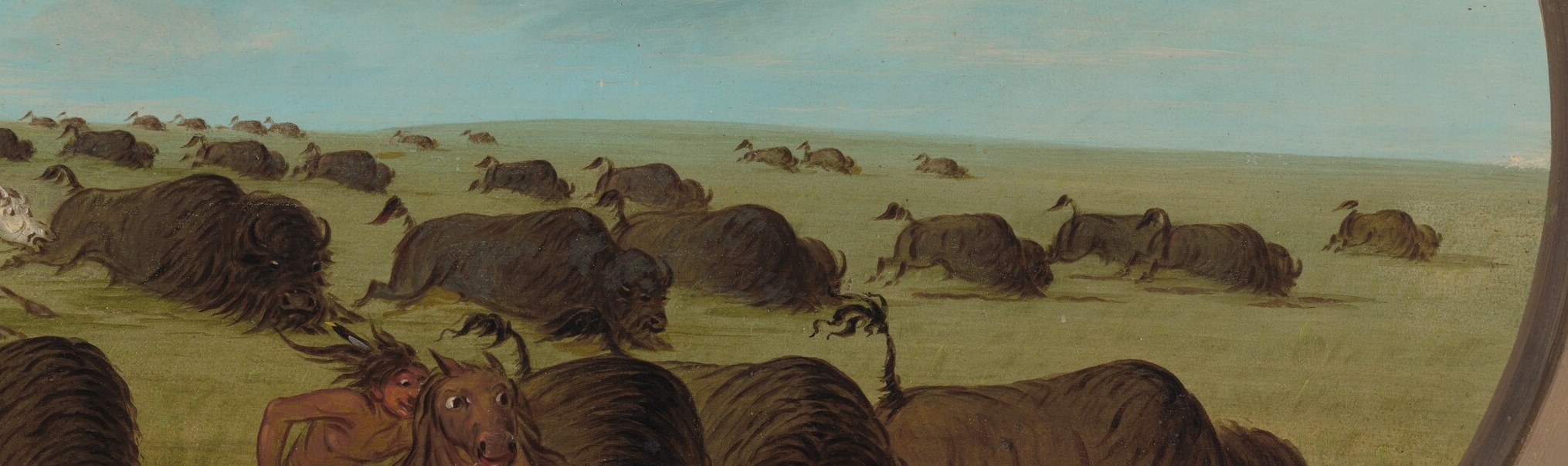
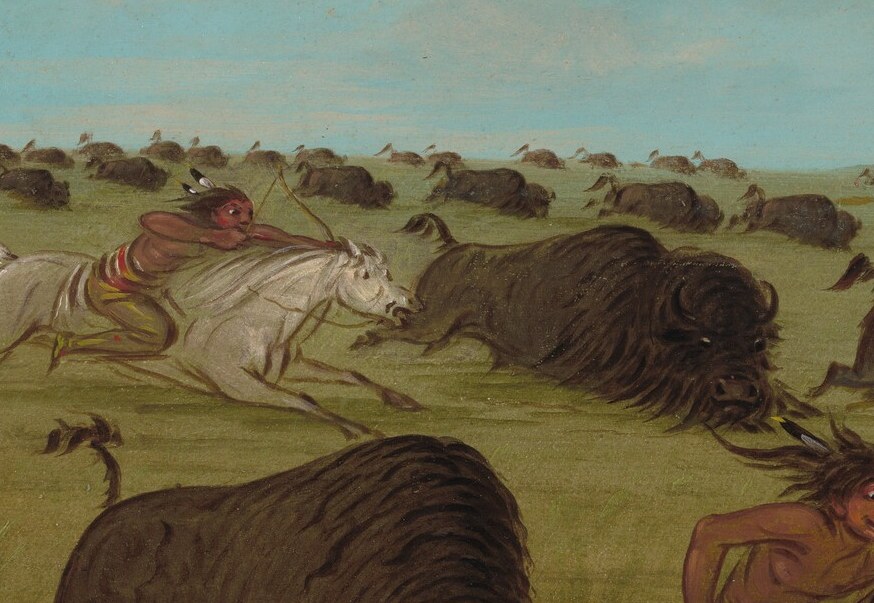
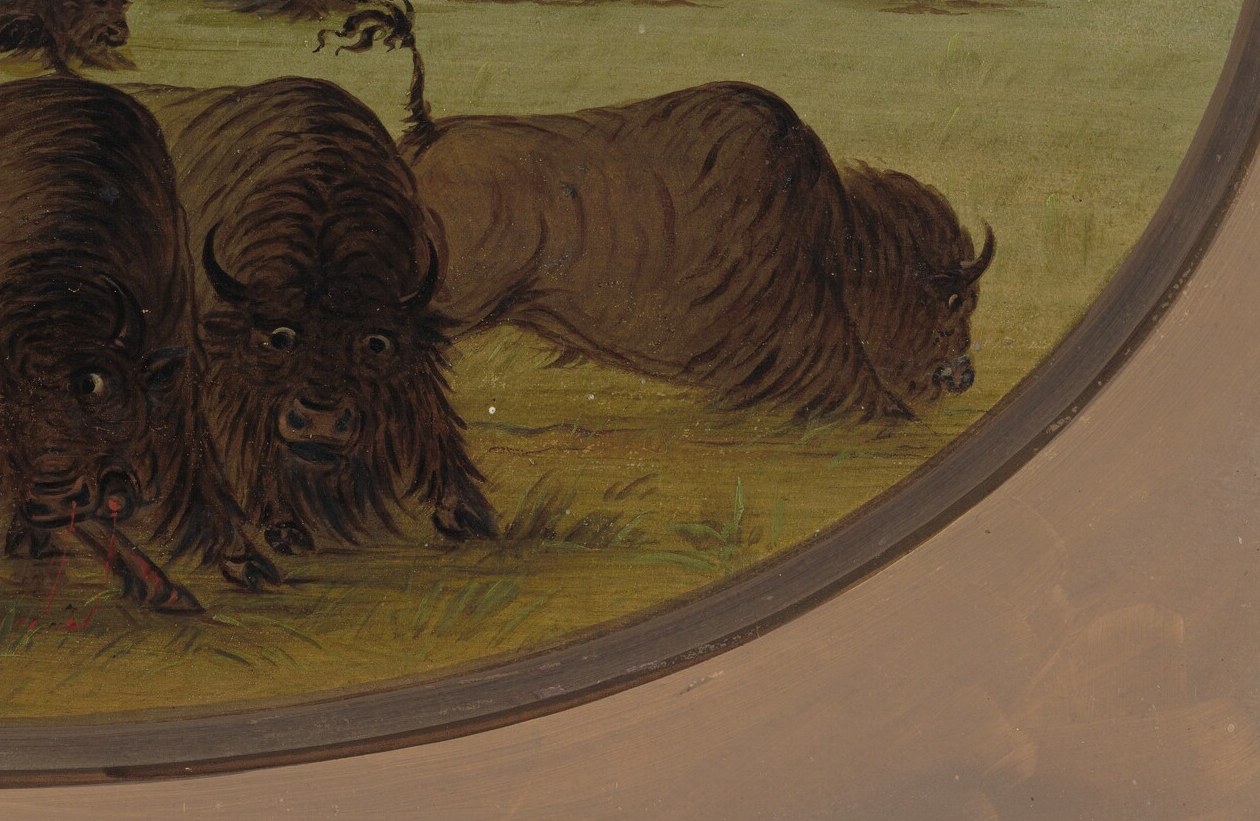
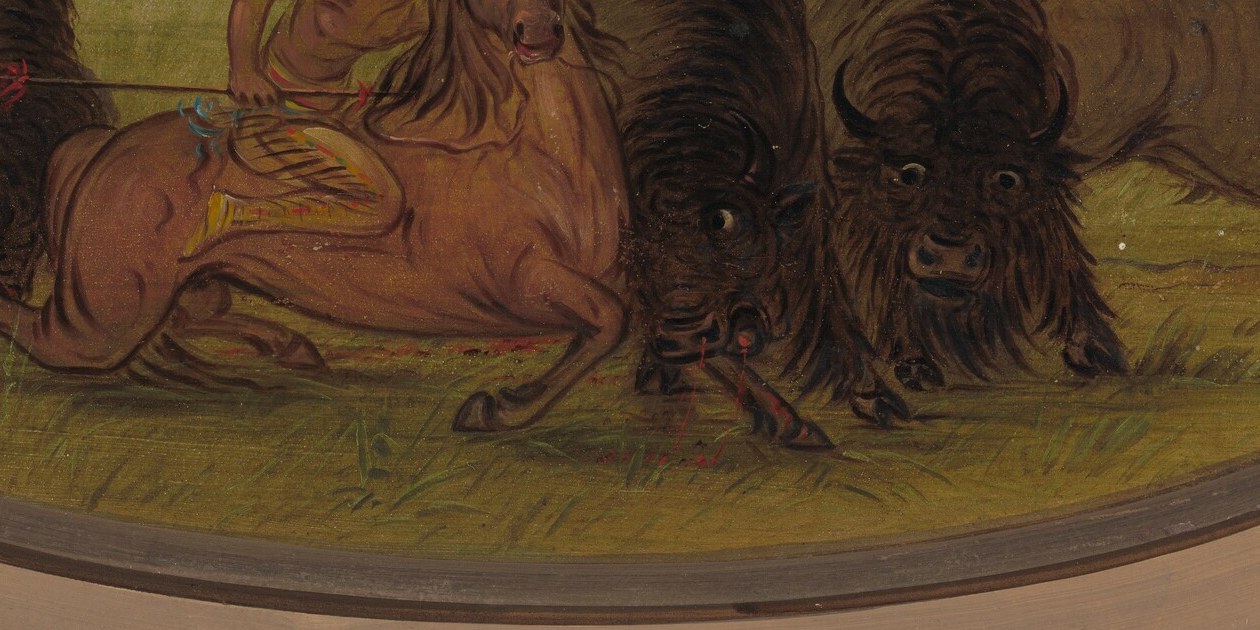
The composition is pure chaos. A charging buffalo fills the foreground, a rider pushes into the herd, and a figure lies prone on the right, possibly injured. Catlin did not idealize this scene; the brushwork is loose, the dust almost tangible, and the sky a bright, indifferent blue overhead.
Catlin was a self-taught painter who had originally practiced law. He made five expeditions to the American West in the 1830s, driven by a belief that Native American cultures were being irrevocably destroyed. He painted portraits and scenes like this one not as trophies, but as evidence, building an exhaustive visual record of Plains Indian life and subsistence.
The word 'accidents' in the title pulls no punches. The hunt was dangerous, for both the hunters and the hunted, and Catlin wanted that danger on the record. What do you notice first: the power of the buffalo or the vulnerability of the figure on the ground?
Details
Transcript
This is not a story about the hunt. It is a record of a world about to disappear. The painter was a lawyer who left the courtroom. He crossed the frontier five times in the 1830s. Look at the man on the ground. The title calls this an 'accident.' This chaos is exactly what he wanted us to see.