Forest scene by Jacob van Ruisdael
Jacob van Ruisdael's "Forest Scene," painted in 1653, is a superb example of Dutch Golden Age landscape painting, now held at the Rijksmuseum. Ruisdael, a pre-eminent landscape painter of his time, masterfully captures the essence of the natural world.
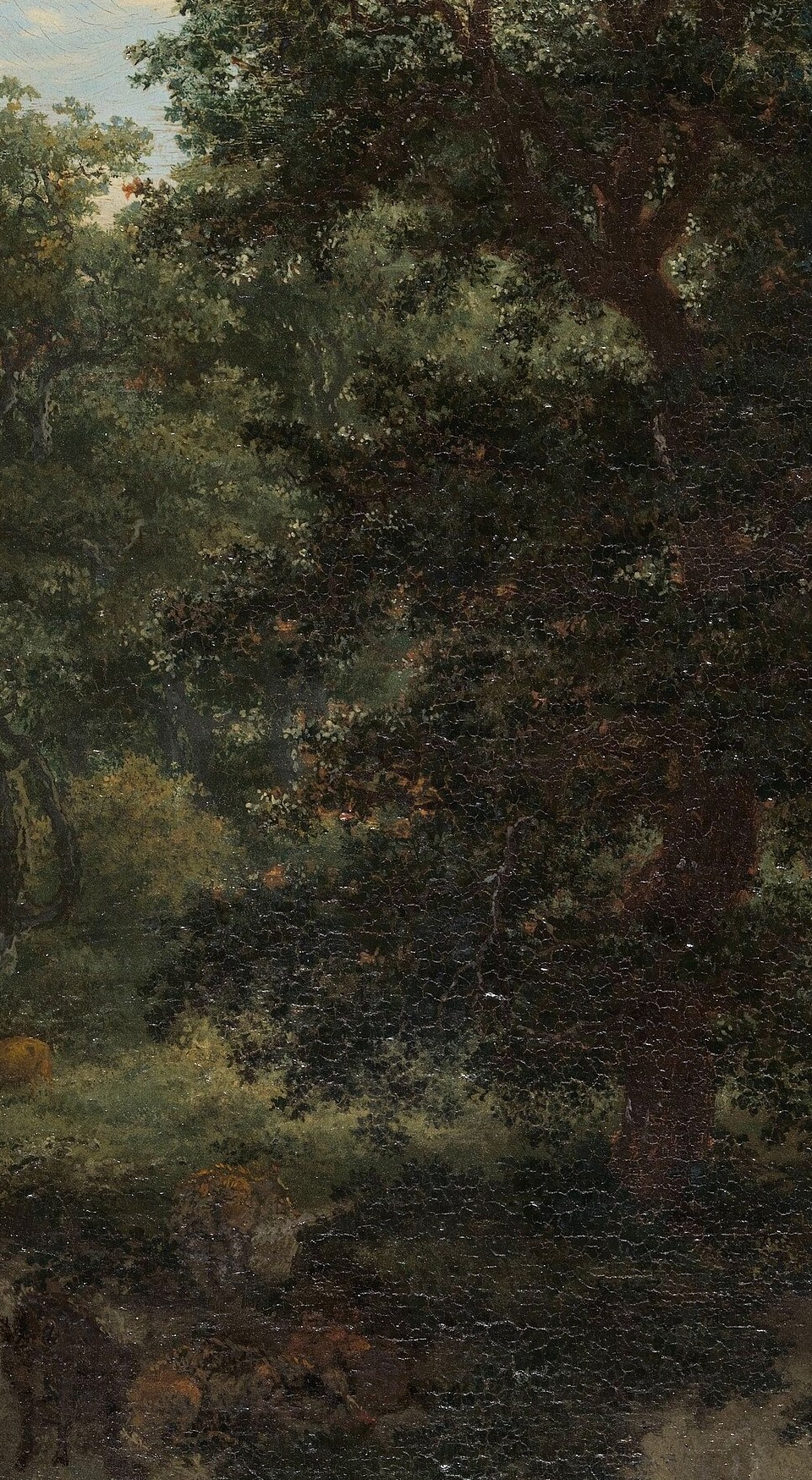
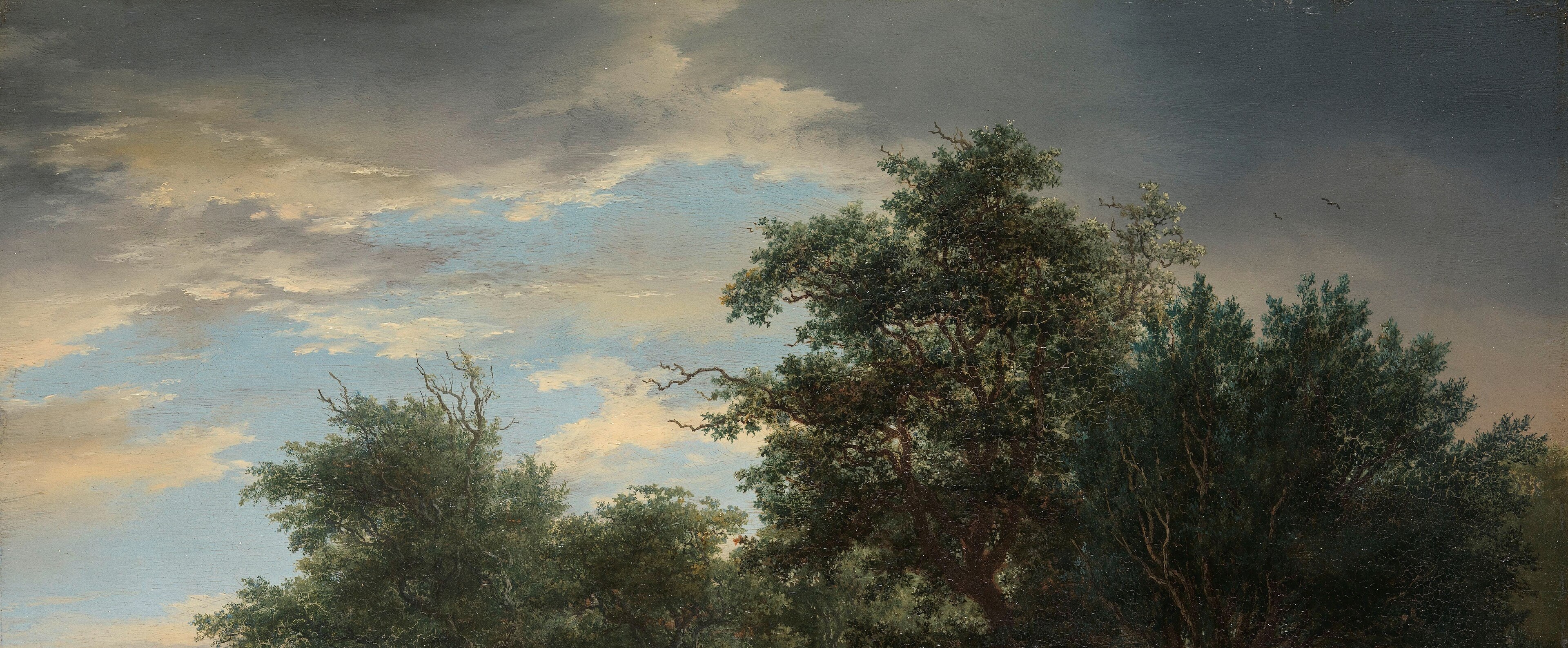
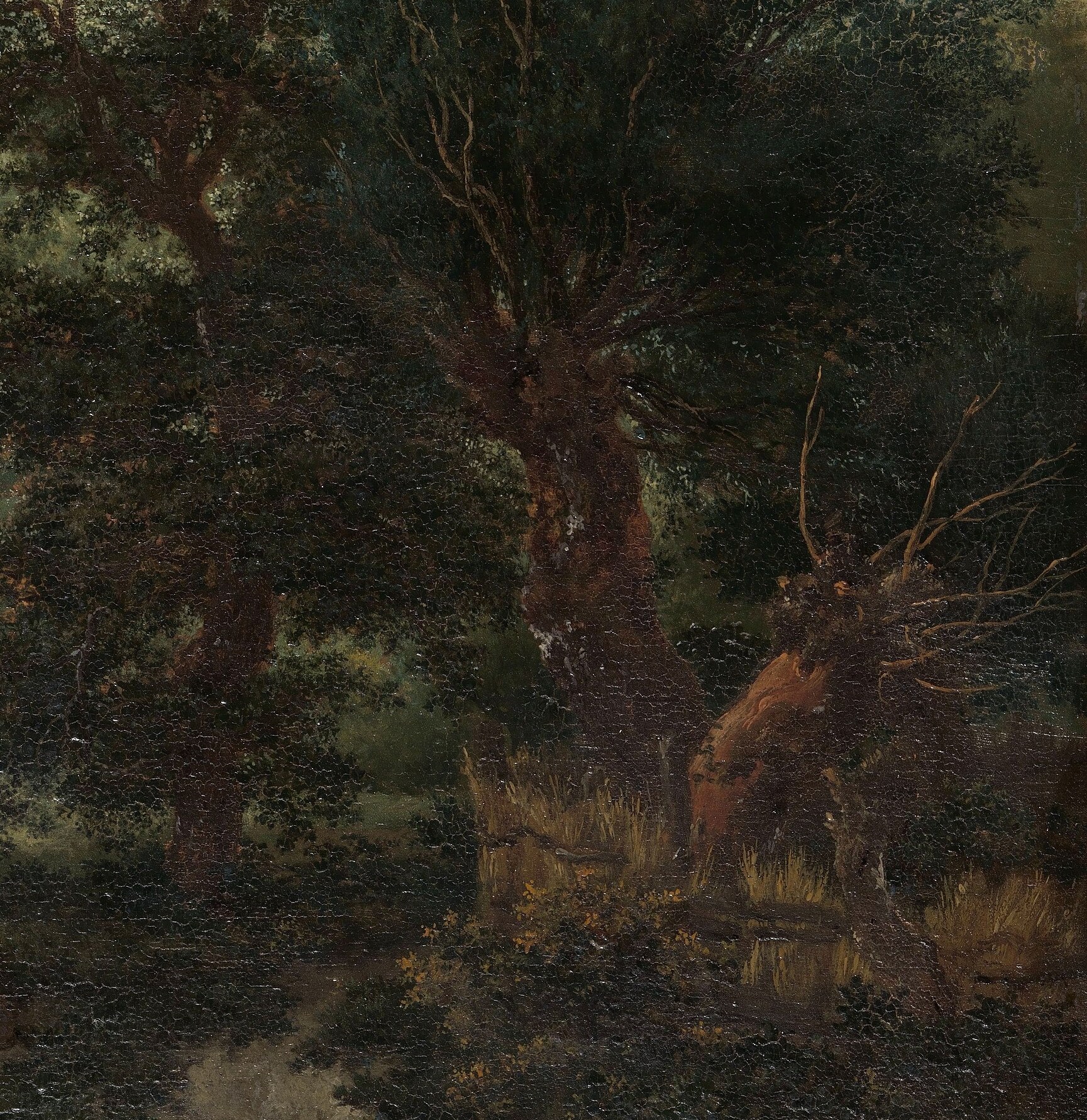
Notice the dramatic central tree, whose gnarled trunk and expressive branches are rendered with remarkable texture and depth. The interplay of light and shadow, characteristic of Ruisdael's style, guides the eye through the dense foliage and across the reflective water in the foreground.
Created during a period of immense wealth and cultural achievement in the Netherlands, this painting reflects a deep appreciation for the country's varied landscapes. Ruisdael's work often invited contemplation of humanity's enduring relationship with nature, a popular theme during the Dutch Golden Age.
What details in this forest scene draw your eye the most?
Details
Transcript
This painter was the master of Dutch Golden Age landscapes. Look at the central tree, its gnarled trunk dominates the scene. His use of light and shadow makes the texture palpable. A lone shepherd and his dog blend into the quiet forest. This tranquil scene was painted in 1653, during a prosperous time. The Dutch Golden Age celebrated their natural, changing world.