Two Studies of an Indian from Calcutta, Seated and Standing by Delacroix, Eugène
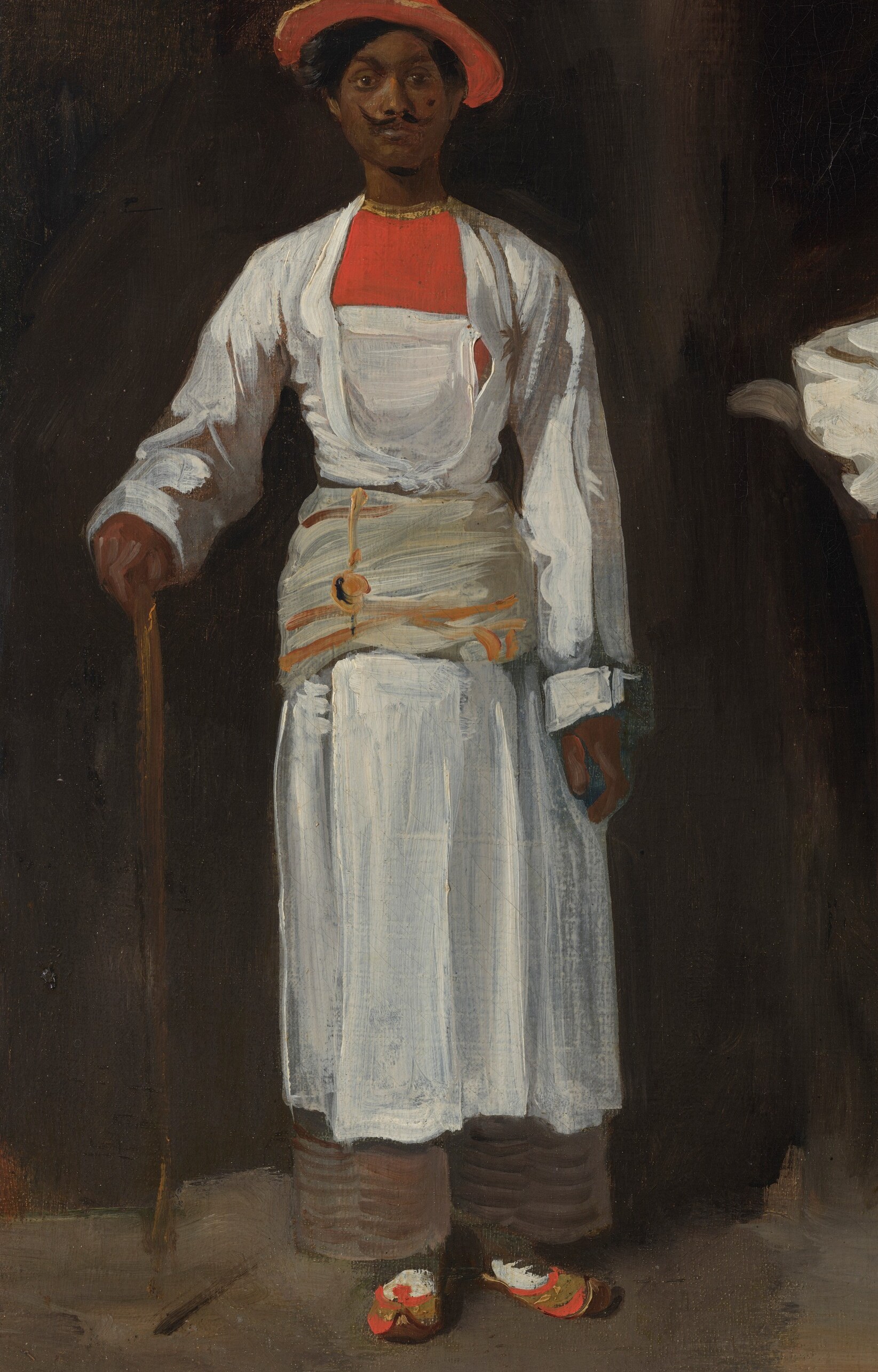
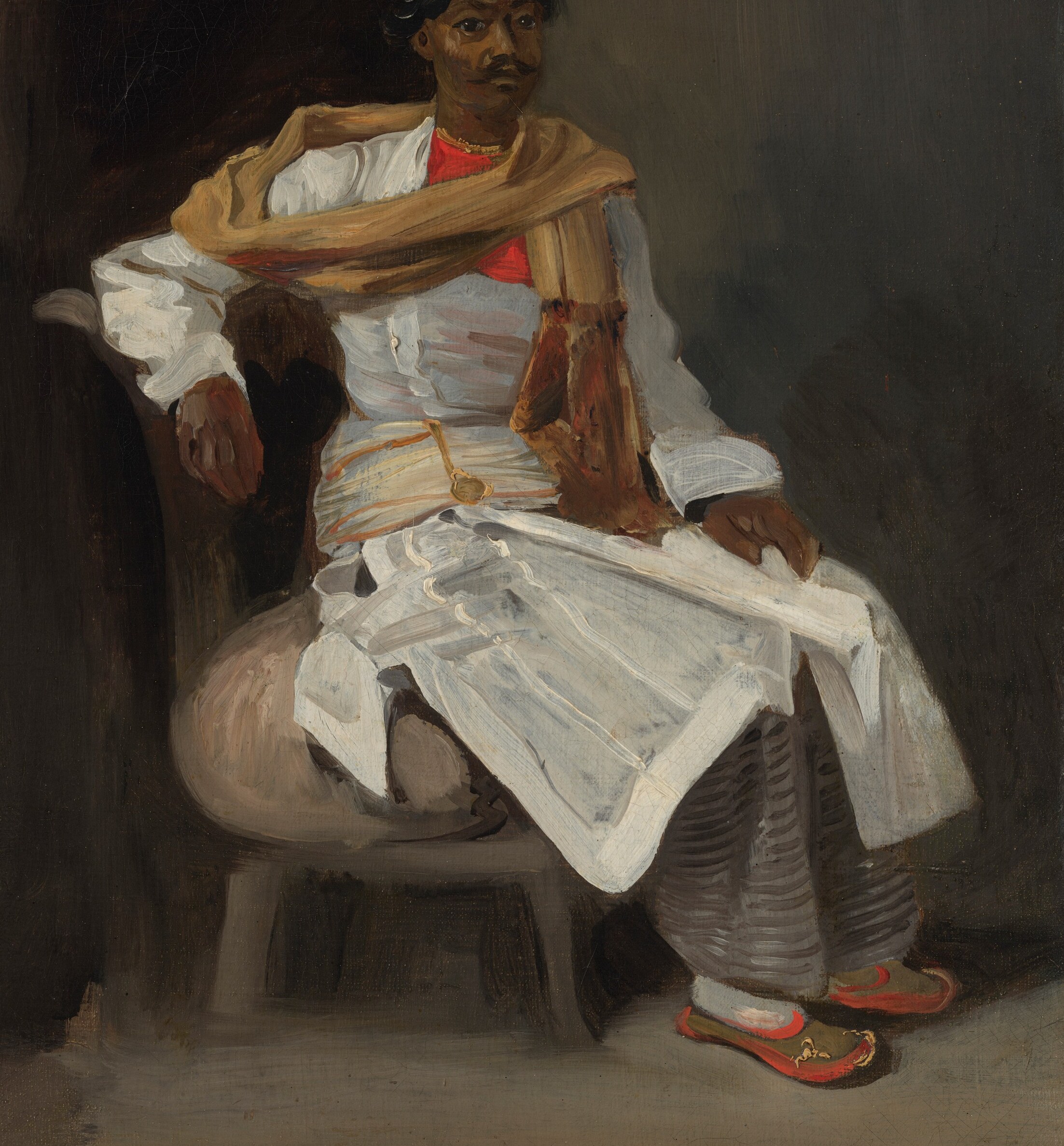
This is Eugène Delacroix's quiet, respectful 'Two Studies of an Indian from Calcutta, Seated and Standing,' painted around 1824. It is not a grand history painting but a private study that he kept for himself, away from the public eye and the marketplace.
In the standing figure, the man holds a cane and wears a red hat. His gaze is level and direct, meeting the painter's eye with a dignity that feels deeply personal. The seated version of the same man is softer, more introspective, wrapped in a tan scarf, lost in private thought. Delacroix painted the same person twice, finding two different kinds of presence in one individual.
Delacroix made this early in his career, before his famous trip to North Africa, at a moment when European curiosity about Asian cultures was still relatively fresh. The sitter was an Indian man living in or visiting Paris, a real person whose name history did not record. The painter gave him the close, individual attention usually reserved for a portrait of a friend.
In many later Orientalist paintings, the subject became a costume, a scene, a fantasy. Here, the costume is secondary. The man himself fills the frame, with nothing between him and the painter but a quiet room and an open gaze.
Details
Transcript
Around 1824, a young French painter met a man from Calcutta. He asked him to stand. He stands with a cane, direct and dignified. Look at his eyes. He meets the painter with a level gaze. Then a second pose: seated, softer, lost in his own thoughts. This was not yet Orientalism as fantasy. It was an encounter. The painter never sold the canvas. He kept it all his life.