Triptych: The Last Judgment by Master of the Orléans Triptych
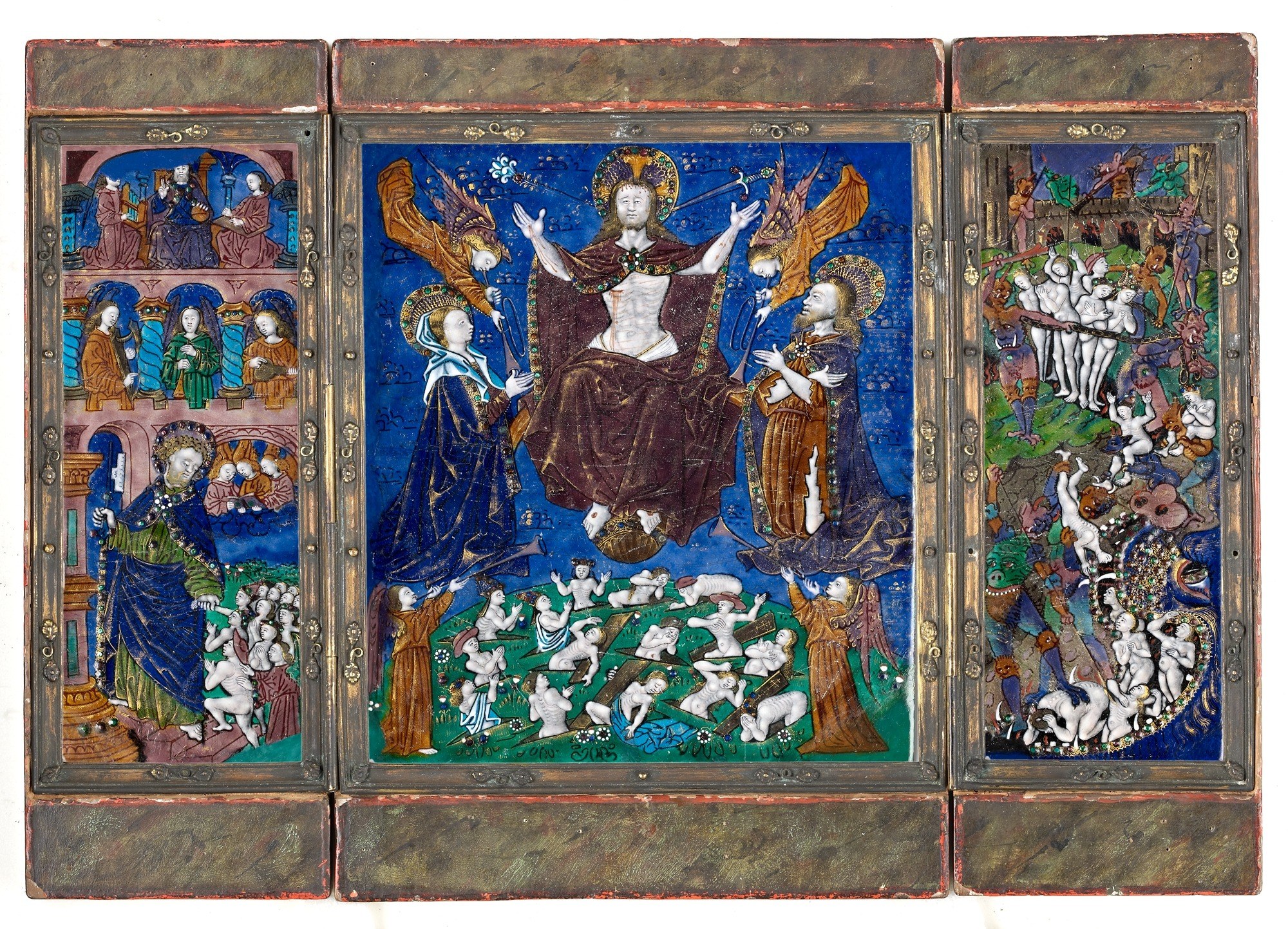
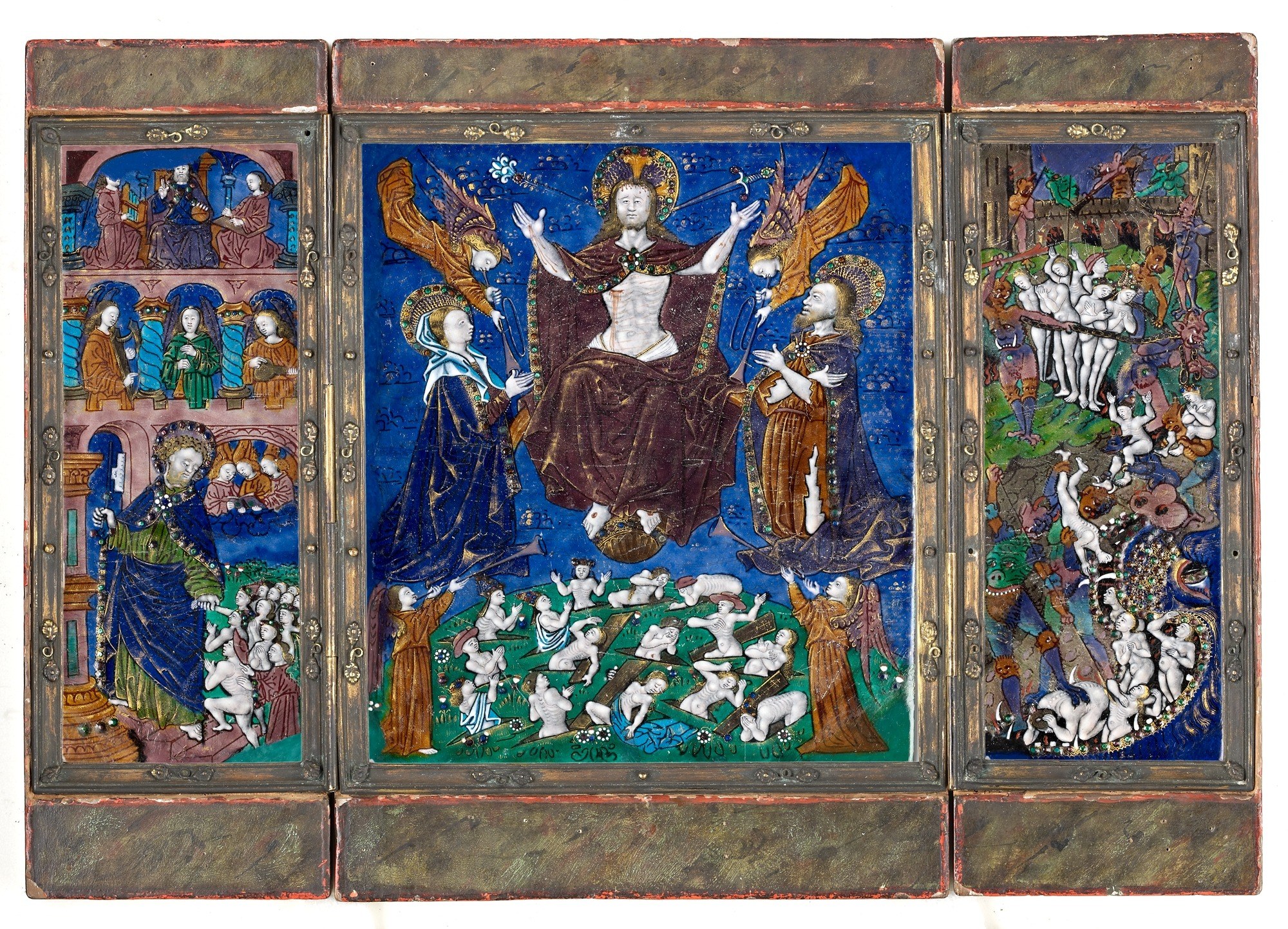
What looks like paint is actually glass. This small triptych, Triptych: The Last Judgment, was made around 1500 by an unknown French artist now called the Master of the Orléans Triptych. It hangs today at The Metropolitan Museum of Art.
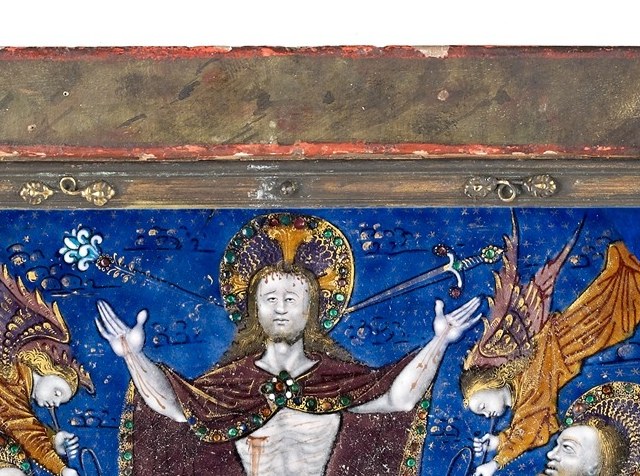
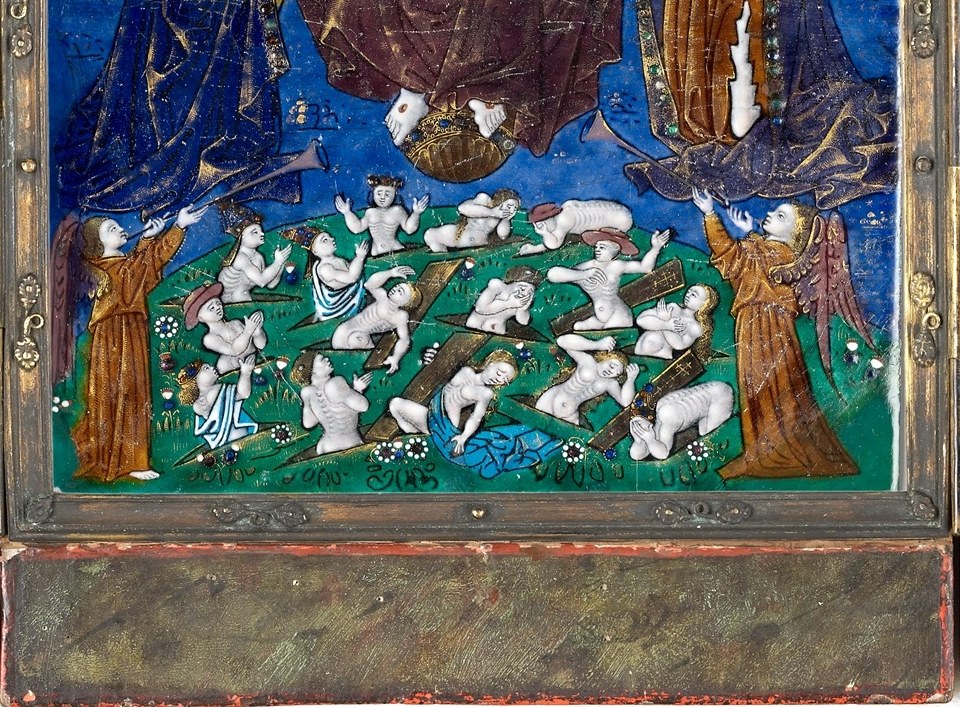
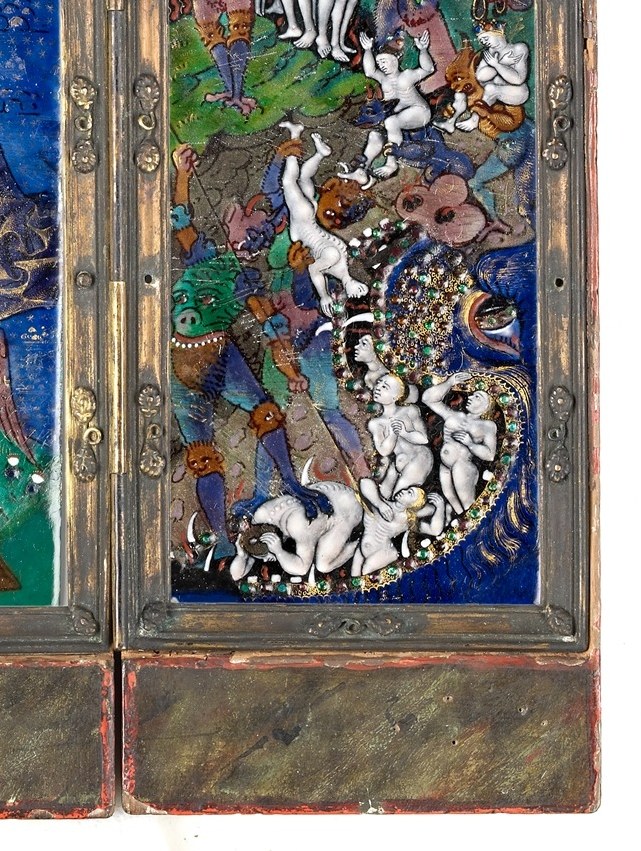
The first thing to notice is the blue. It is not a painted sky but a sheet of enamel, powdered glass colored with cobalt oxide, laid onto a copper plate, and fired in a kiln. Each firing fused the glass into a luminous, jewel-like surface that oil paint cannot match. The gold borders and halos are gilded copper, fired in the same process, so the whole object reads less like a picture and more like a reliquary.
This is the technique of Limoges painted enamel, a specialty of workshops in central France. It was demanding, expensive, and largely a layperson's art, made for private patrons who wanted devotional objects that glowed on a bedside table. Firing at the wrong temperature could ruin weeks of work in an instant.
The artist's name is lost, but his hand survives in the small perfections: the ring of angels encircling Christ, the orderly procession of the saved on the left, the chaotic flames on the right. The enamel has kept its intensity for five hundred years. It will keep it for another five hundred.
Details
Transcript
At first glance, it reads as a solemn pageant of the Last Judgment. A full three-panel triptych, made around 1500 for private devotion. But the paint itself is what stops you. This is not oil on panel. It is painted enamel on copper. Powdered glass, mixed with cobalt oxide, fired in a kiln. The gold borders are gilded copper, fused into the same surface. The painter was a Limoges workshop master. His name is lost. But the light trapped in the glass has outlasted him five centuries.