Trompe l'Oeil of an Etching by Ferdinand Bol by Dutch 17th Century
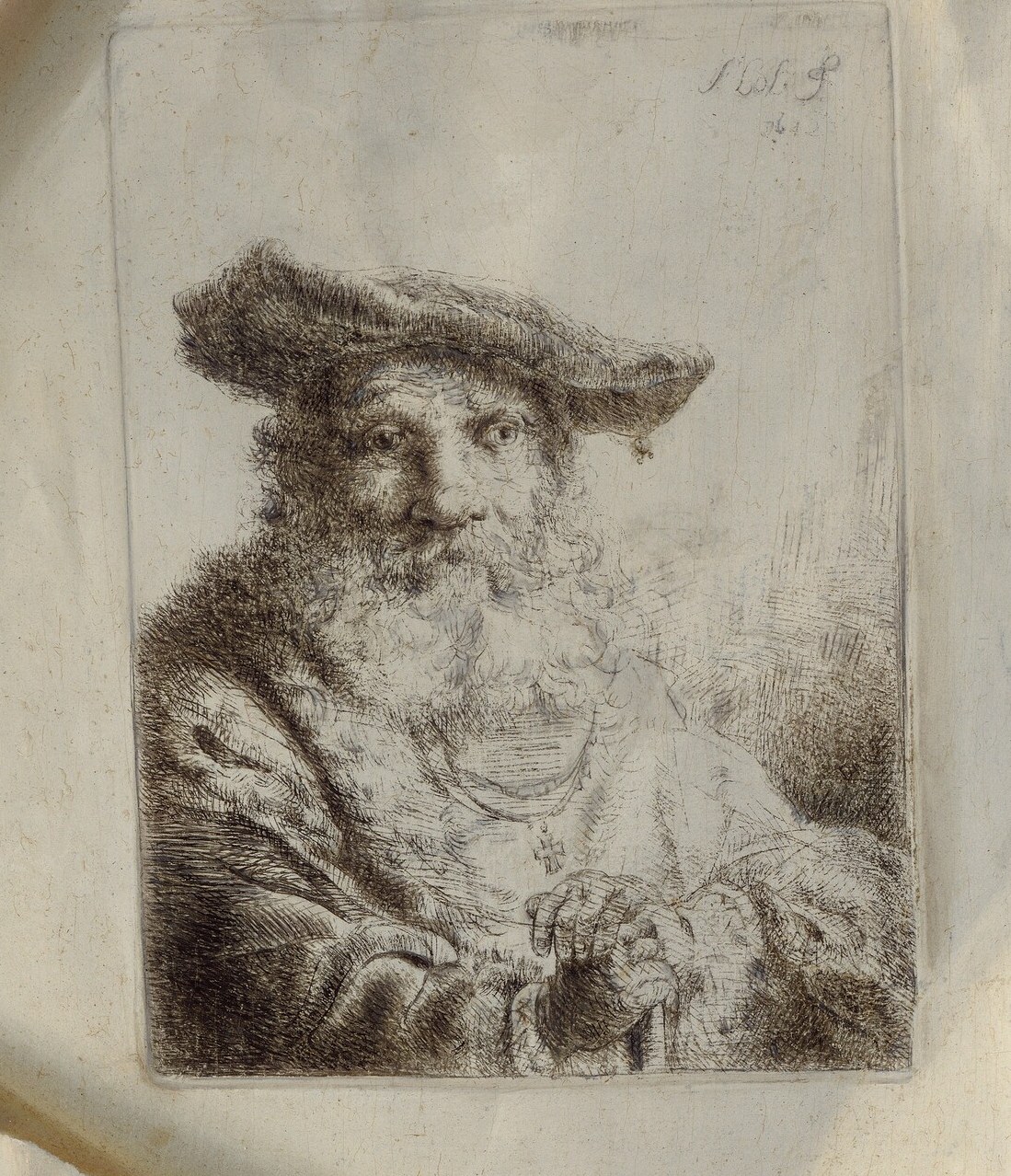
This is not a piece of paper. It is an oil painting on a wooden panel, made around 1675 by a Dutch artist working in the circle of Ferdinand Bol. 'Trompe l'Oeil of an Etching by Ferdinand Bol' lives in a museum collection and rarely travels, so seeing it in high resolution is a genuine treat.
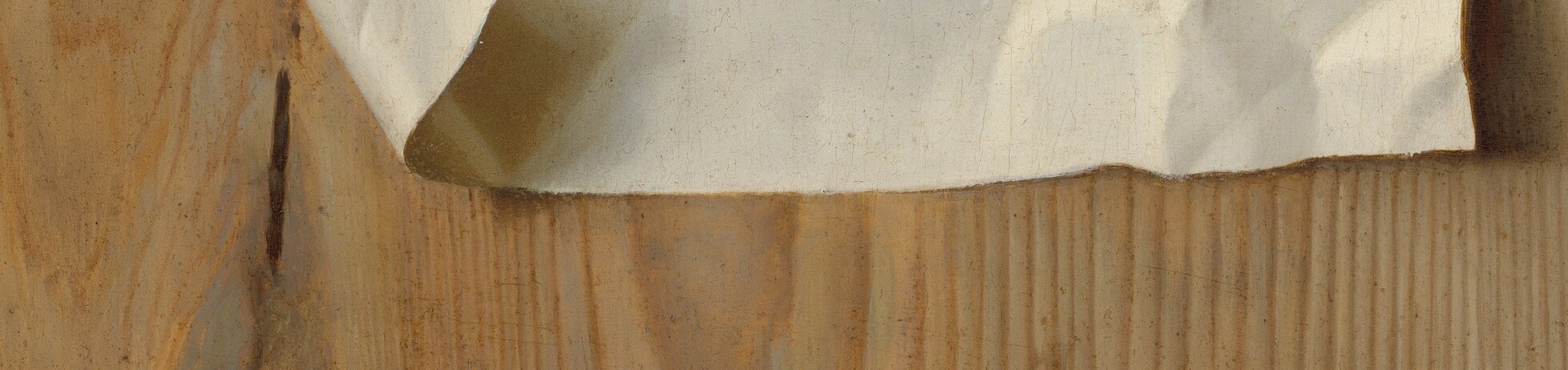
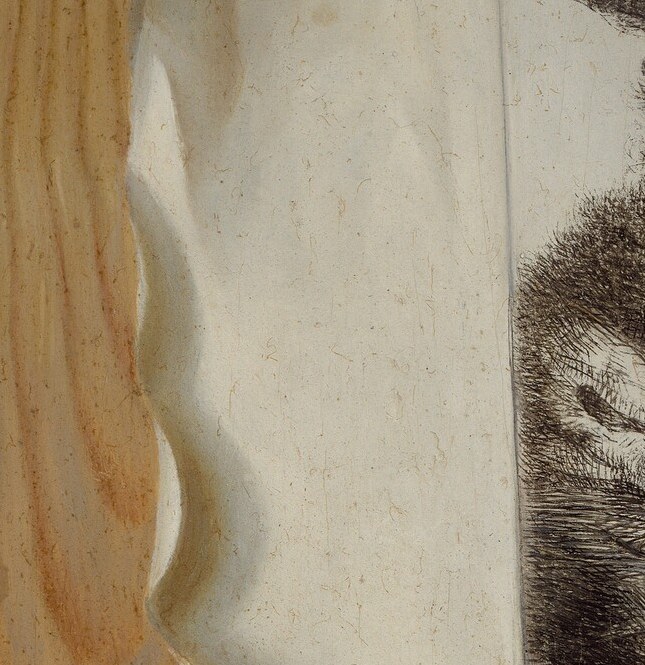
Look first at the crumpled edges and the deep crease running across the sheet. Those shadows and torn fibers are built entirely from paint, layered wet into wet to fool your sense of touch. Then look at the red wax seal, it catches a highlight that makes it read as glossy and hard, even though the surface of the panel is perfectly flat. The artist understood exactly how light behaves on paper, on wax, and on ink.
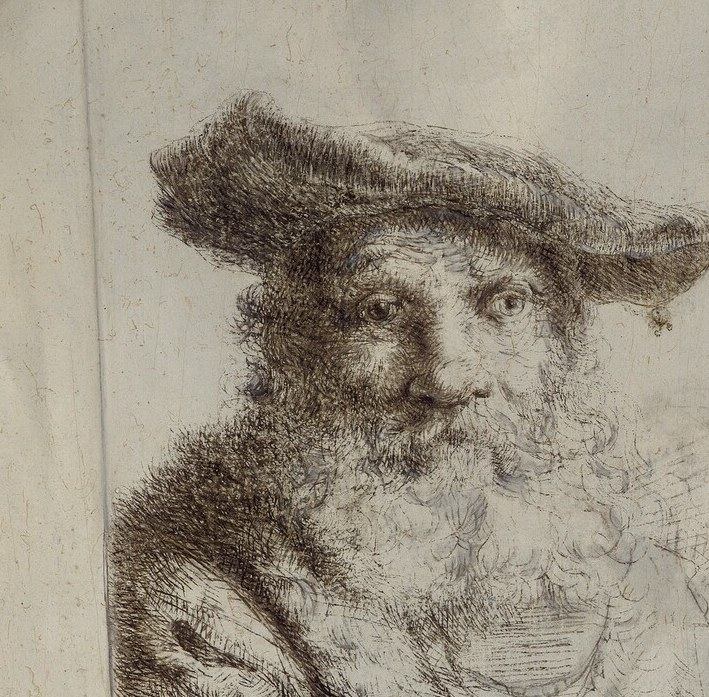
Inside the illusion sits another illusion: the monochrome portrait of a bearded man, rendered as if it were an etched print. But there is no etching here, only paint mimicking the fine crosshatched lines of a copper plate. The painting is a quiet conversation about what is real: a painted copy of a printed copy of a painted original.
The Baroque period loved this kind of visual wit. A collector could hang this on a study wall and watch guests reach out to touch the paper. Three hundred and fifty years later, looking at it on a bright phone screen, the trick still works.
Details
Transcript
You are not looking at a piece of paper. This is oil paint on a flat wooden panel. Every wrinkle, every shadow, every torn edge is a brushstroke. The red wax seal looks glossy and hard, but it is only paint. And the etching inside the illusion is also painted, line by line. The Dutch called it 'trompe-l'oeil': trick the eye.