Almée by Nathaniel Sichel
Nathaniel Sichel's "Almée," painted around 1500 and housed at the State Hermitage Museum, presents a romanticized vision of an "Almeh," a professional female entertainer from the Middle East. This painting, a product of the 19th-century Orientalism movement, offers a Western interpretation rather than an authentic cultural representation.
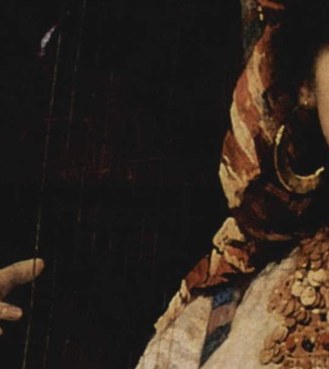
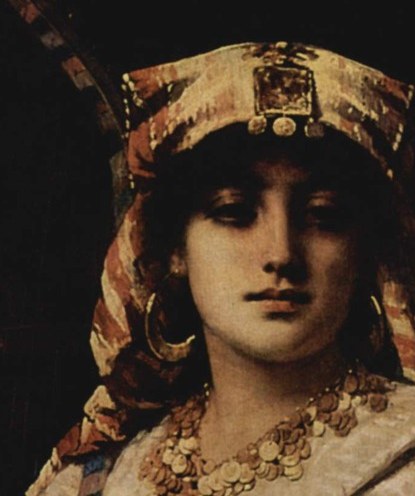
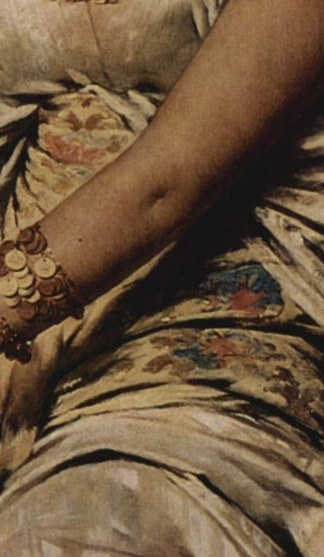
Observe the central figure, poised with a harp, her fingers delicately positioned as if about to play. Her elaborate headdress and layered gold necklaces with coin-like pendants signify wealth and status, further enhancing the exoticized portrayal.
Sichel's use of light and shadow, reminiscent of chiaroscuro, illuminates the central figure while the background remains obscured. This technique draws the viewer's focus to the performer, contributing to the work's dramatic effect. The inclusion of a smaller, kneeling figure also holding a harp in the background adds to the sense of a musical ensemble within this stylized Eastern setting.
"Almée" exemplifies how European artists during the Orientalism movement often romanticized and exoticized their subjects from North Africa and the Middle East. What aspects of this portrayal do you find most striking?
Details
Transcript
This painting is called 'Almée'. An 'Almeh' was a professional female entertainer in the Middle East. She is poised with a harp, her fingers ready to play. Her elaborate headdress and jewelry signal wealth and status. Look closely at the shadowed figure in the background, also with a harp. This work is part of the 19th-century Orientalism movement. It shows a Western, romanticized interpretation, not an authentic one.