Susåen. The Bridge and the Mill at Karrebæksminde by Laurits Andersen Ring
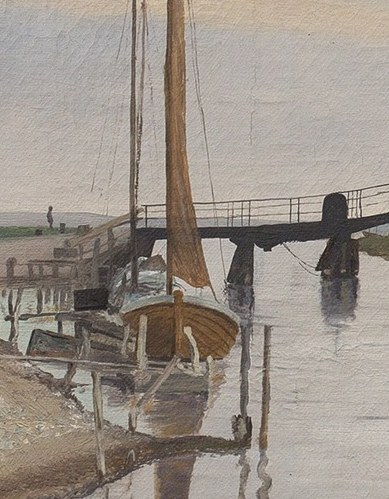
Laurits Andersen Ring's "Susåen. The Bridge and the Mill at Karrebæksminde," painted in 1900, is a masterful study in light and reflection, held at the Statens Museum for Kunst. Ring, a Danish pioneer of symbolism and social realism, was deeply interested in capturing the subtle moods of the landscape.
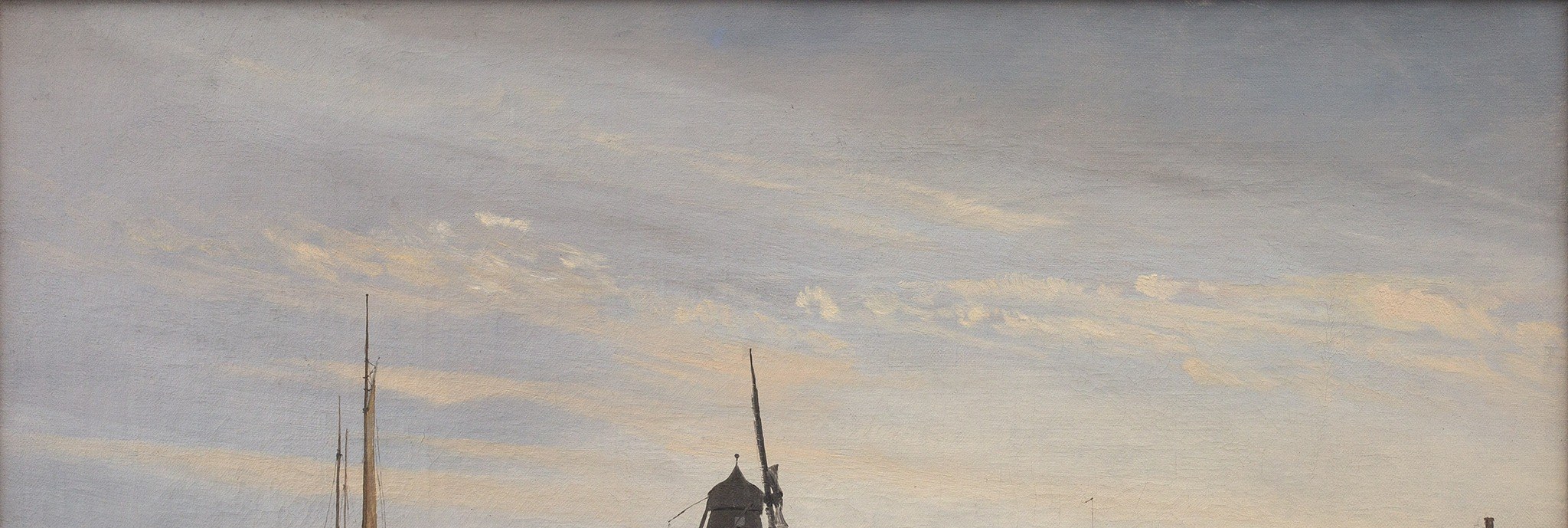
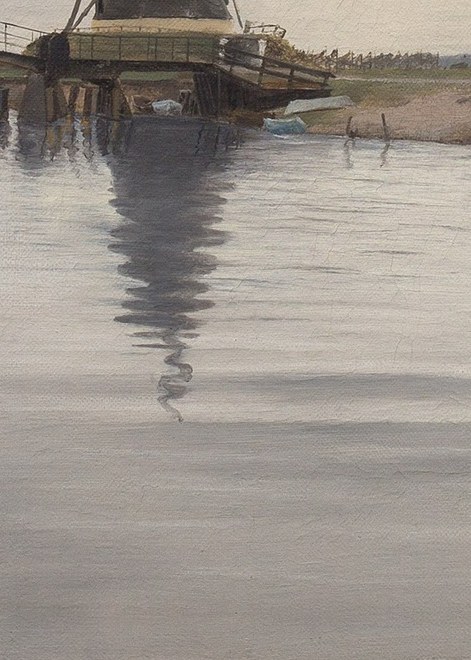
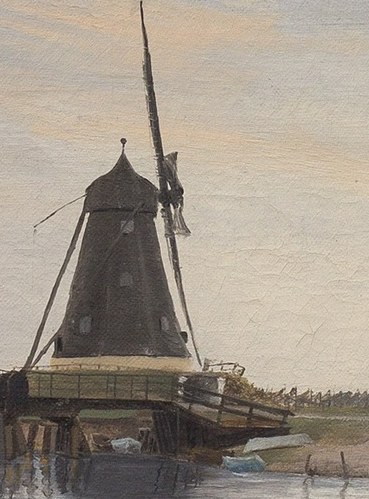
Observe how the painter renders the soft, diffused light of the sky, with clouds that blend seamlessly. Then, look at the river below, where the dark windmill is perfectly mirrored, yet distorted by the water's gentle movement. It's a testament to his skill in capturing ephemeral effects in oil paint.
This painting exemplifies Ring's ability to create a sense of stillness and contemplation. His technique uses layered strokes and a muted palette to convey atmospheric quietude, making a simple rural scene feel profound. It's a brilliant example of how a painter can make you feel the air and see the light.
What details in the water's reflection capture your eye the most?
Details
Transcript
This painter was obsessed with light, air, and reflections. Look at the pale, soft clouds, blurring into the sky. Now see how the windmill's dark shape mirrors below. The paint captures the subtle ripple and distortion of water. The light itself feels still, as if time has paused here. It's a quiet mastery, turning oil paint into atmosphere.