Self-Portrait by Salvator Rosa
View the artwork: Self-Portrait →
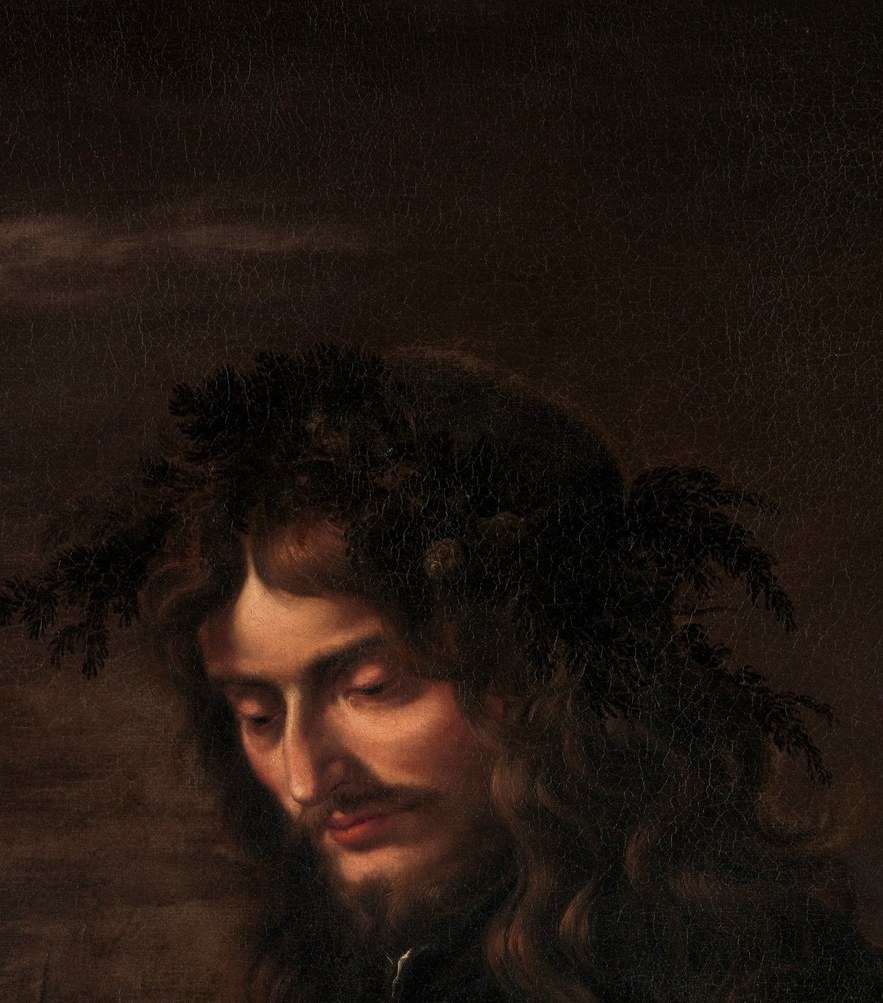
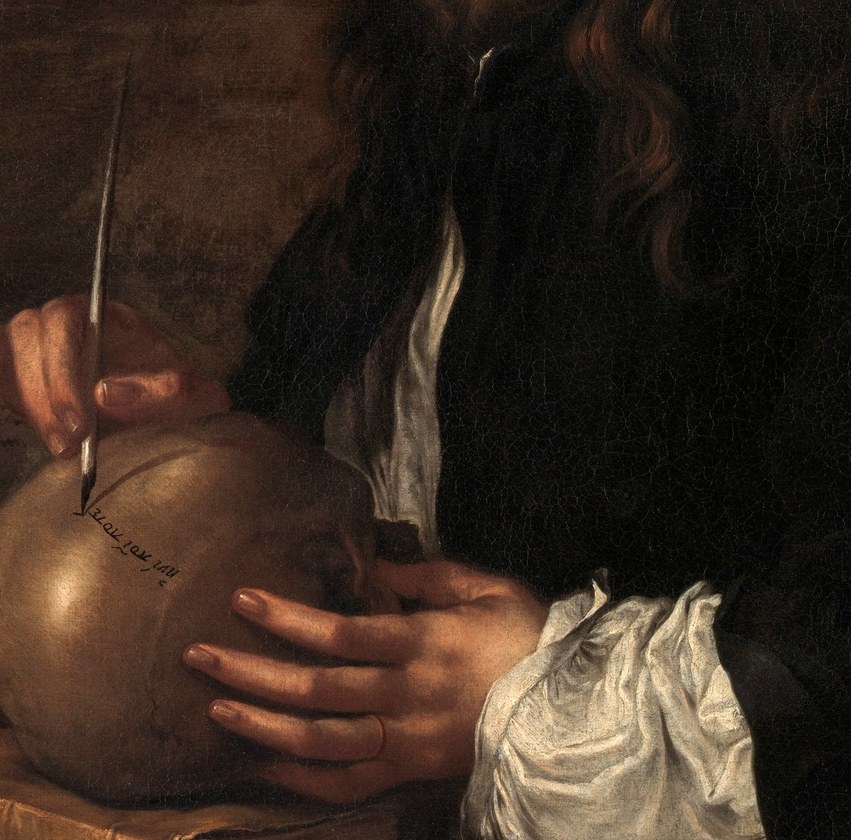
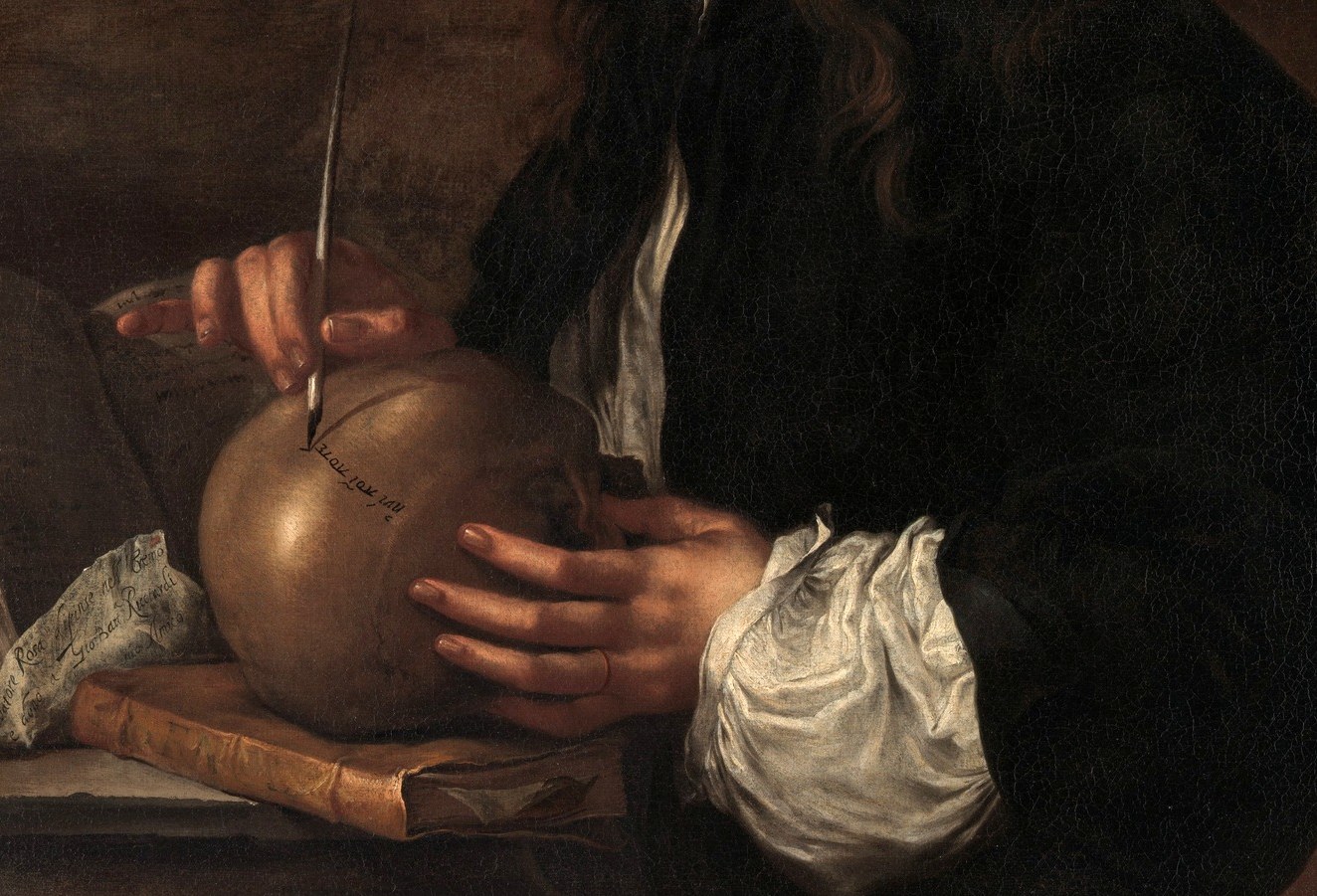
This is Salvator Rosa's Self-Portrait, painted around 1647 and now held at the Metropolitan Museum of Art. It is not a portrait of vanity but of intellectual defiance. Rosa shows himself not as a gentleman or a courtier, but as a philosopher communing with a memento mori, an object that may be a human skull.
Look at his eyes. They do not engage the viewer. The gaze drifts upward and inward, a convention of philosophical portraiture meant to signal deep thought rather than performance. Then follow the light down to his hands. He is not merely holding the skull; he is writing on it with a stylus. The act fuses creativity with the acknowledgment of death, a declaration that his ideas, his satires, his poems, his paintings, will outlast the body.
Salvator Rosa was the enfant terrible of 17th-century Rome and Naples. A painter, yes, but also an actor, musician, and a caustic satirist whose mockery of powerful artistic and literary circles earned him real enemies. He was compelled to move between cities more than once when his sharp tongue caught up with him. This self-portrait is a direct response to that life of conflict: he presents himself not as a charming entertainer but as a solemn thinker, alone in the dark, carving meaning into the symbol of mortality itself.
The painting's chiaroscuro is deliberately severe. The black cloak dissolves into the background, leaving only the illuminated face and hands floating free. Rosa understood that in the court of public opinion, his mind was his only unassailable weapon.
#arthistory #SalvatorRosa #Baroque
Details
Transcript
He paints himself, but refuses to meet your eyes. His gaze drifts upward, fixed on something beyond the frame. In his hands, he cradles what appears to be a human skull. He is inscribing it with a stylus, like a student with a book. This is Salvator Rosa. He was as famous for his vicious satire as his brush. His poems and plays made enemies in Rome who forced him to flee. So he paints himself as a philosopher, holding mortality itself. He writes onto the symbol of death, claiming his ideas outlast flesh.