Artwork
Self-Portrait
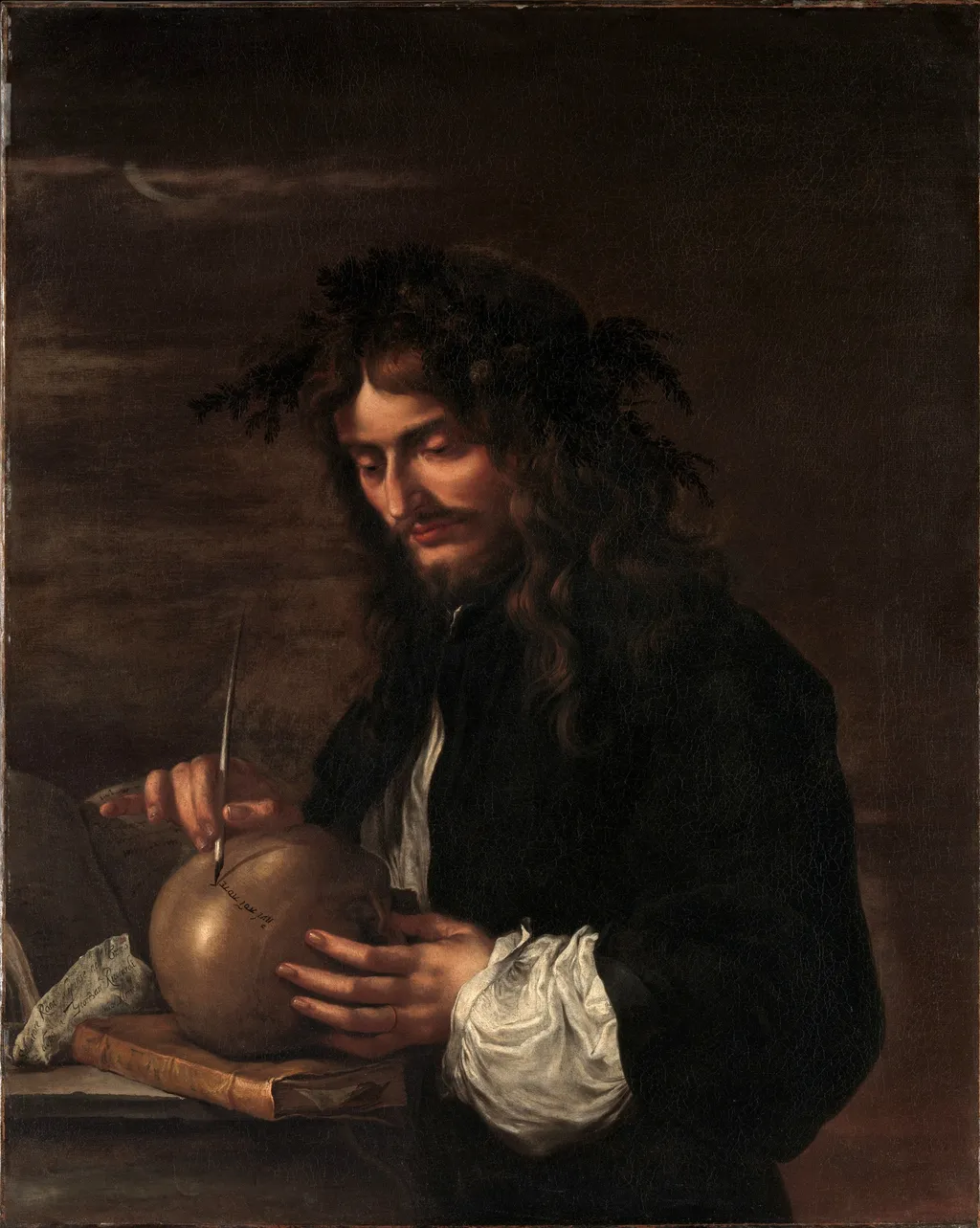
Self-Portrait is an oil painting by the Early Baroque Italian artist Salvator Rosa. It dates from 1647 and is held in the collection of the Metropolitan Museum of Art.
About this work
Subject & Meaning
By presenting himself with a skull, the work engages with traditional memento mori symbolism, serving as a visual meditation on the transience of life.
Created in 1647, this oil painting functions as a self-portrait depicting the artist Salvator Rosa. The composition features the artist alongside a skull and elements suggesting the act of writing. These specific inclusions establish an iconography centered on mortality and intellectual or artistic creation.
By presenting himself with a skull, the work engages with traditional memento mori symbolism, serving as a visual meditation on the transience of life. The combination of the artist's likeness with these objects represents a convergence of personal identity and philosophical reflection on death, characteristic of the portrait genre during this period.
Technique & Style
Salvator Rosa’s 1647 self-portrait is rendered in oil paint on a canvas support, measuring roughly 99 cm high by 79 cm wide. The painting shows the artist holding a skull and a piece of writing, presenting a straightforward likeness with attention to facial features and textile details. Brushwork appears smooth, modeling the flesh and fabric with subtle tonal shifts.
The composition places the figure slightly off‑center, highlighting the memento mori symbols. The sources confirm the medium, dimensions and iconography but do not address the work’s condition or any later changes.
History & Provenance
Salvator Rosa executed this oil-on-canvas self-portrait in 1647. The work, which depicts the artist alongside a skull and writing implements, measures 99 by 79 centimeters. While specific details regarding the original commission or the intermediate ownership chain prior to its museum acquisition are not provided in the available records, the painting is currently held in the collection of the Metropolitan Museum of Art.
The piece is classified as a portrait genre work and remains a significant example of Rosa's output from the mid-seventeenth century.
Self-Portrait (1647) by Salvator Rosa is housed in the collection of the Metropolitan Museum of Art in New York. The work is catalogued as part of the museum’s holdings, though the specific accession or inventory number is not disclosed in the available documentation. Its physical dimensions are recorded as 99 cm in height and 79 cm in width.
The painting has been referenced in scholarly discussions of Rosa’s self-representation, but no exhibition record is provided in the sources examined, indicating that its exhibition history is not detailed within the current reference material.
Overview
This oil painting, titled Self-Portrait, depicts the artist engaged in a contemplative act. A figure with curly hair and a beard is shown seated, holding a spherical object while seemingly inscribing it with a stylus. The dark attire of the subject is offset by a lighter fabric draped over one arm, while the background remains indistinct, emphasizing the figure's thoughtful expression.
Own this work as a print
Artist & collection
Artist
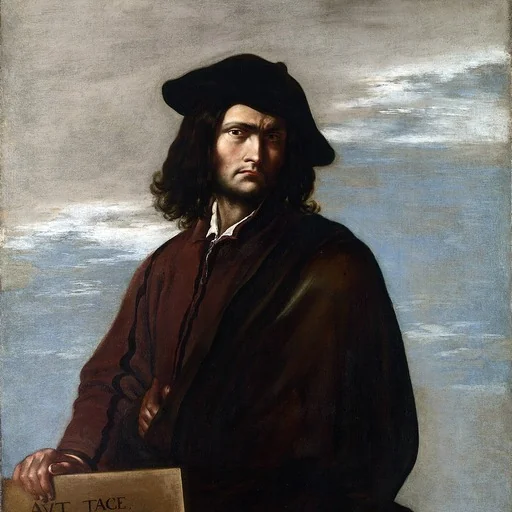
Salvator Rosa (1615 – 15 March 1673) is best known today as an Italian Baroque painter, whose romanticised landscapes and history paintings, often set in dark and untamed nature, exerted considerable influence from the 17th century into…

- Self-portrait
 Bildnis eines Gelehrten
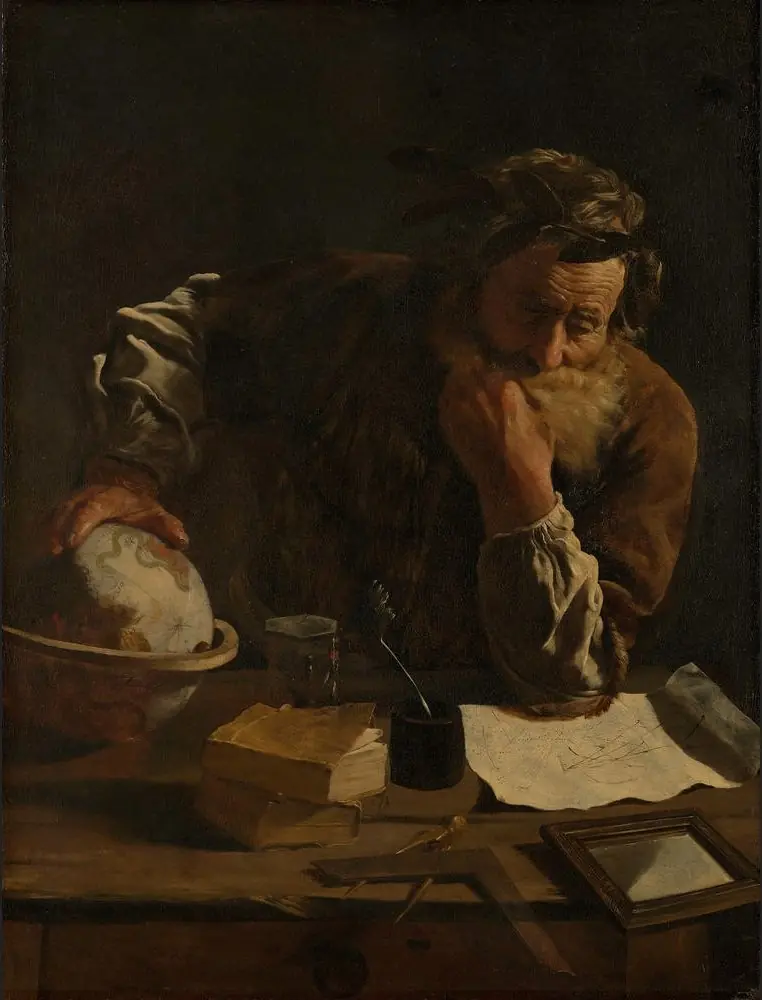 Portrait of a scholar (Archimedes?)
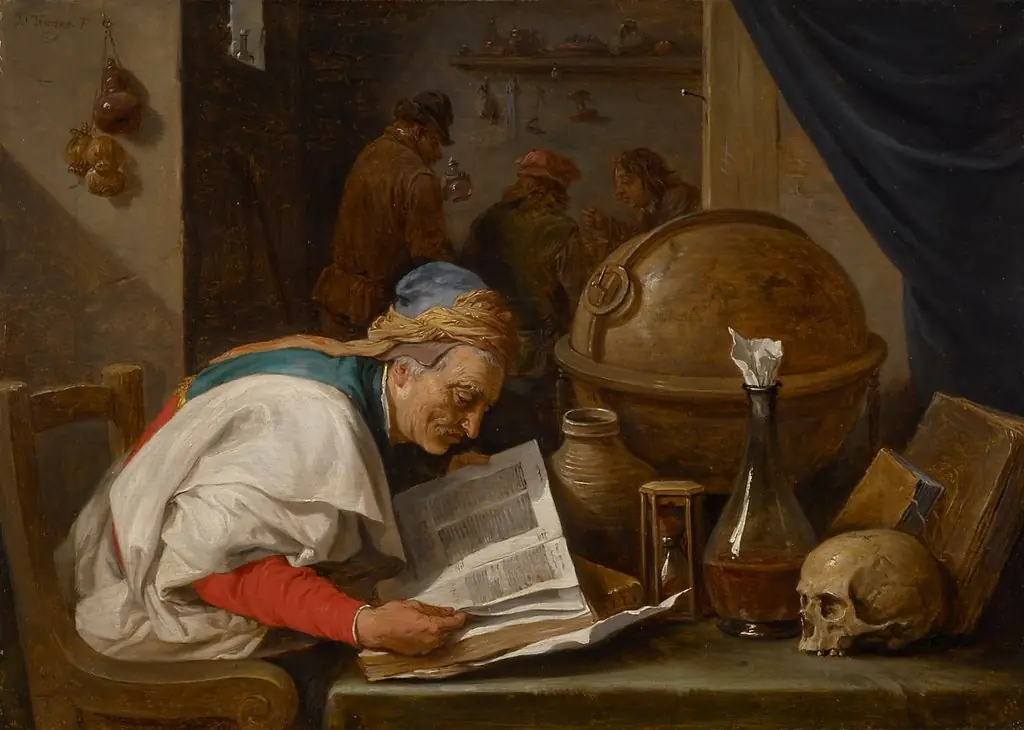 The Alchemist
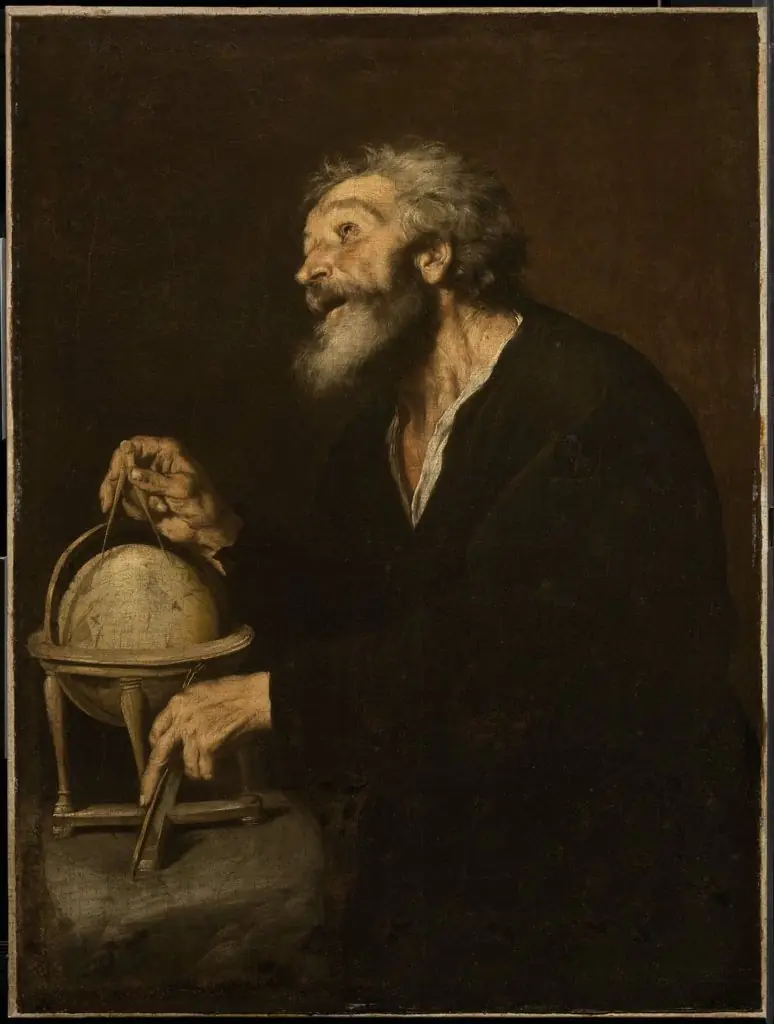 The Geographer
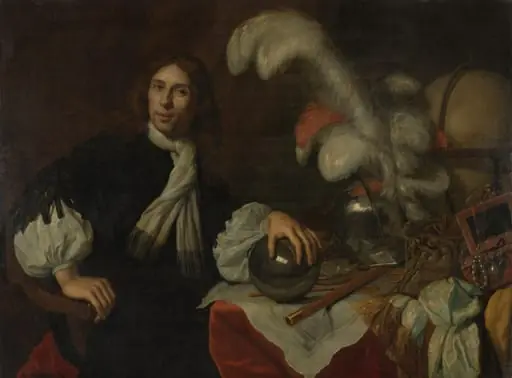 Posthumous Portrait of Aucke Stellingwerff, Admiral of Friesland, Killed in 1665 at Lowestoft by a Cannonball
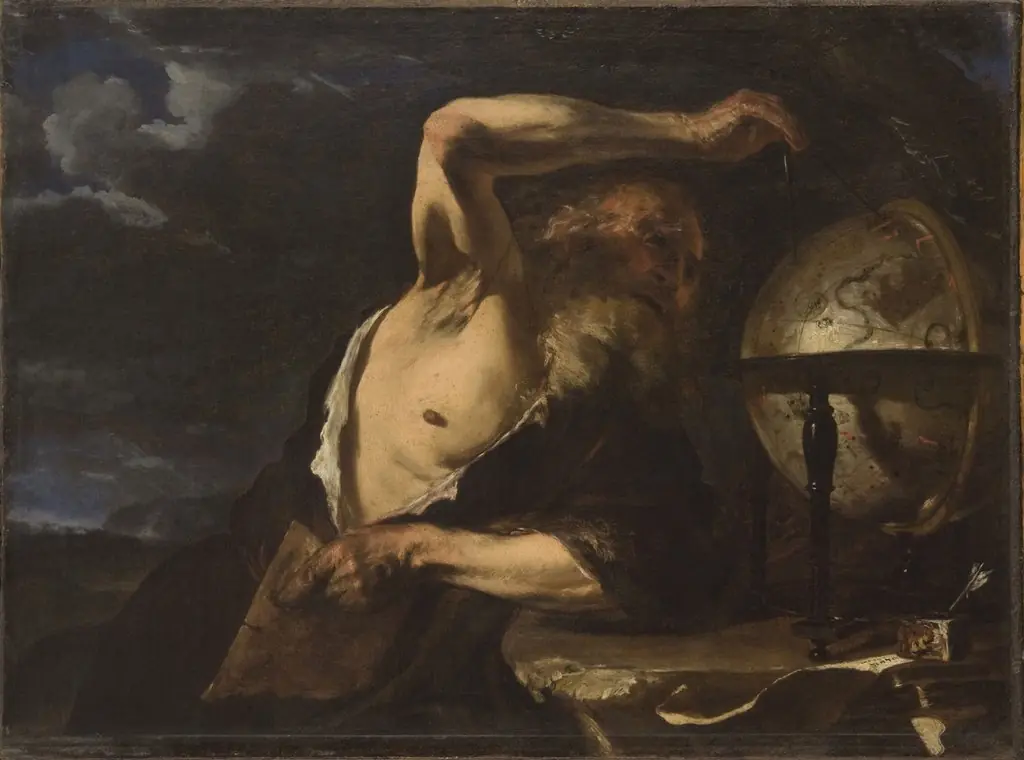 The Philosopher Anaxagoras
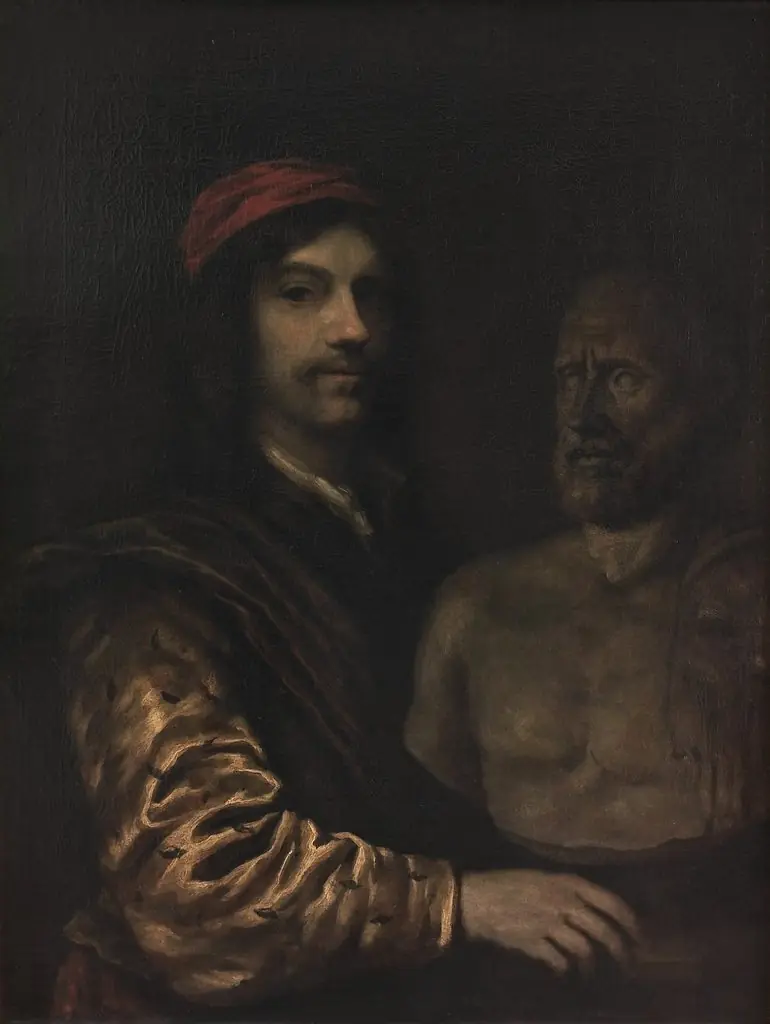 Self-portrait of Philips Koninck (1619-1688)
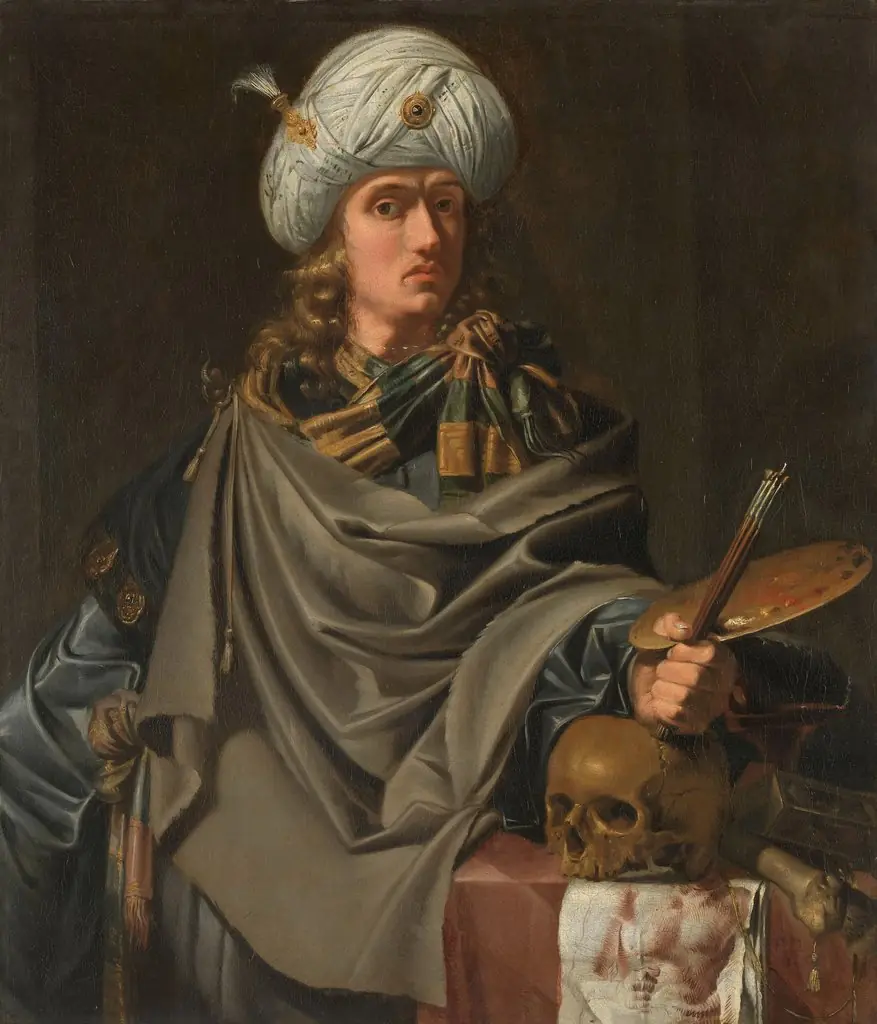 An antique artist
 The Astronomer
 Portrait of a Man in an Interior
 Man with Urine Bottle in his Hand