A Dominican Preaching by Erri, Agnolo degli
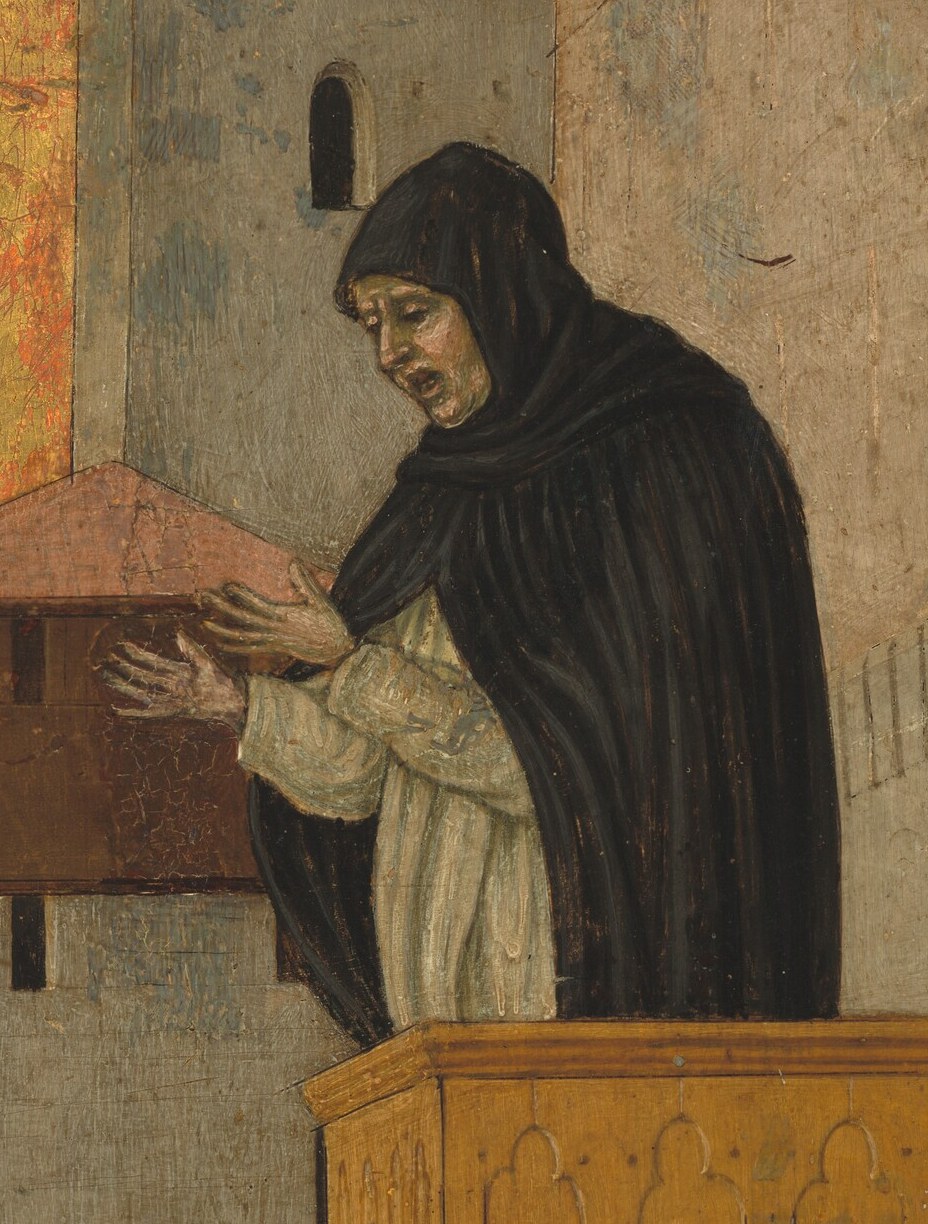
Agnolo degli Erri’s 'A Dominican Preaching' (c. 1470) is a compact guide to reading Quattrocento religious painting. Made with tempera on poplar panel in Modena, it uses a public sermon to teach viewers how objects and colors carry meaning.
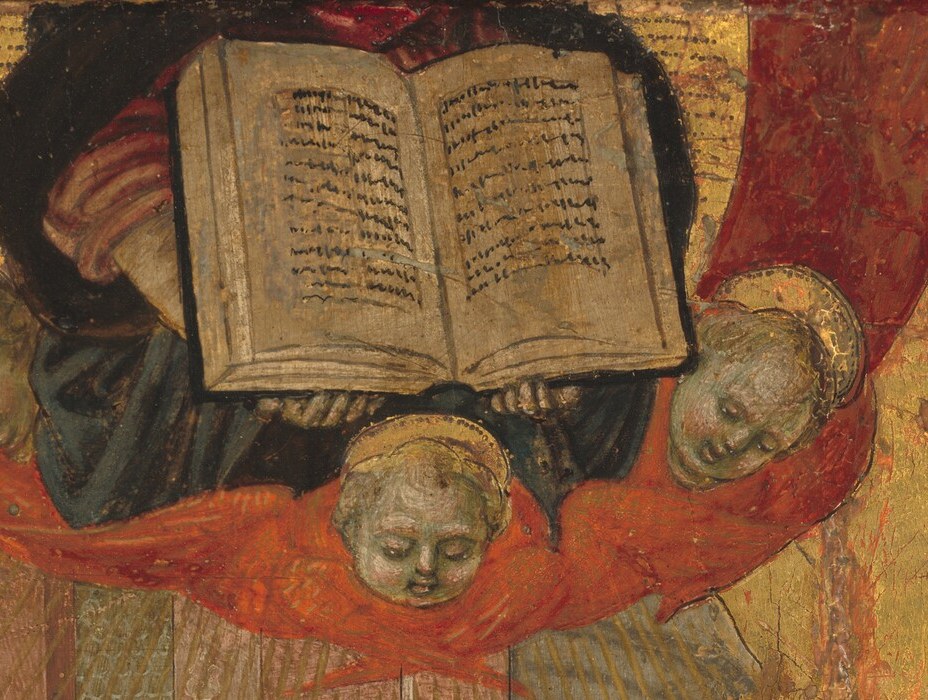
Start at the top. The open book held by angels is revealed scripture, the divine source that authorizes the friar’s words. Below it, his black-and-white habit identifies him as a Dominican, an order founded in the 13th century specifically to preach and combat heresy through teaching. The shimmering gold background is not a neutral backdrop; in Gothic and early Renaissance painting, gold signals the presence of the sacred breaking into the everyday world.
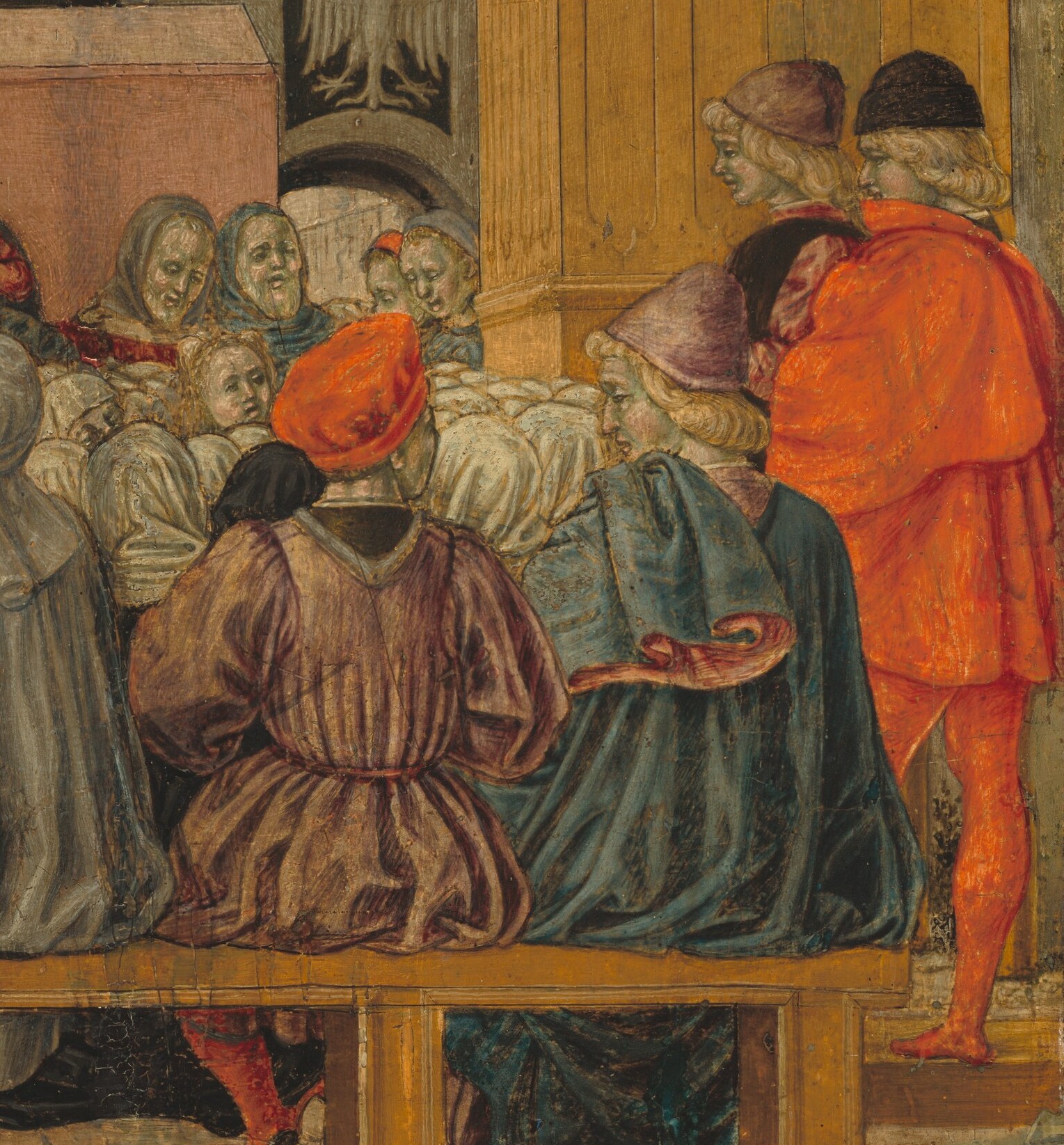
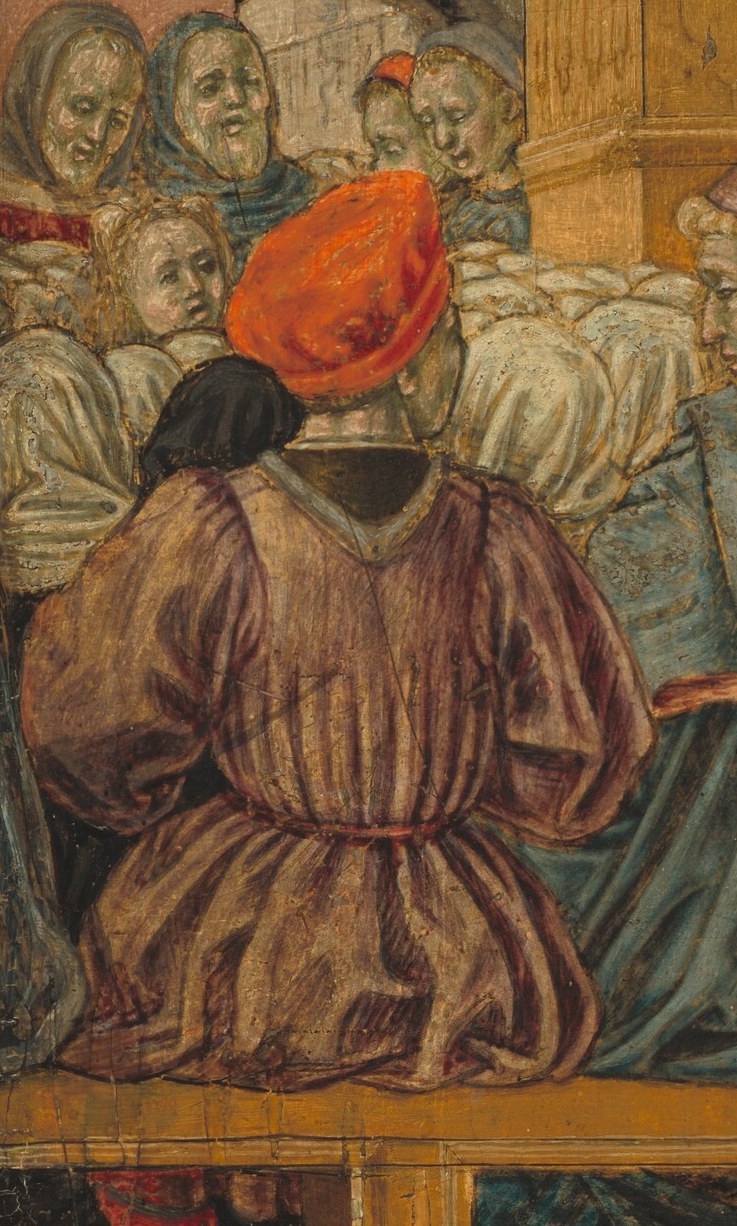
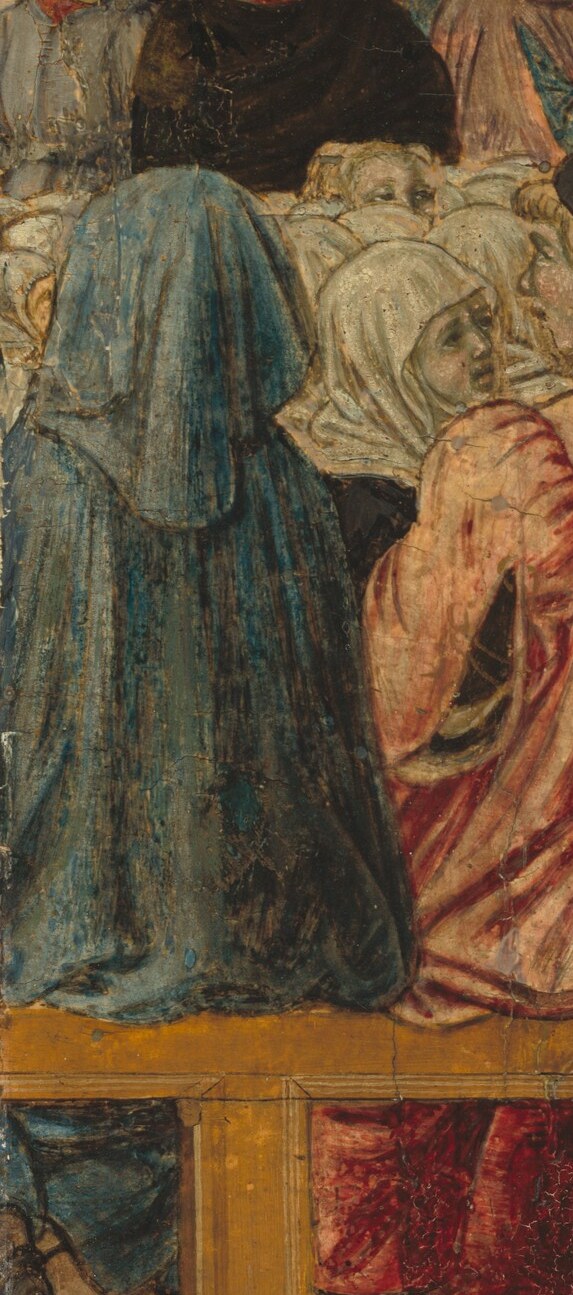
The crowd itself completes the message. Men, women, and children in varied dress suggest the sermon’s reach across social lines. A man in a red hood stands out, perhaps a civic official, but he listens alongside everyone else. Agnolo degli Erri worked in a transitional moment when Gothic linearity began absorbing early Renaissance naturalism, and this painting captures that tension: flat gold meets modeled faces, all in service of a single theological idea.
What object in the painting first told you this was more than a street scene?
Details
Transcript
A Dominican friar preaches to a crowded city square. Above him, angels hold an open book in the sky. It is not any book. It is revealed scripture, the source of his words. His black and white habit signals the Dominican Order, founded to preach against heresy. The gold background is not just decoration. It means the divine is present here. And the crowd? Every age, every station. The sermon is for the whole city. Proclamation, authority, and divine presence, painted into a single scene.