Roundel with the Holy Trinity by http://www.wikidata.org/.well-known/genid/3fe9a96b08b376636eab2a1ffbb33828
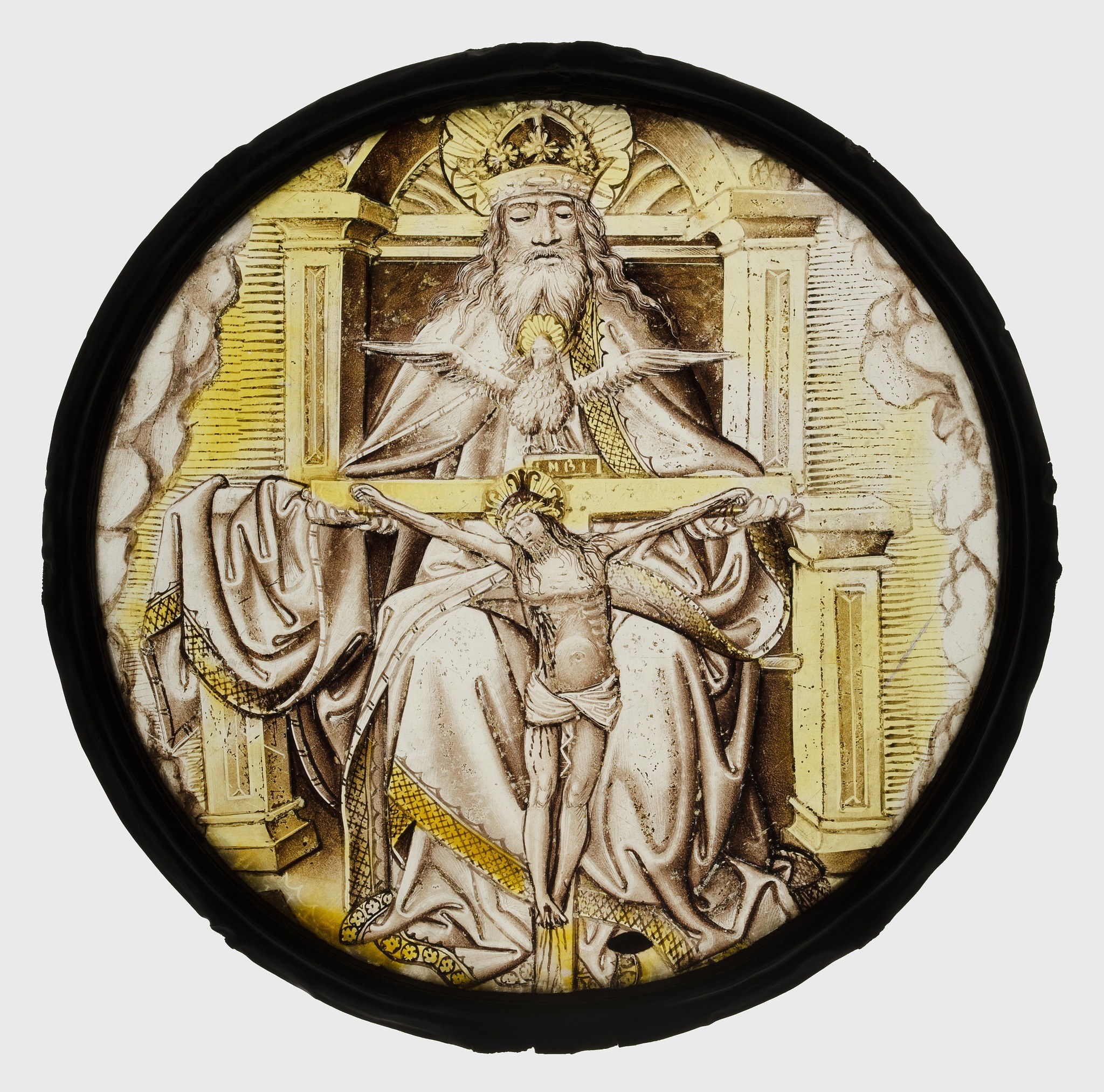
This is the "Roundel with the Holy Trinity," a stained-glass roundel painted by an unknown master around 1515. It is not a painting for a wall but a window, designed to glow with uncreated light in a church or chapel. The artist used silver stain to turn clear glass into a luminous, sulfur-yellow gold, making divine light a literal, chemical reality.
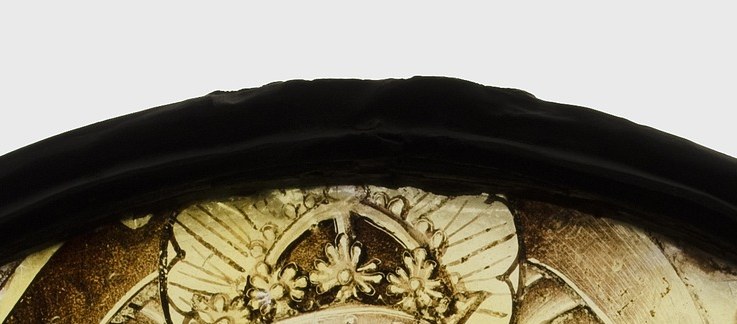
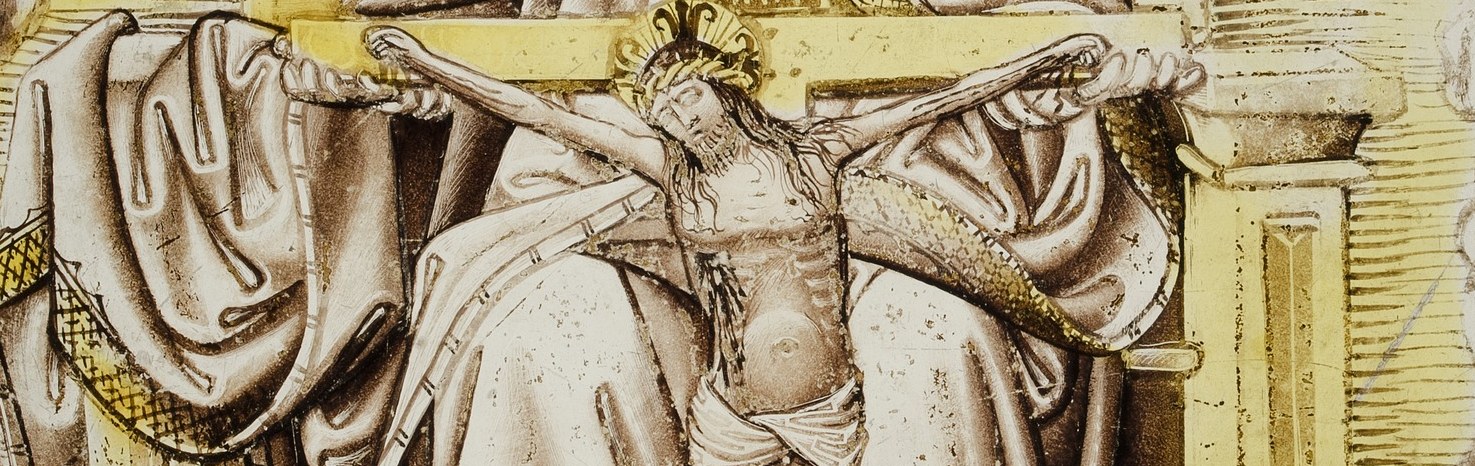
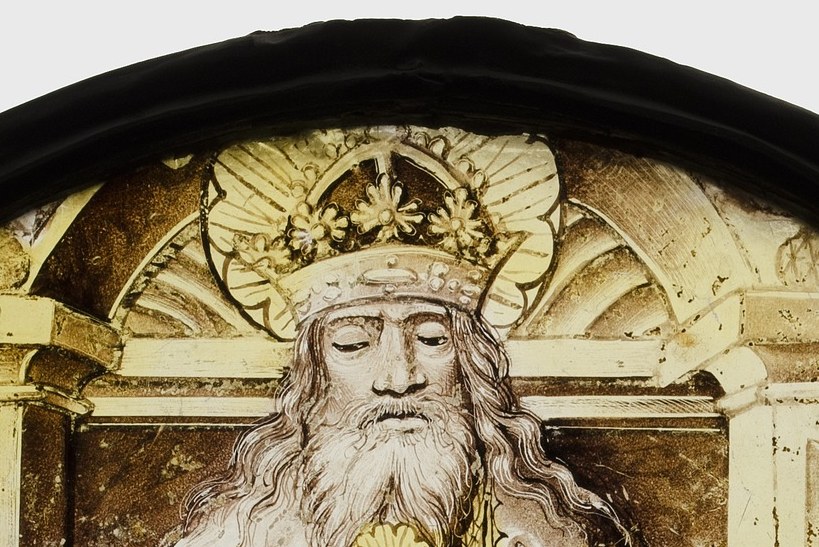
The painting is a visual catechism. Every detail decodes a point of theology. God the Father wears a papal tiara, a sign of supreme authority, yet his large hands grip the arms of the cross, showing he is an active participant in the sacrifice. His sorrowful, downward gaze bears the weight of what he holds. The dove of the Holy Spirit is small and easy to overlook, but it is the hidden connector joining Father and Son. The pair of stone columns frame the scene like Solomon's Temple, reminding the viewer that this moment of crucifixion is also a moment of eternal kingship.
This image follows the Gnadenstuhl, or "Throne of Mercy," formula, a Northern European shorthand for the Trinity. The Father presents the crucified Son while the Spirit hovers between them. The circular format itself is a theological claim: a circle has no beginning and no end, a shape reserved for the eternal completeness of God. The artist enclosed divine mystery inside a perfect geometry of lead and glass.
Five centuries later, by some miracle of survival, the glass is uncracked and the luminous gold is undimmed. Look at the Father's face one more time. Does his expression read to you as sorrow, or authority?
Details
Transcript
This crown belongs to a grieving father. His hands physically hold the cross. The Spirit is small, but connects them both. The gold light is not from a window. It is a chemical stain on the glass. The doctrine is that all three are one. This 500-year-old glass makes a circle. A circle has no beginning or end.