John the Baptist by Robert Campin
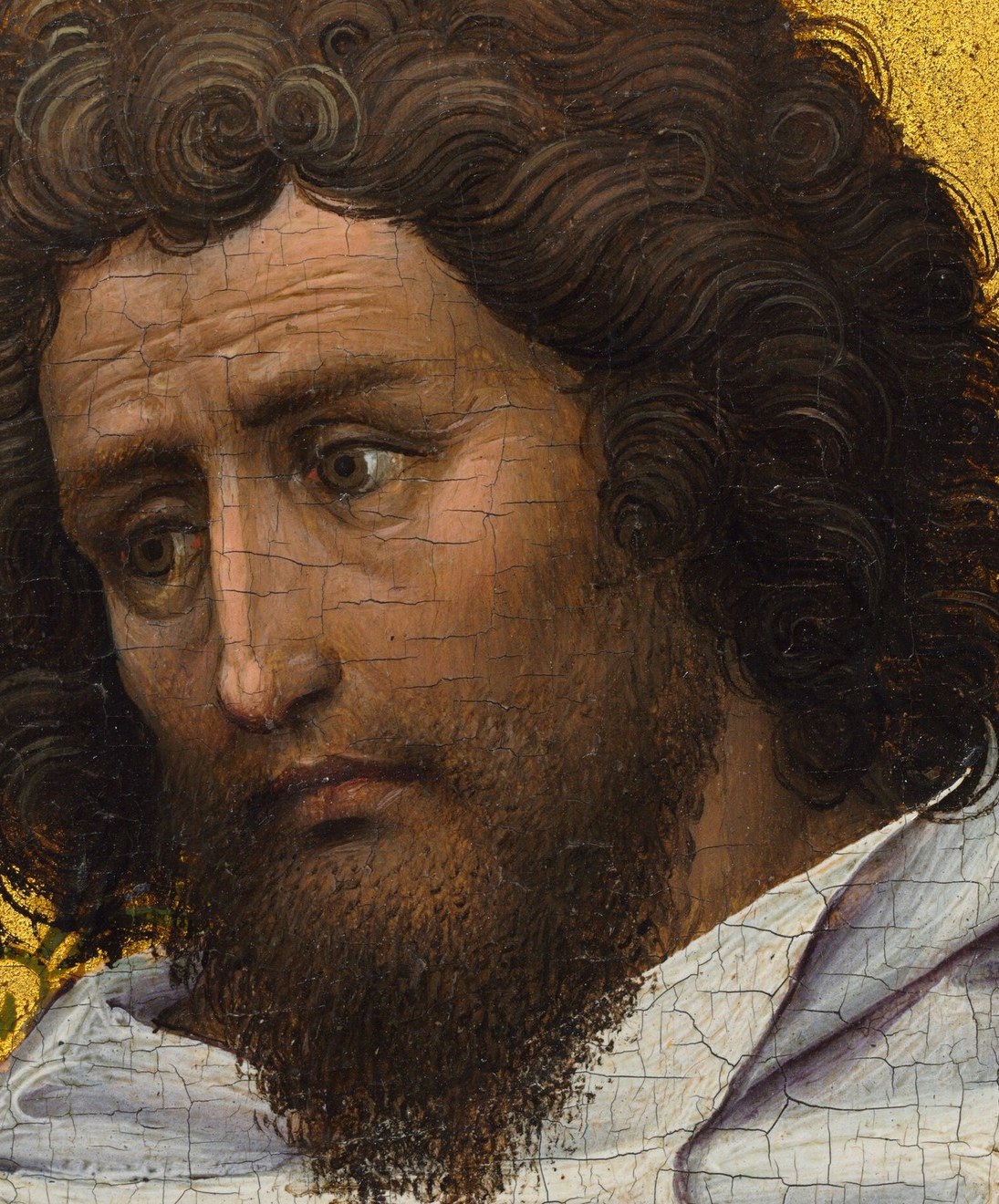
Robert Campin, a pivotal figure in early Netherlandish painting, created this striking portrait of *John the Baptist* around 1410, now housed at The Cleveland Museum of Art. Campin's innovative use of oil paint helped define the Northern Renaissance style.
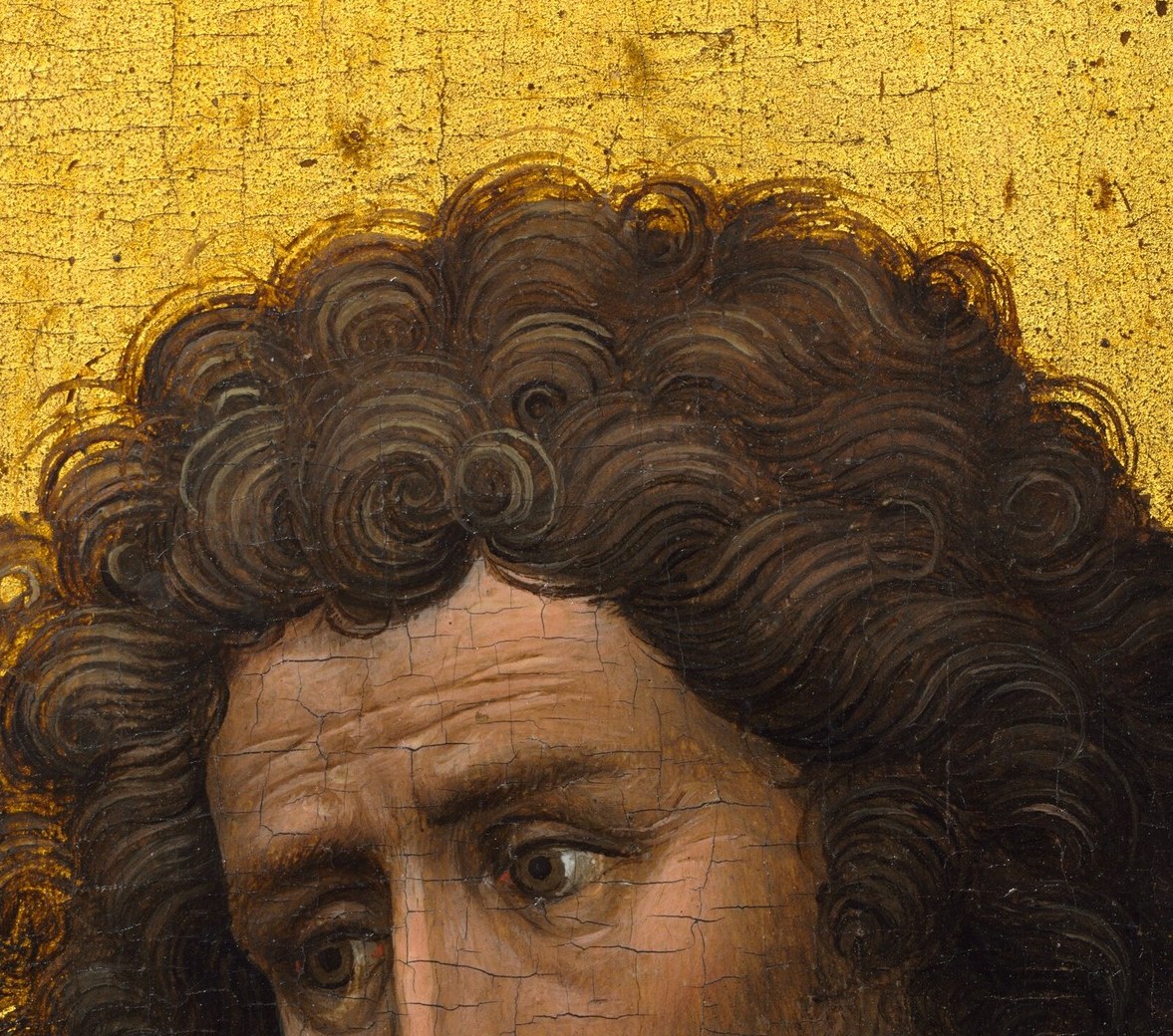
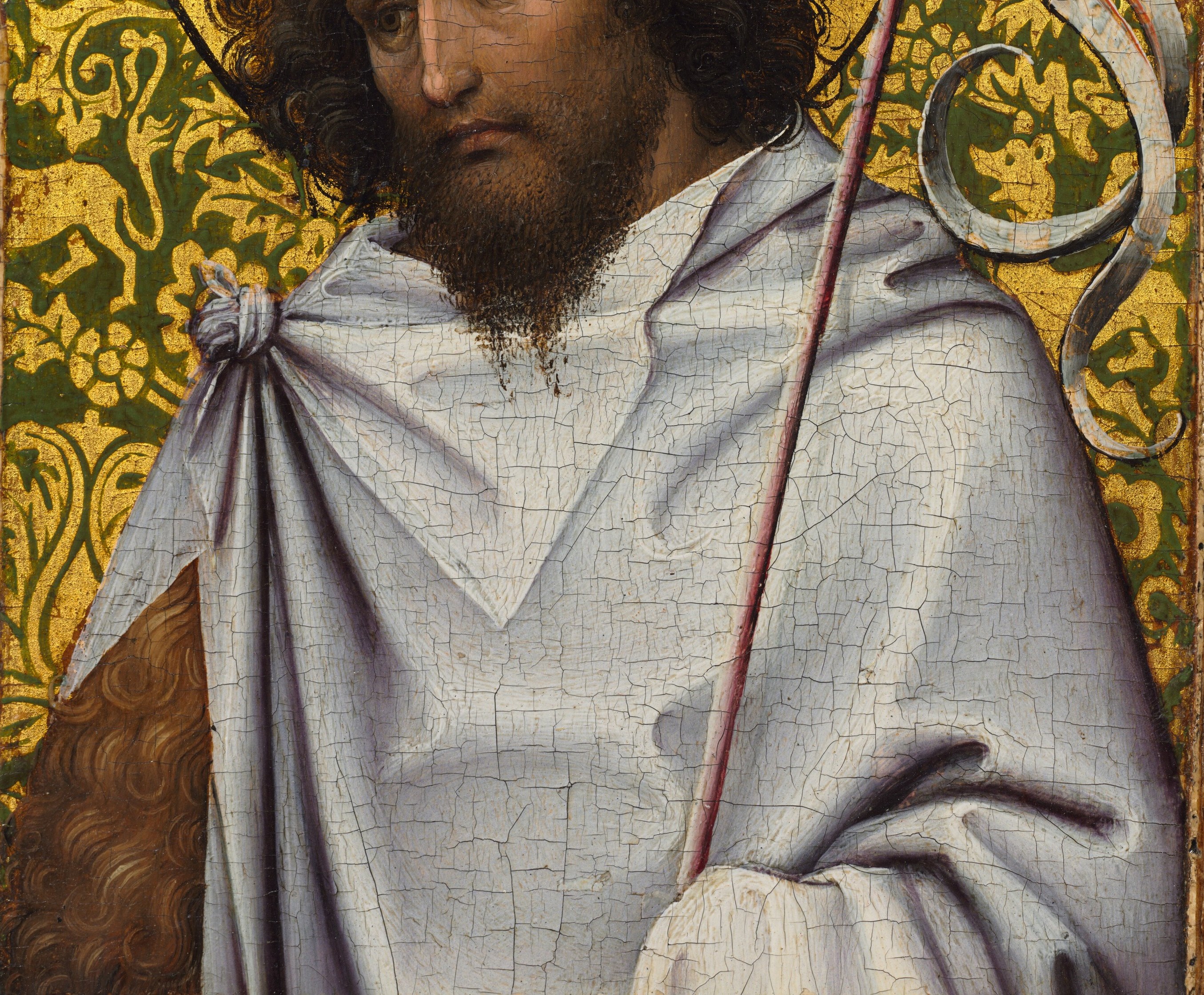
Observe the meticulous detail in John's face, from his curly hair to the textures of his beard and lambskin robe. The luminous white cloak showcases the artist's skill in rendering fabric.
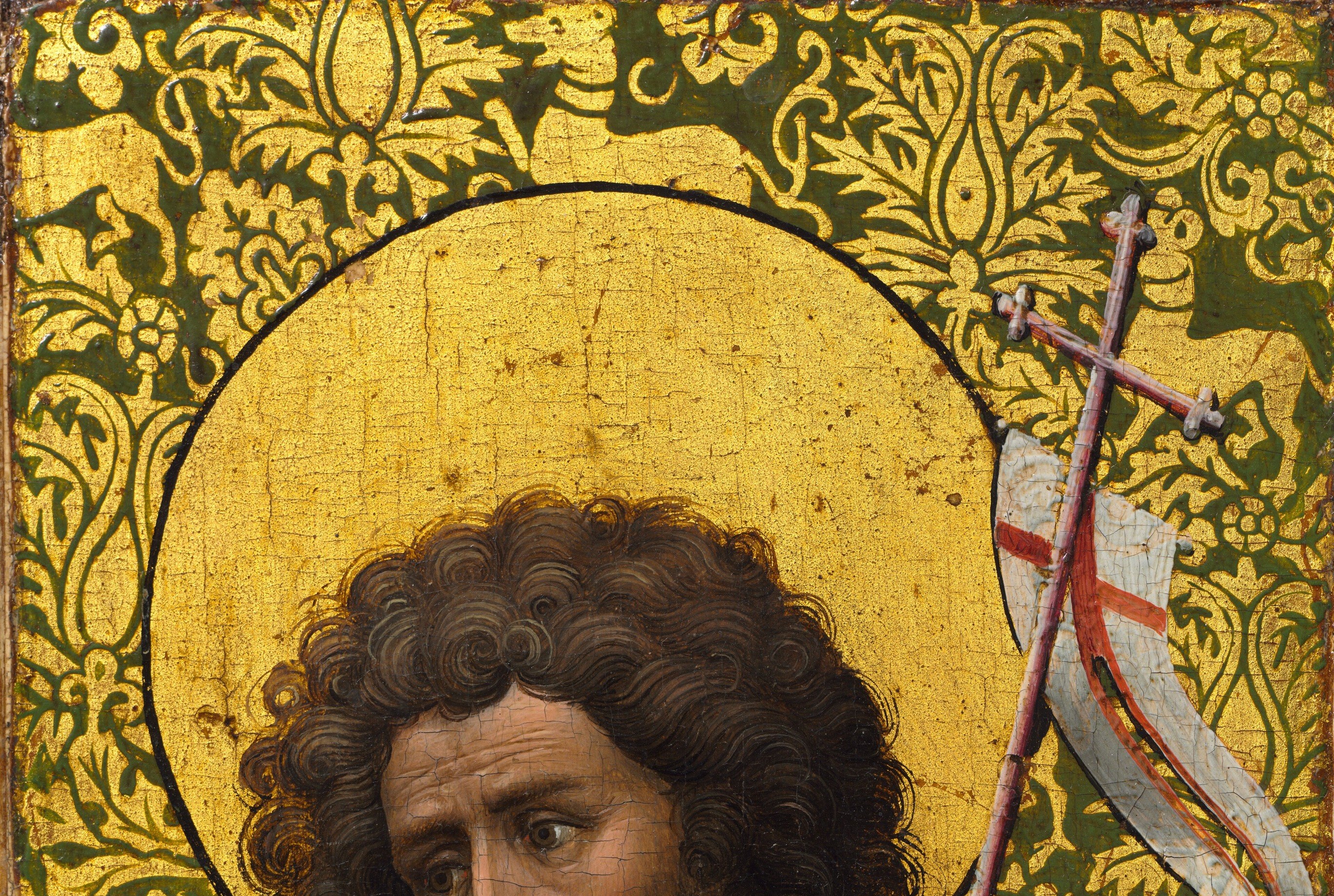
Most people scroll past the background, but look closely: it's not plain. Campin painted an intricate gold and green patterned background, almost like a woven textile, which adds a rich decorative element and emphasizes the saint's importance.
This early 15th-century masterpiece offers a window into the beginnings of Northern European realism and the artistry that brought such sacred figures to life. What other subtle details do you notice?
Details
Transcript
This solemn portrait of John the Baptist is from 1410. Robert Campin was a founder of early Netherlandish painting. His detailed realism captures every curl of hair, every wrinkle. The luminous white cloak shows his mastery of oil paint. But look at the background, a hidden detail. It's an intricate pattern, almost like a woven tapestry.