The Return to the Fold by Anton Mauve
Anton Mauve's The Return to the Fold (1873) recorded a precise fact of Dutch agricultural life so warmly that American collectors created a price differential between scenes of "sheep coming" and "sheep going."
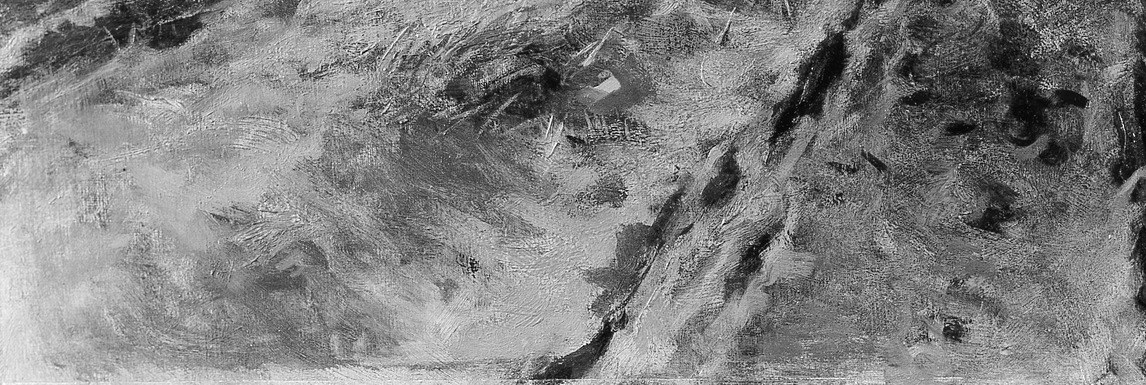
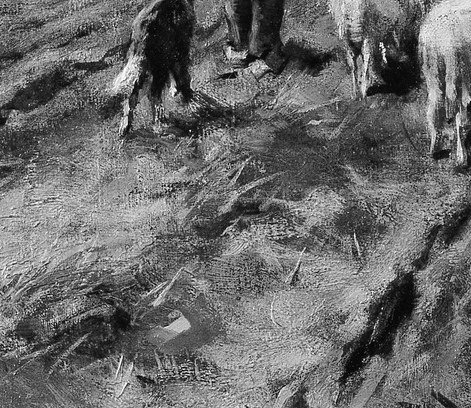
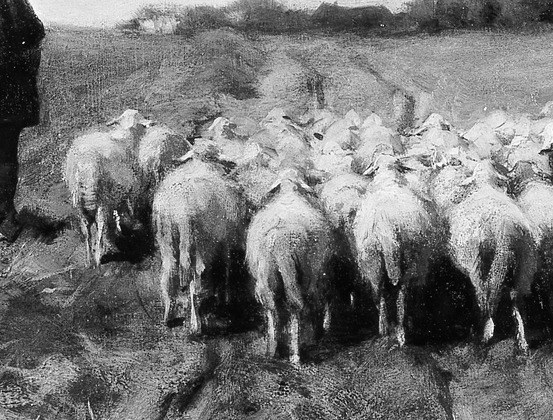
Look first at the foreground mud. Deep parallel wheel ruts carve through it, built with heavy impasto that still holds the palette knife's mark. This track has been used for generations. Above it, the flock becomes a single slow mass of loaded brushstrokes, individual faces only emerging at the front where one sheep meets your eye. The shepherd leans into his walk with the slight forward pitch of real fatigue, his thin vertical staff doubling as a tool and a mark of quiet authority.
Mauve was a leading figure of the Hague School and an early mentor to his cousin-in-law Vincent van Gogh. He worked in a deliberately subdued palette, letting the diffuse overcast light of the Dutch polder set the entire tonal key. His broken-stroke ground surfaces are the painting's real showpiece: up close, the mud is a virtuoso passage of texture hiding under apparent plainness.
The painting now hangs as a document of a working landscape that was already vanishing when Mauve painted it. What do you notice first, the shepherd's face, the dog, or the sheer weight of the flock?
Details

Transcript
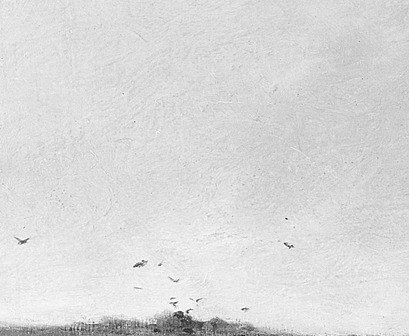
A pale, overcast sky, a flat horizon, and a slow white tide. This is the Netherlands, 1873. The day is ending. The flock comes home along a track rutted by generations. A shepherd walks at the flock's head. He leans forward with the weight of the routine. His dog works the left flank. A partner, not a pet. American collectors paid more for sheep coming than for sheep going. This painter taught Vincent van Gogh. His name was Anton Mauve.