Vanitas Still Life by Daellen, François van
François van Daellen's *Vanitas Still Life*, painted around 1650, is a poignant example of a genre popular in 17th-century Holland. These works served as visual reminders of the fleeting nature of life and the futility of worldly possessions.
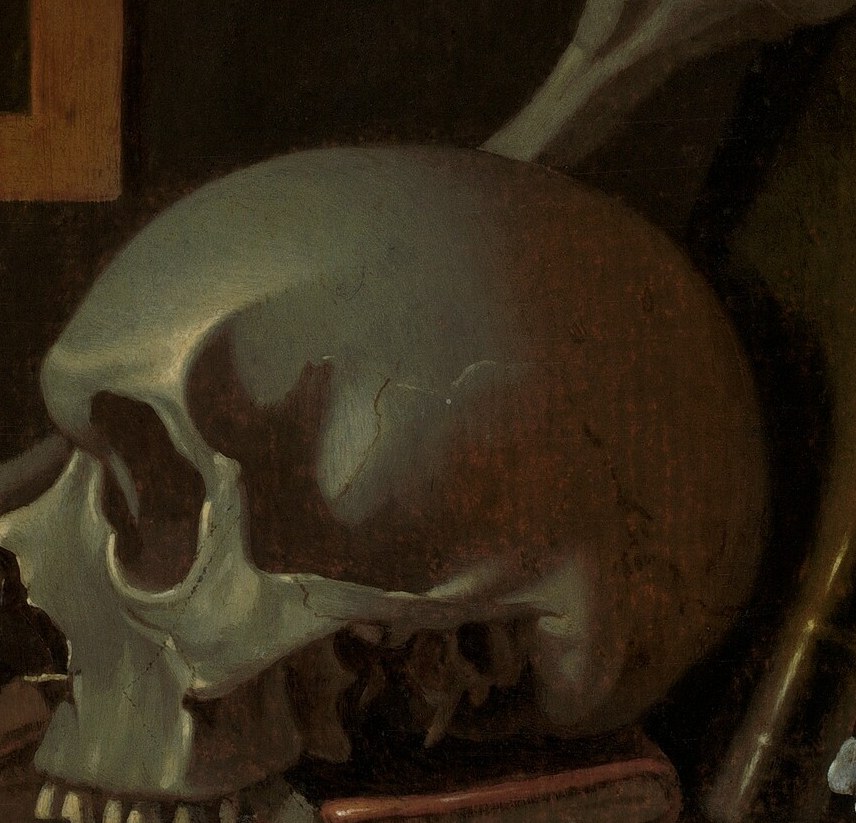
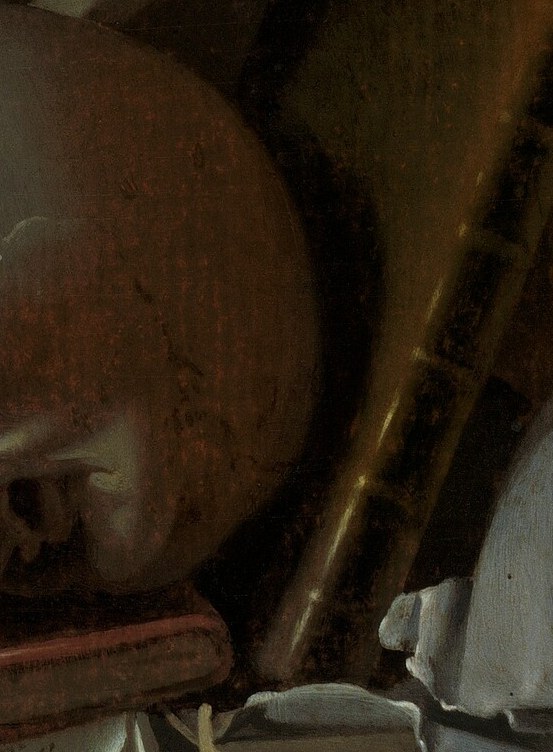
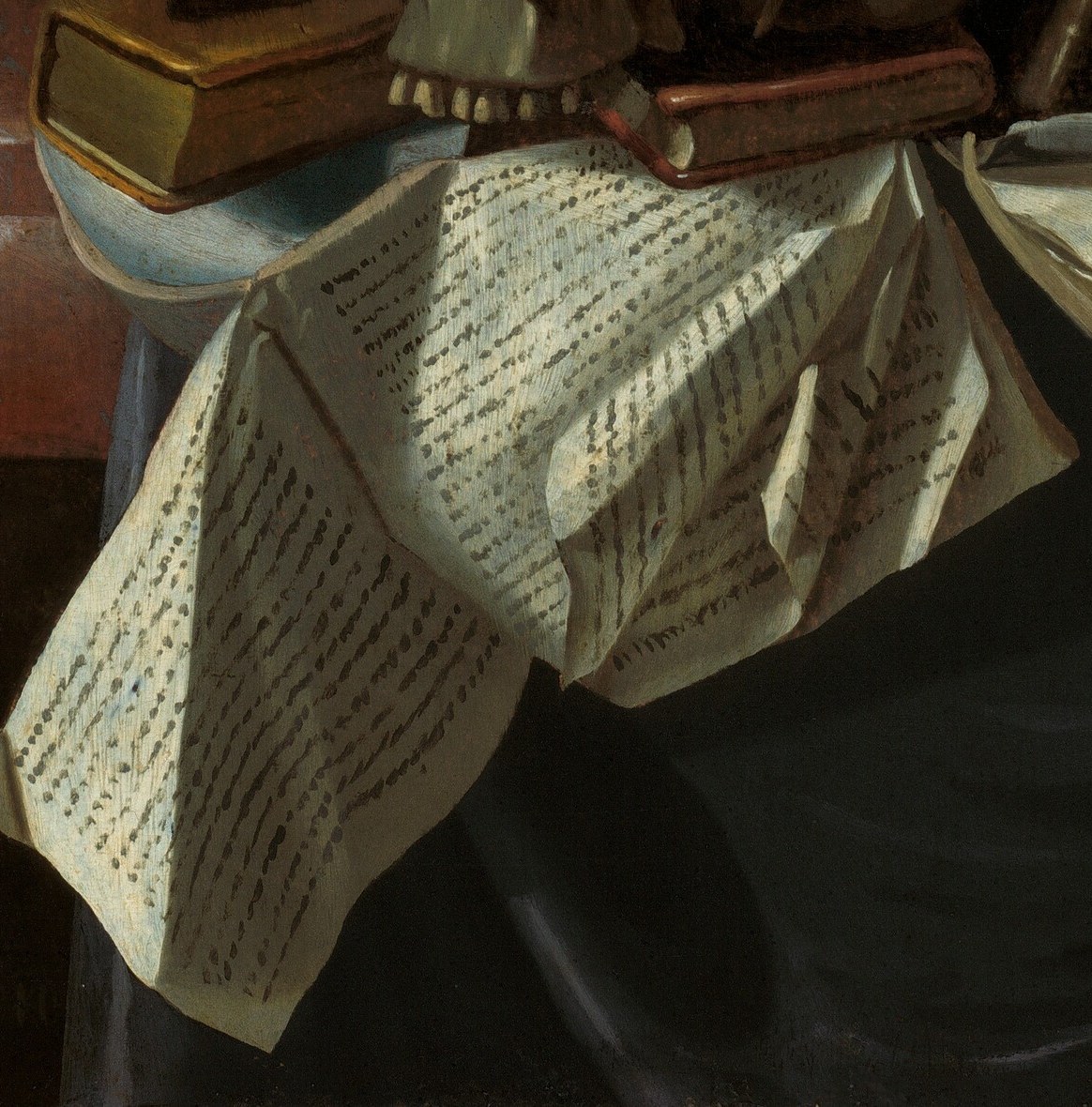
The painting's central elements, a human skull, a burning candle, and an open book, are carefully arranged to evoke contemplation. The skull is a direct symbol of mortality, while the flickering candle with its rising smoke signifies the passage of time. The book and inscribed paper allude to knowledge and intellectual pursuits, yet they are juxtaposed with the skull, questioning their ultimate value in the face of death.
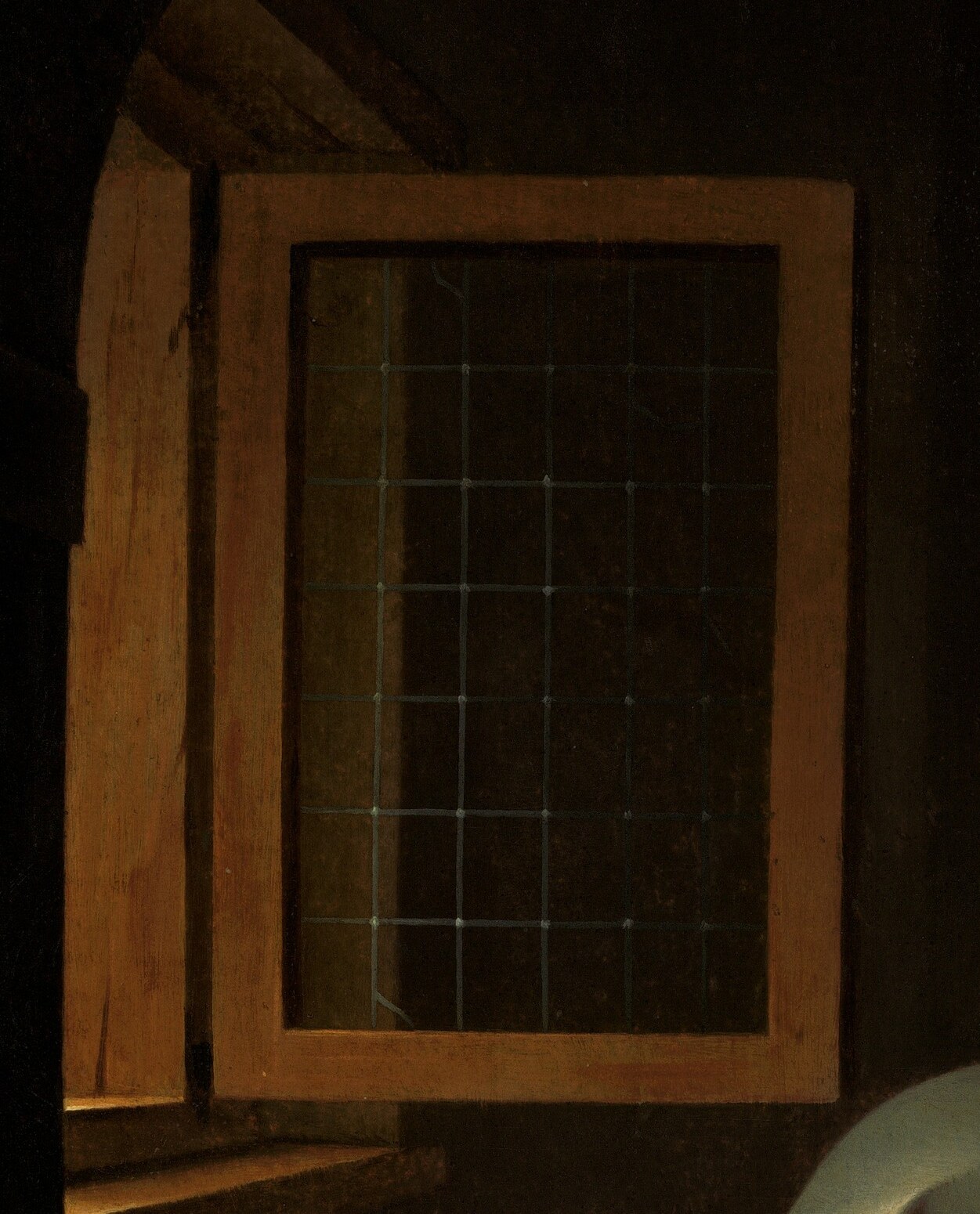
Van Daellen masterfully uses stark contrasts between light and shadow, a technique known as chiaroscuro, to enhance the dramatic impact and depth of the composition. This intensifies the focus on the symbolic elements against a dark, subtly lit background. This painting, created on paper laid down on panel, reflects a common philosophical concern of its era.
What do these symbols mean to you today?
Details
Transcript
A common type of painting in 17th-century Holland. These are 'vanitas' still lifes, reminders of mortality. The burning candle shows time passing, and smoke rises. An open book and inscribed paper represent human knowledge. But the skull questions the ultimate value of worldly pursuits. This genre invited contemplation of life's brevity.