Fruit Still Life by Duncanson, Robert Seldon
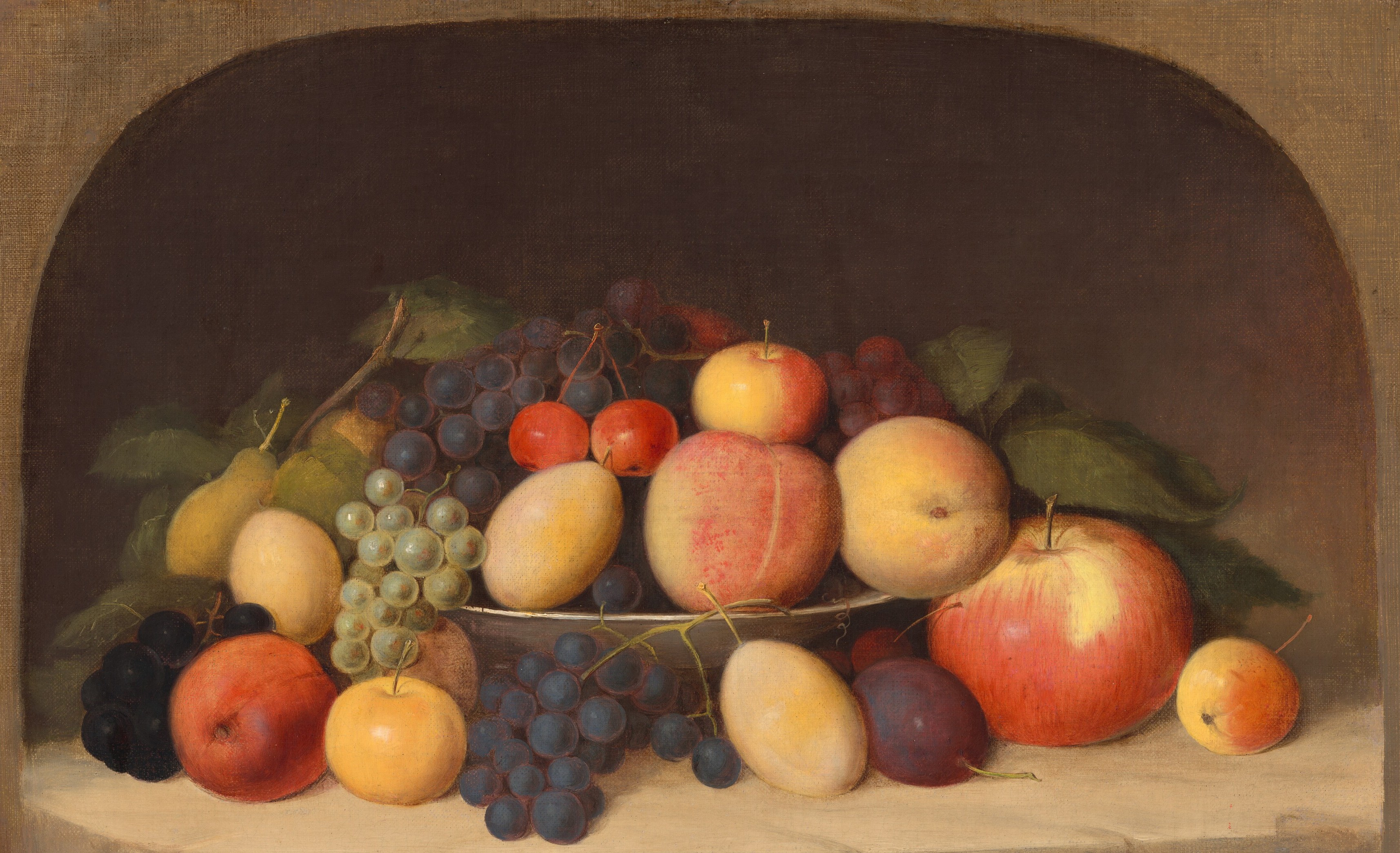
Robert Seldon Duncanson's "Fruit Still Life" is a masterclass in quiet observation, painted around 1849 and now held at the Smithsonian American Art Museum. It exists from a moment before Duncanson became famous for his monumental landscapes, a moment when the self-taught son of a freed Virginia slave was earning a living and sharpening his eye in Cincinnati.
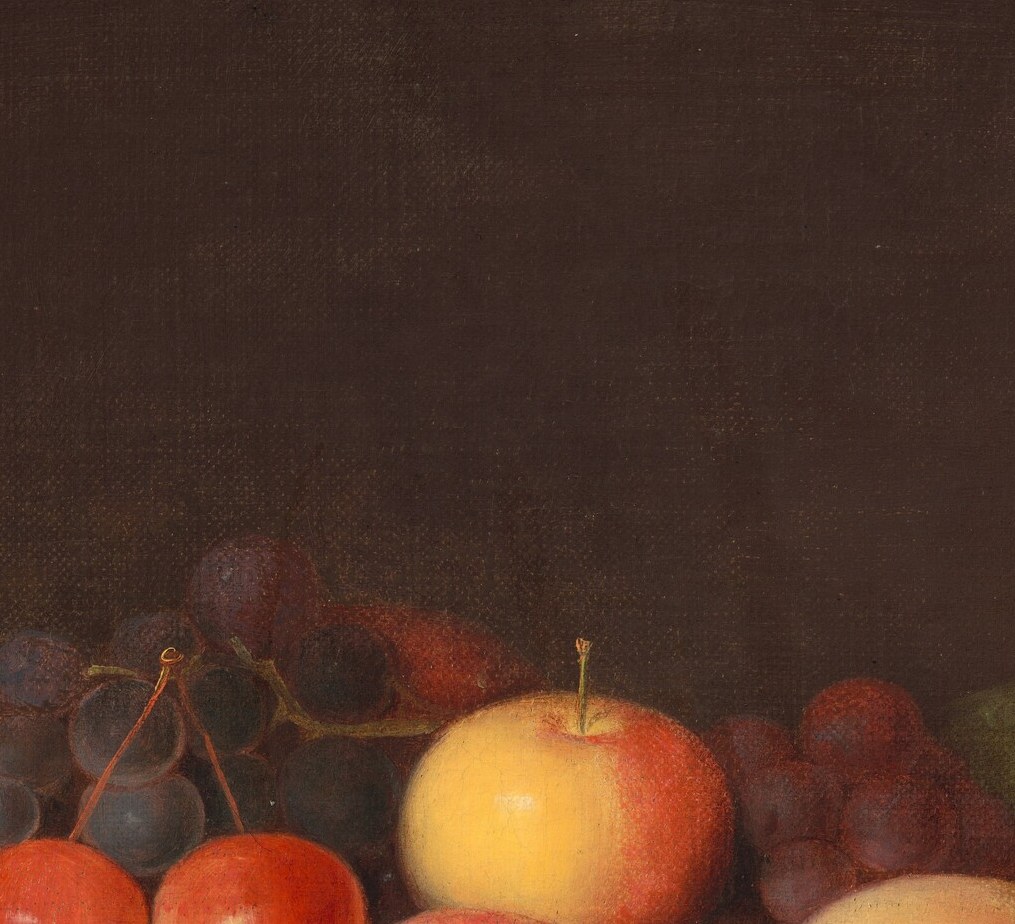
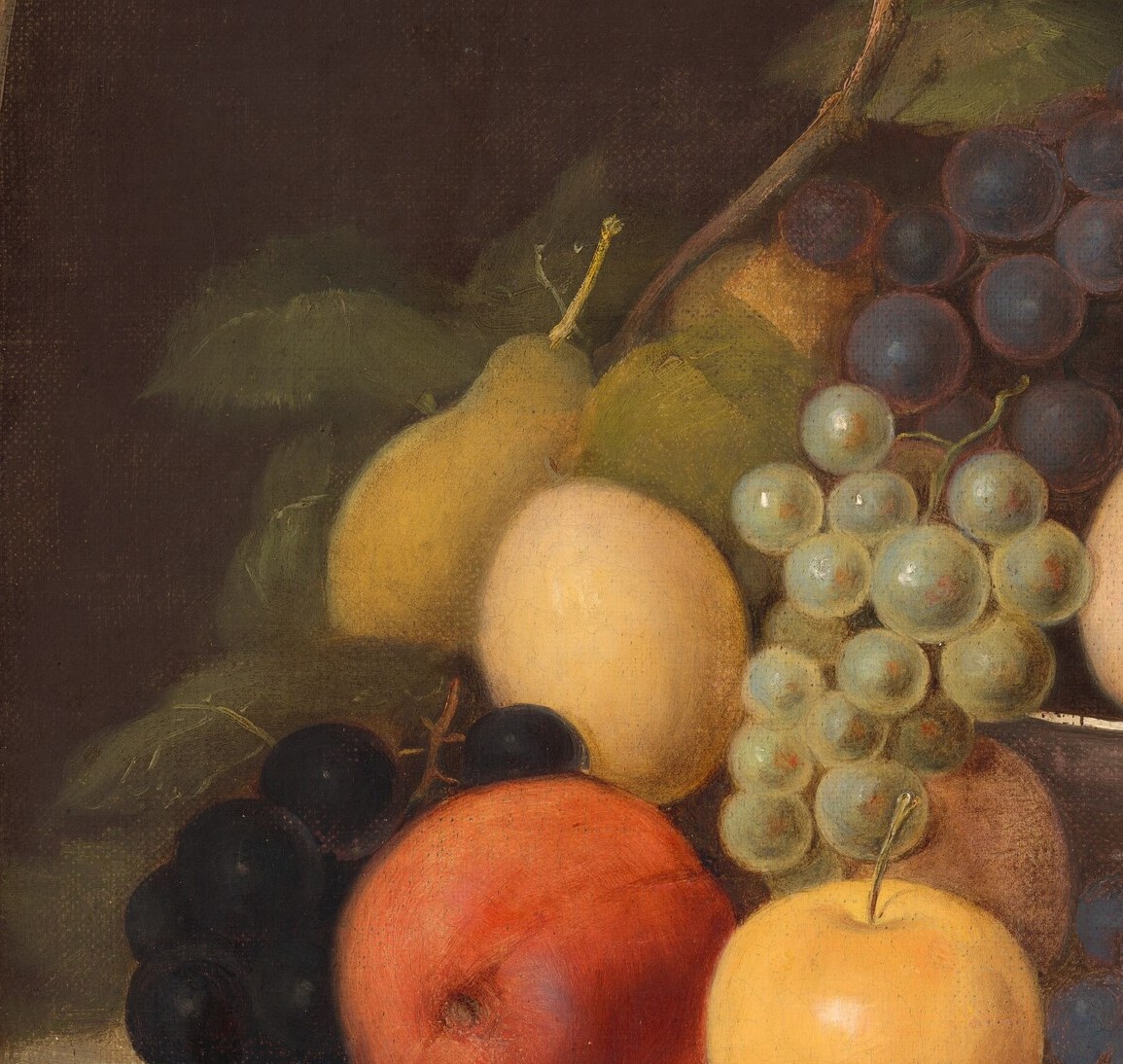
Look past the central peach to the cluster of dark grapes cascading over the bowl's left edge. On each individual grape, Duncanson painted a faint, dusty bloom, the natural yeasty coating that signals ripeness and the moment of harvest. The bowl itself is nearly invisible, a humble white vessel that steps back so the fruit can speak.
Painted about a decade before the Civil War, this still life represents a bold artistic choice. Duncanson was openly working as an artist and exhibiting professionally at a time when many patrons only wanted portraits or epic landscapes. This modest canvas captures the precise technical control that would later earn him international acclaim when he finally traveled to Europe.
Take a moment with those grapes. You are looking at the hand of a man who taught himself to see what others would scroll past.
Details

Transcript
First glance: a simple, generous pile of fruit. The artist was a free Black man in Ohio, 1849. This was years before he could study in Europe. But look closer, at the dark grapes on the left. He painted the waxy bloom on every single berry. A tiny, dusty veil that proves they were just picked. A master-level detail, painted in America before he ever crossed the Atlantic.