The slaughtered ox by Abraham van den Hecken the Younger
View the artwork: The slaughtered ox →
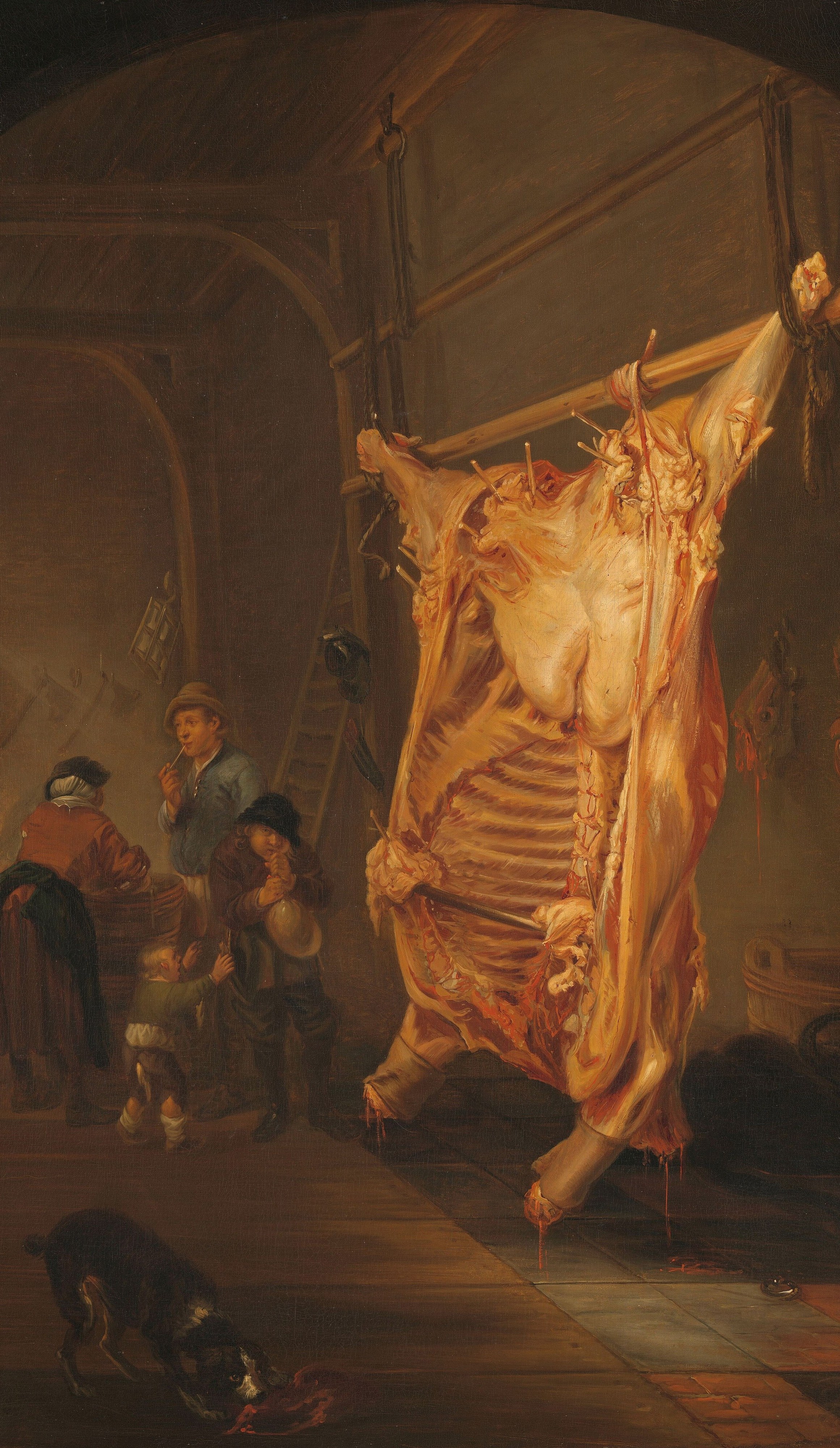
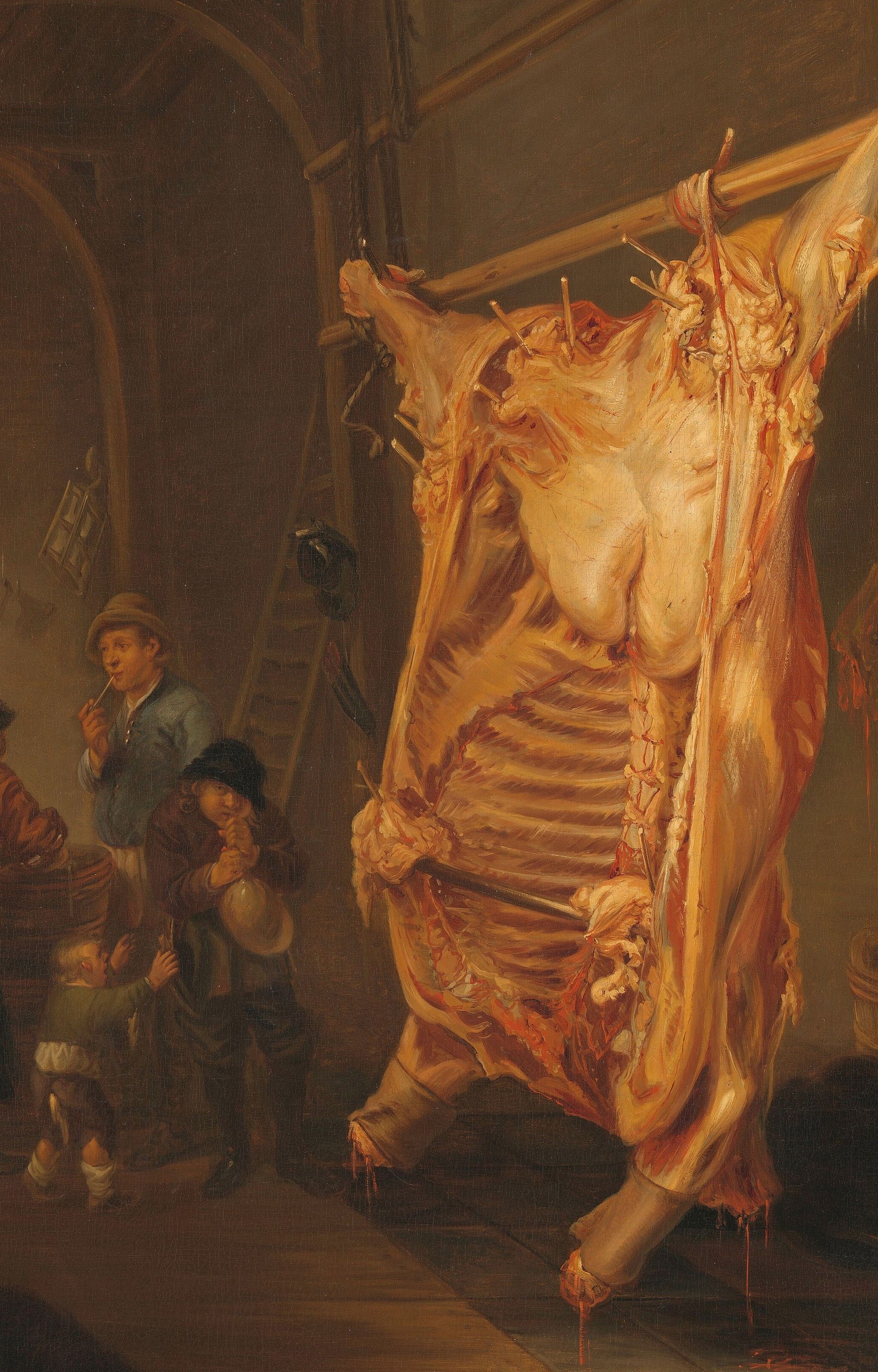
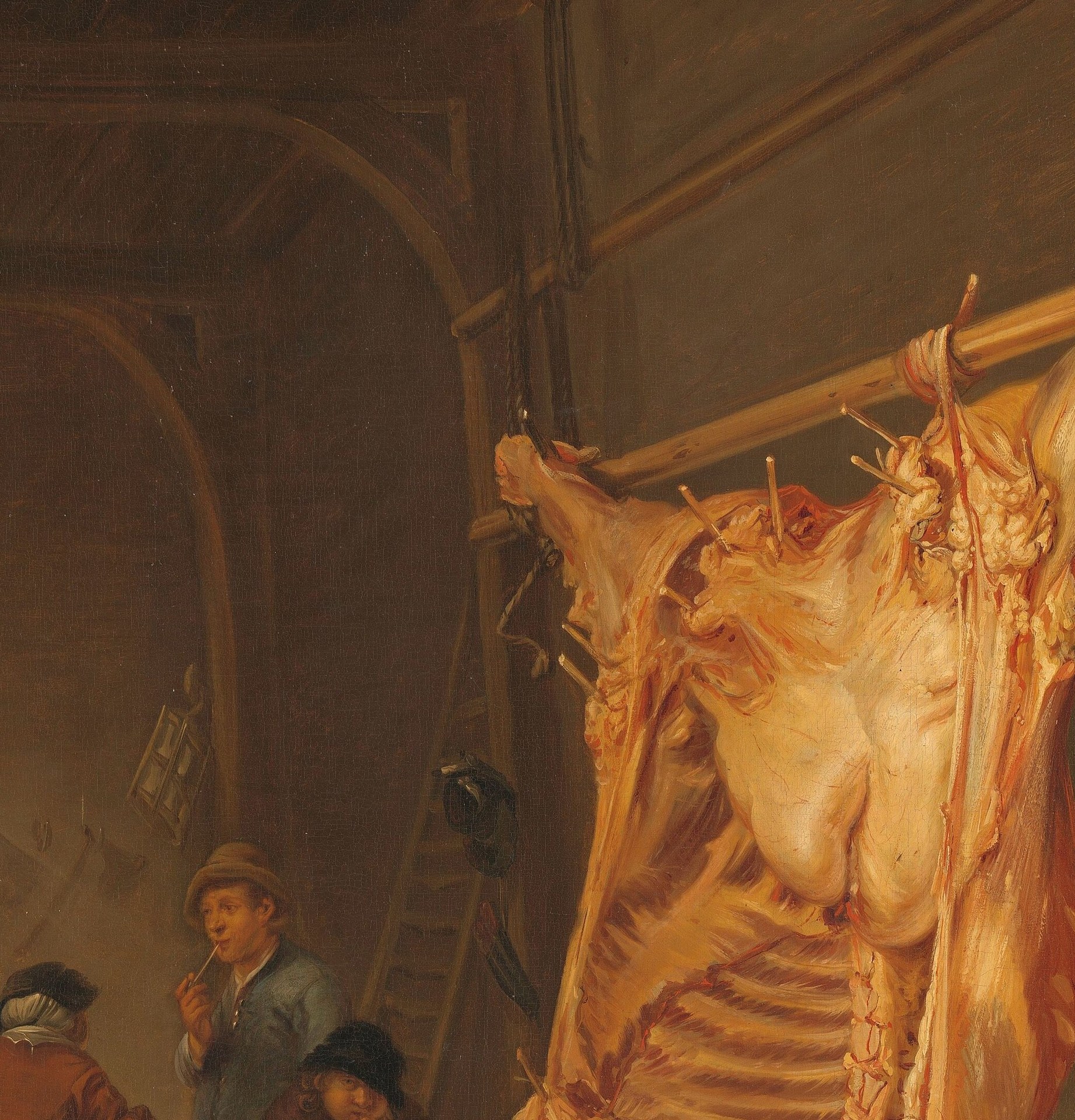
Abraham van den Hecken the Younger painted The Slaughtered Ox around 1635, and at first glance it presents a single monumental subject: a flayed carcass suspended from a beam in a dim cellar. The impasto on the meat is so thick it seems to lift off the canvas, a virtuosic passage that made 17th-century viewers marvel at its wet, raw sheen.
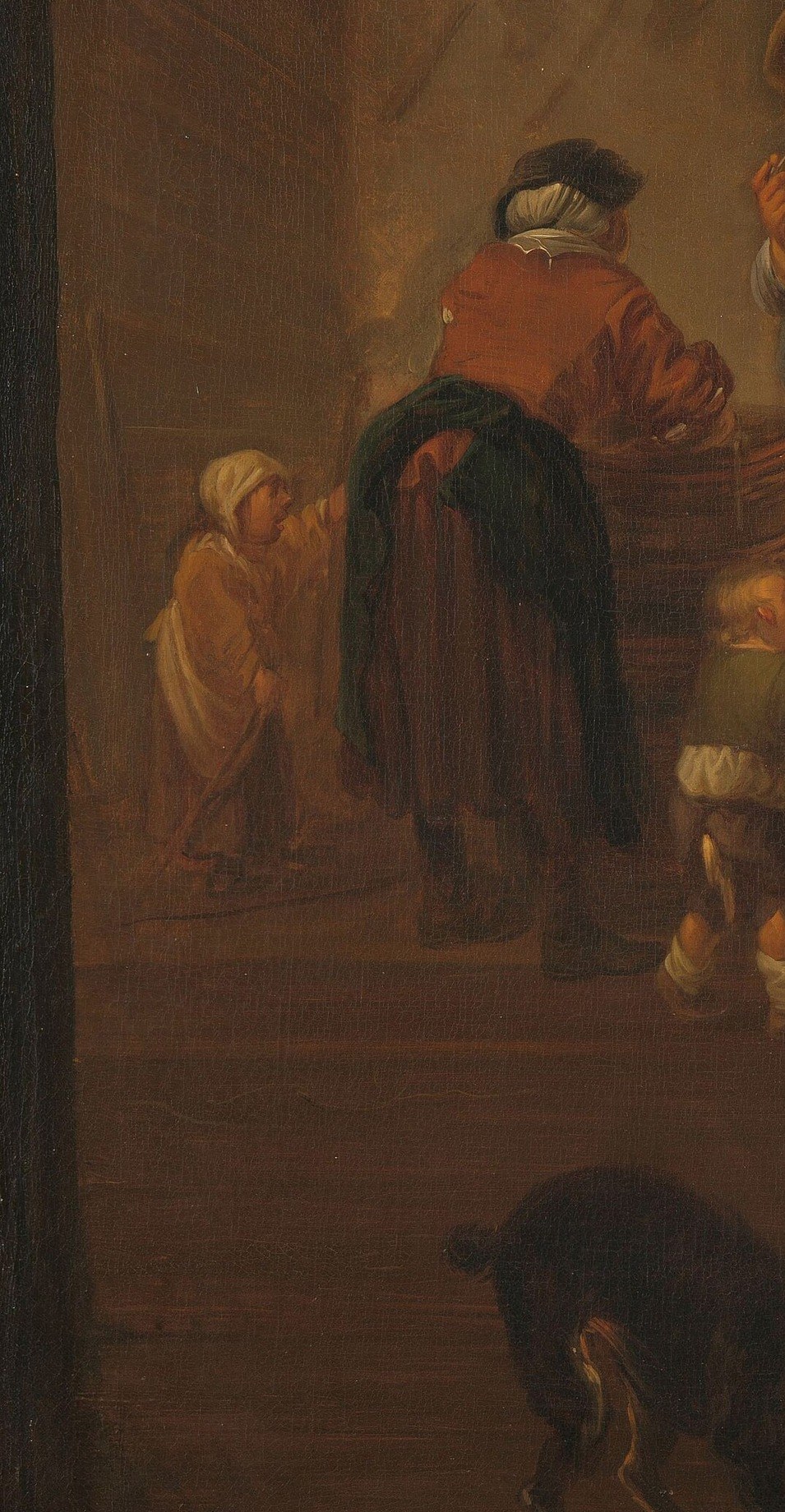
But the painting is not a still life alone. Look past the carcass, into the shadowed left background, and you will find three human figures: a man in a red coat, a small child in dark clothing, and a boy wearing a hat. They stand together as witnesses, turning the slaughter into a shared, quiet event. Lowest of all, almost swallowed by the floor shadow, a dog waits near a wooden barrel.
Van den Hecken was a Dutch-Flemish painter born in Antwerp in 1616, active in Amsterdam. This work belongs to a tradition of butchery scenes that carried complex meanings for Dutch audiences: the ox was both everyday food and a symbol of abundance and mortality. The carcass, its legs spread by a wooden bar, also echoes the posture of a crucifixion, a deliberate visual parallel contemporary owners would not have missed.
What the painting offers most powerfully is the reward of patient looking. The third figure and the dog only resolve after a long moment in the dark. What detail did you find last?
#arthistory #dutchgoldenage #hiddenfigures
Details
Transcript
At first, it looks like a painting of meat. But you are not alone with it. A man in red watches from the dark. And a small child stands beside him. Keep looking. There is a third figure, barely visible. And a dog, waiting in the lowest shadow. The painter hid a whole household inside this butchery.