Artwork
The slaughtered ox
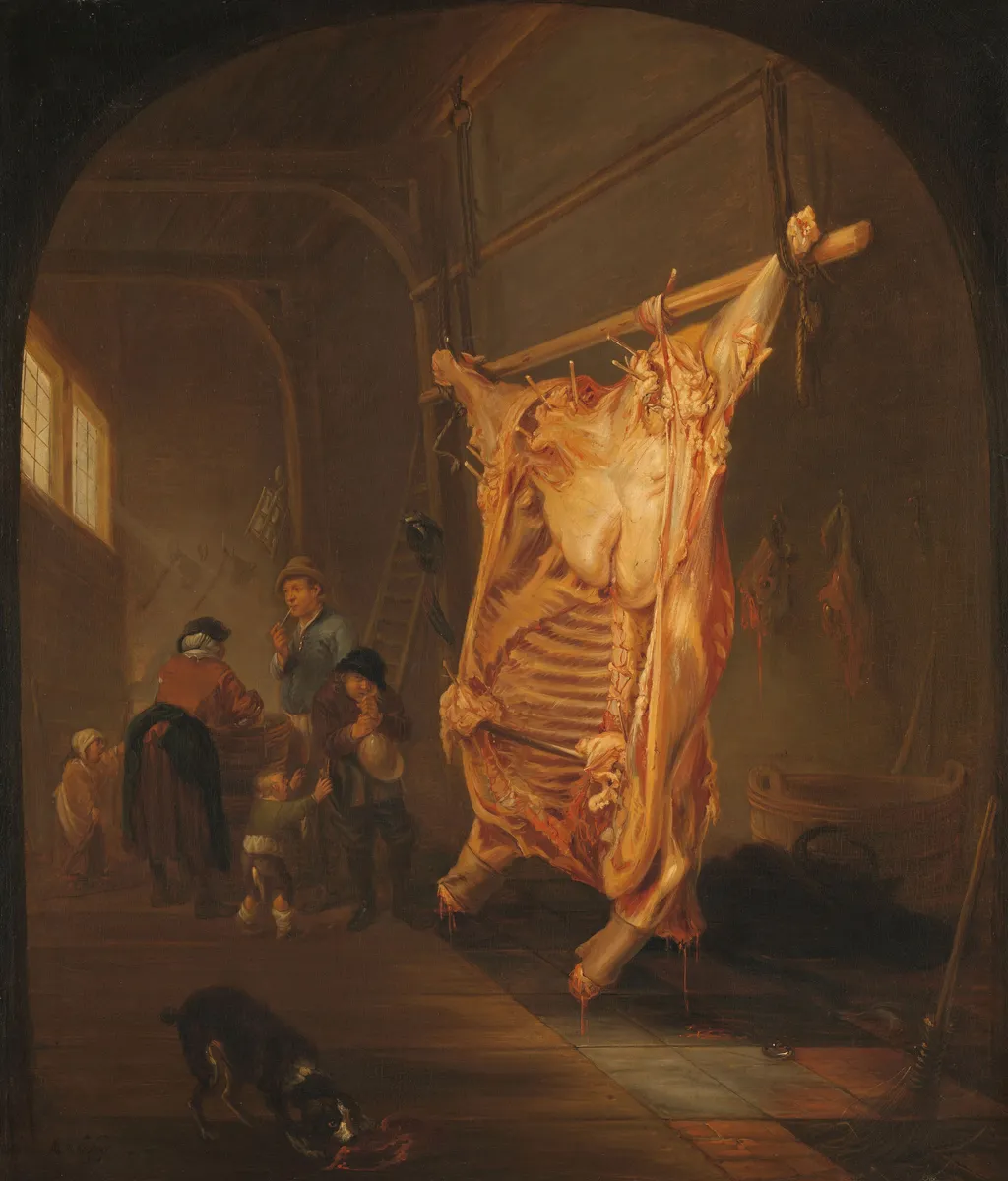
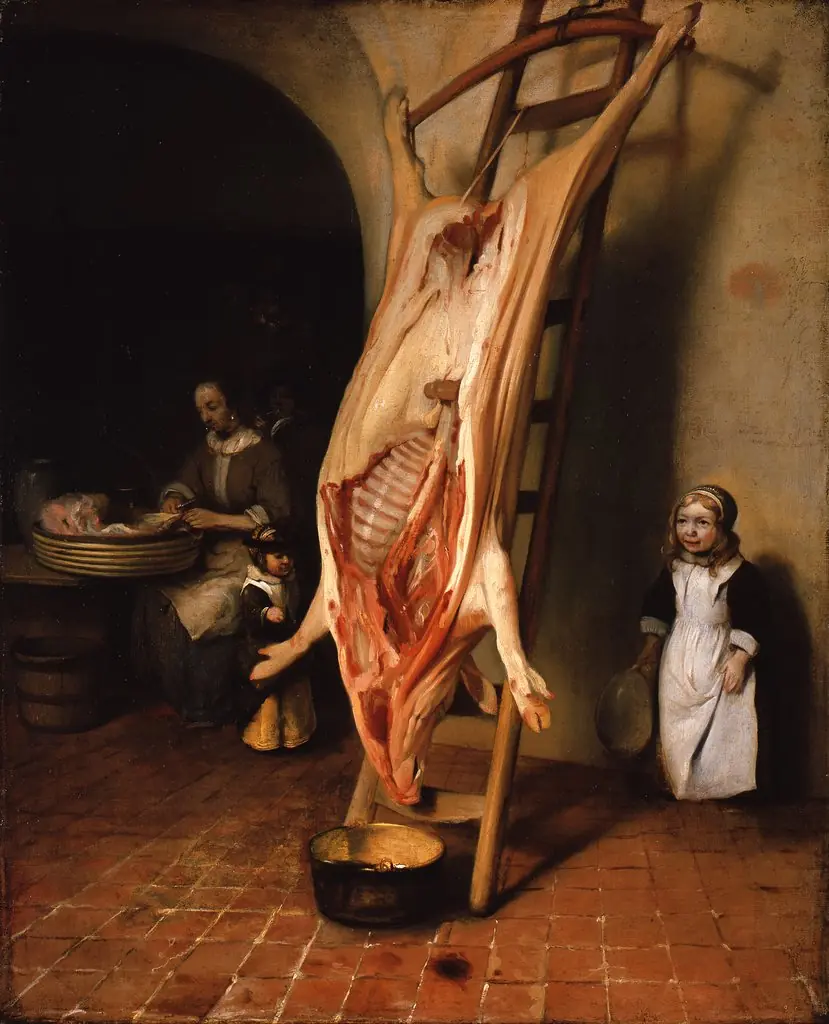
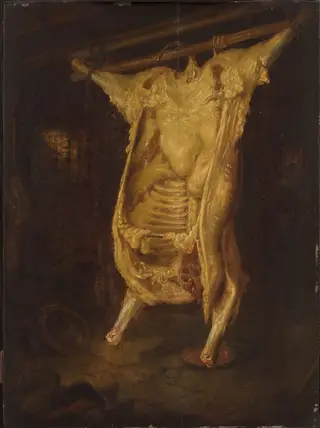
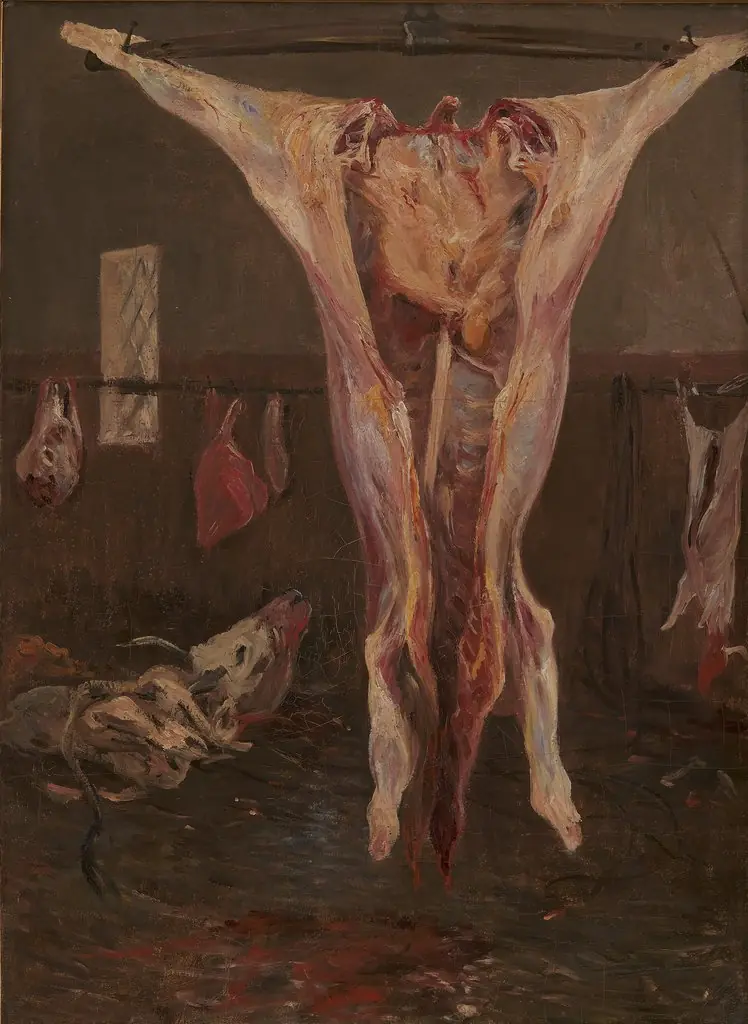
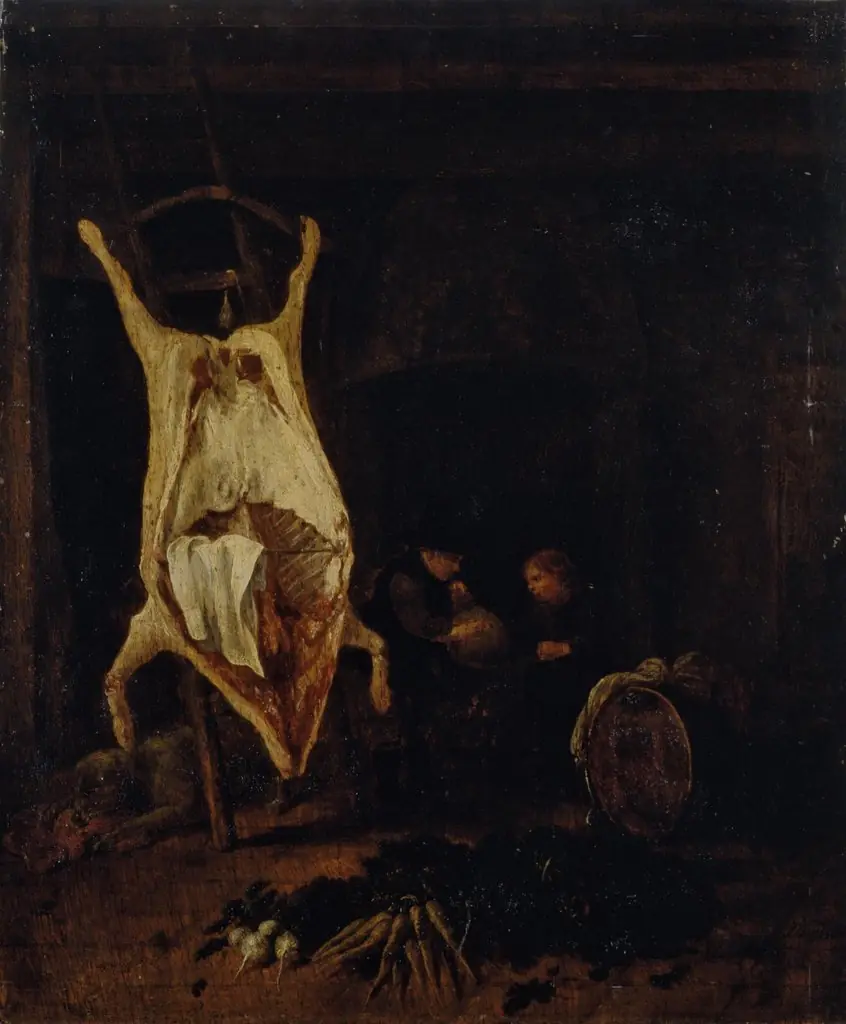
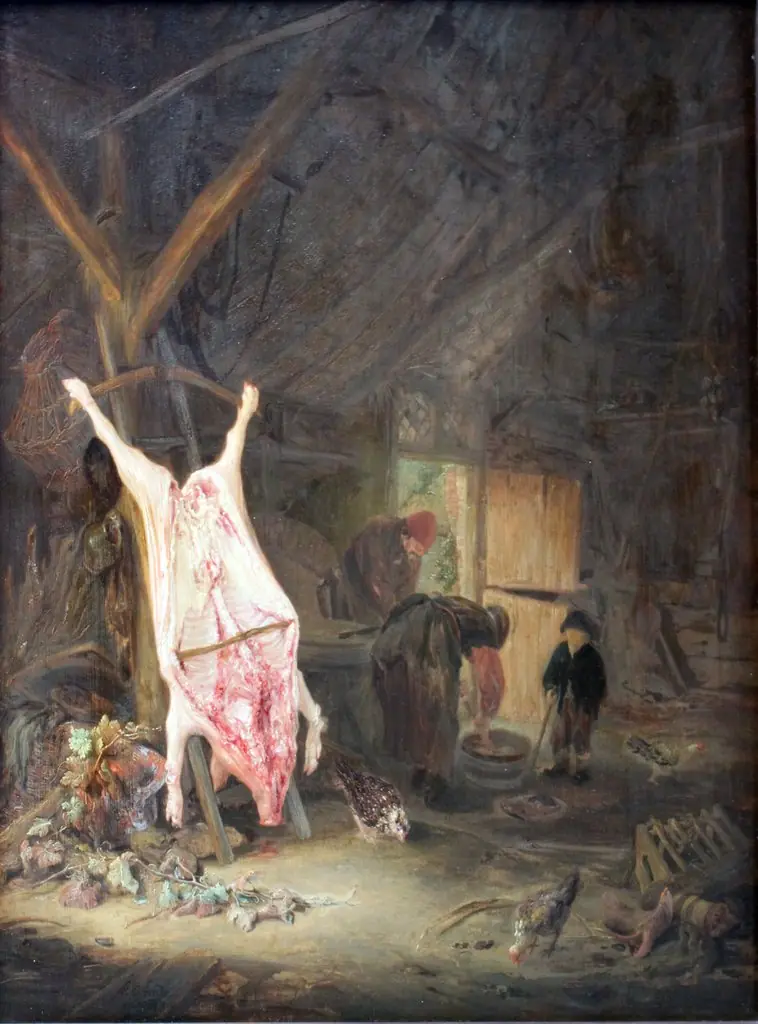
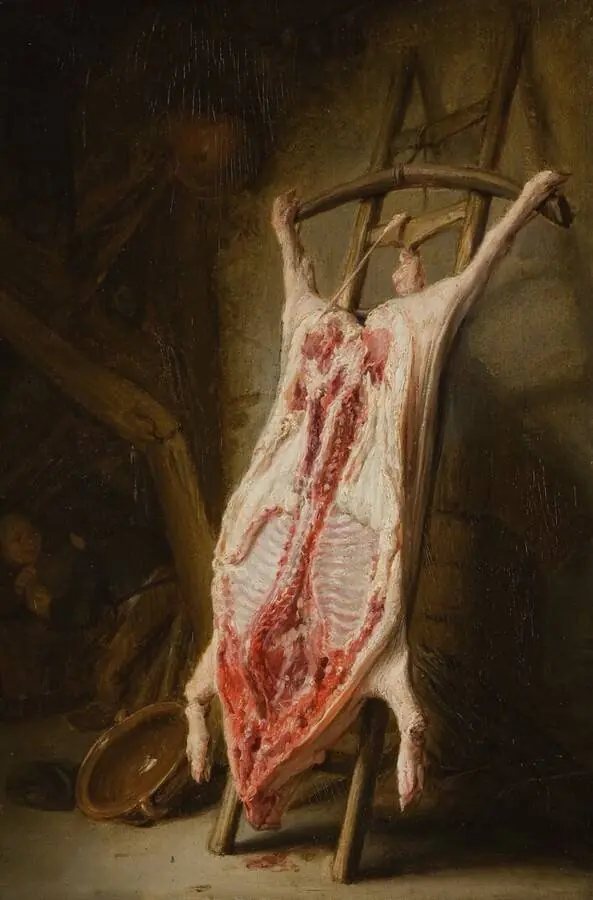
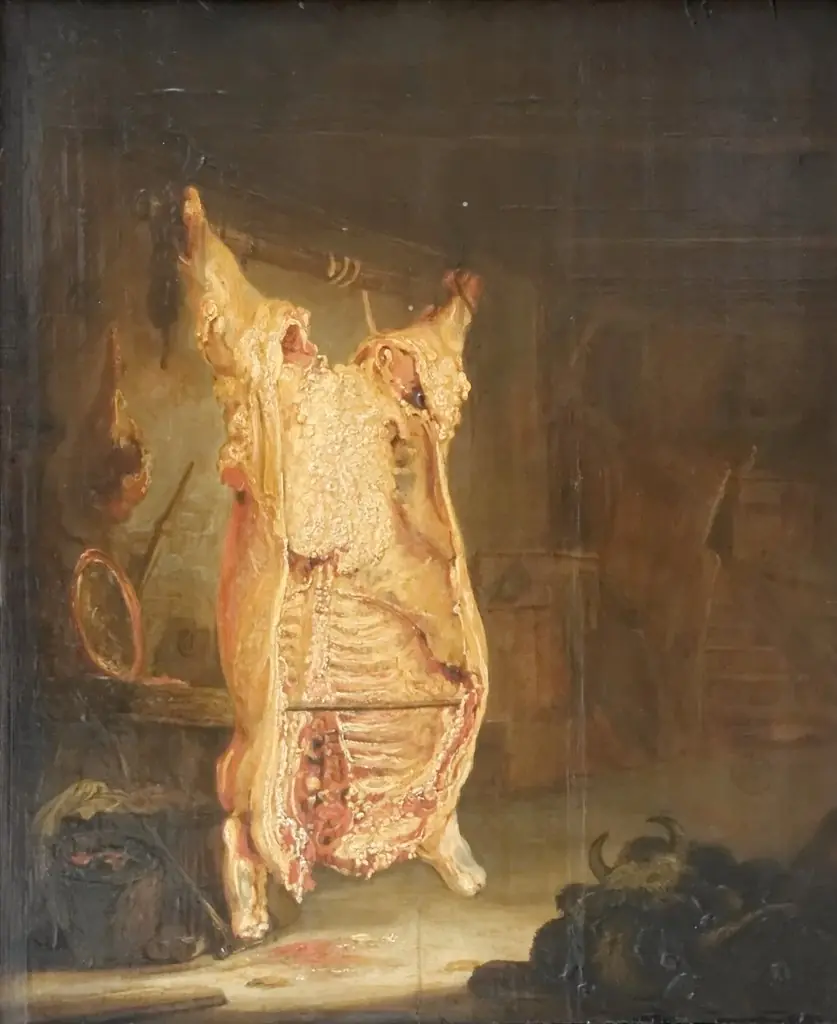
The slaughtered ox is an oil painting by the Dutch Golden Age artist Abraham van den Hecken the Younger. It dates from 1635 and is held in the collection of the Rijksmuseum. This oil painting presents a large ox carcass suspended within a dimly lit, brick-walled interior.
About this work
Subject & Meaning
The inclusion of meat hanging for aging underscores the work's focus on the practical realities of butchery and household provision.
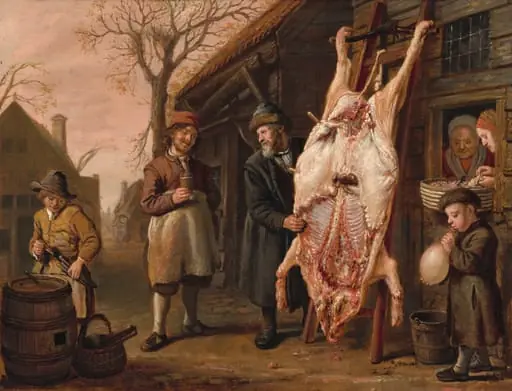
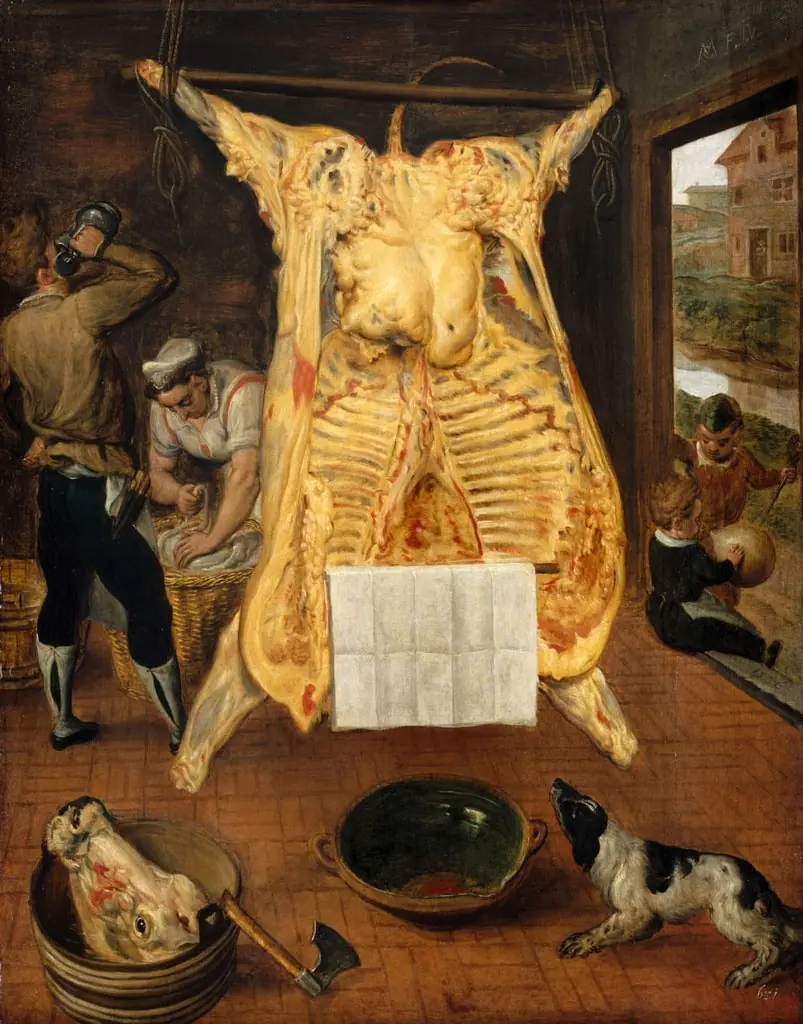
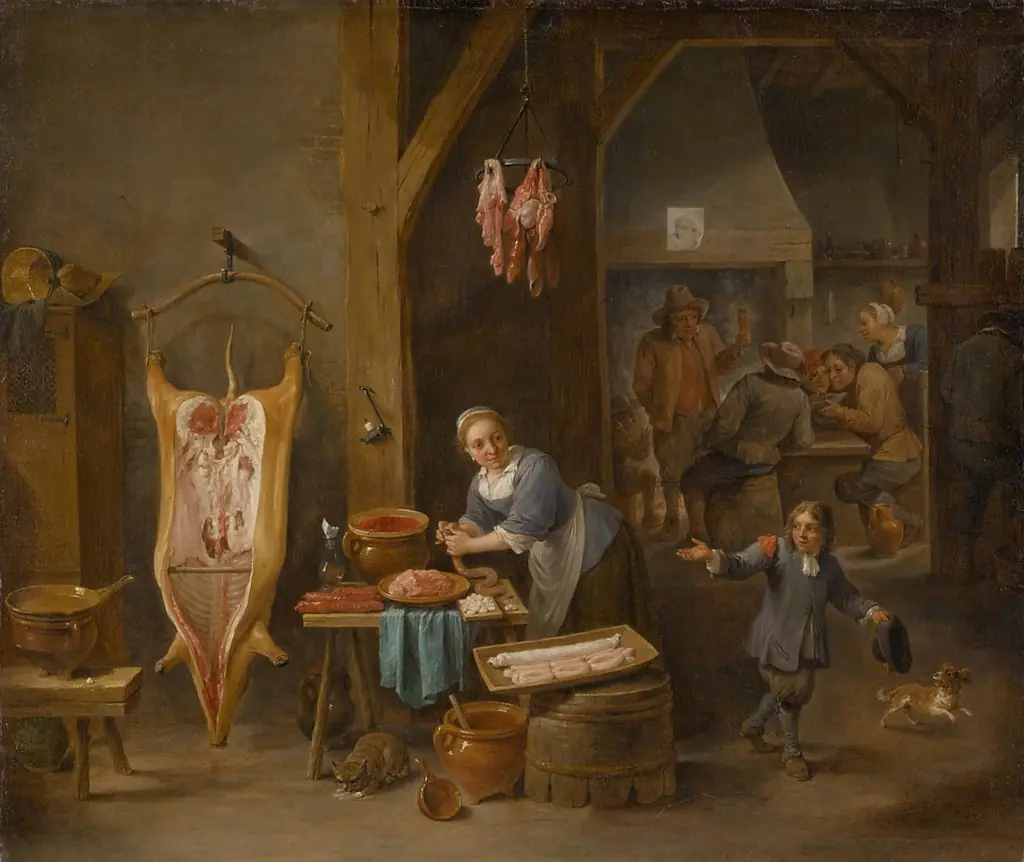
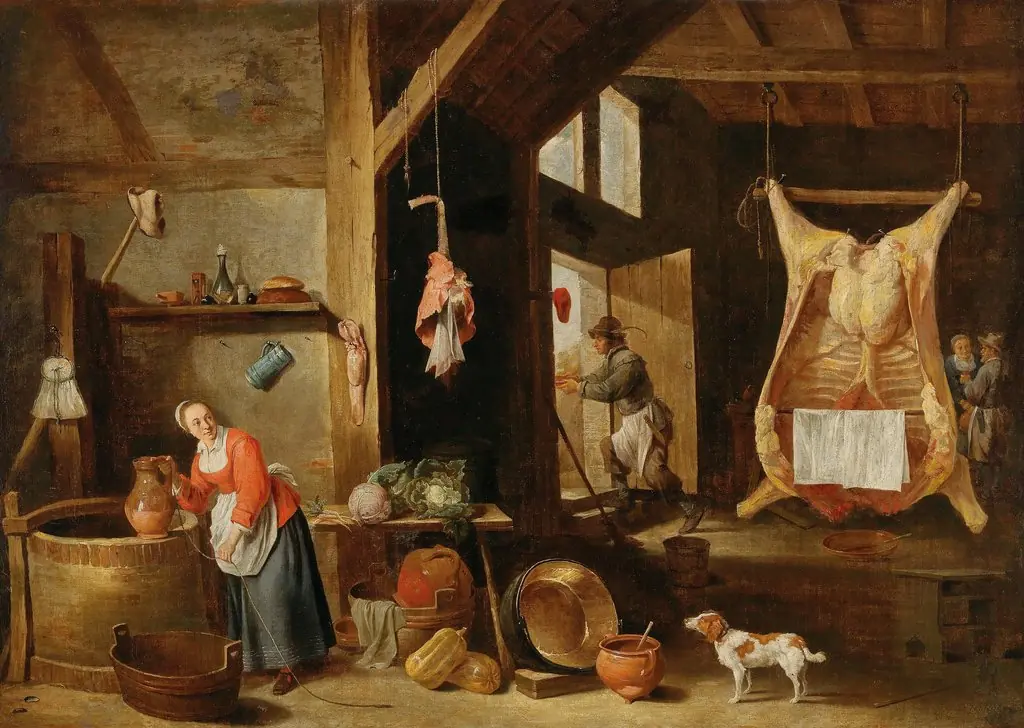
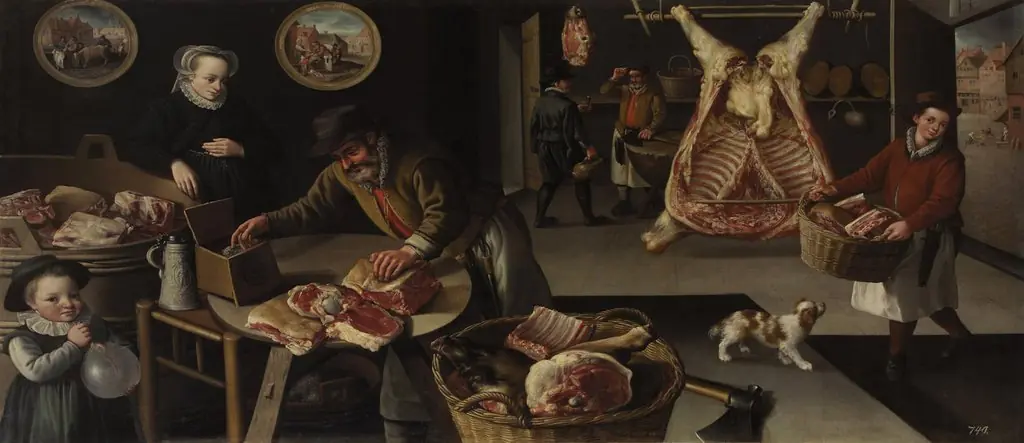
The painting depicts a slaughtered ox suspended by a rope, a motif recurrent in Dutch genre scenes of the seventeenth century. A child stands to the left, while a woman washes her hands in a barrel, and a man smokes a pipe in the background; a dog and broom appear in the foreground, anchoring the scene in a domestic slaughterhouse setting. The inclusion of meat hanging for aging underscores the work's focus on the practical realities of butchery and household provision.
Such imagery has been interpreted as a meditation on the transience of life and the cycles of consumption, aligning with broader Calvinist reflections on labor, providence, and the moral economy of the Dutch Republic.
Technique & Style
Created by Abraham van den Hecken the Younger, The Slaughtered Ox is an oil painting executed on a canvas support. The work, dated to 1635, belongs to the genre art tradition and depicts a slaughterhouse scene with hanging meat and various figures. The painting measures 114 centimetres in height and 98 centimetres in width.
As a genre scene, it focuses on the formal representation of everyday life, specifically the butchering of an ox, incorporating elements such as a child, a dog, and a woman washing her hands within the composition. The medium of oil paint allows for the detailed rendering of textures associated with the beef, the wooden barrel, and the surrounding slaughterhouse environment.
History & Provenance
The Slaughtered Ox was painted circa 1635 by Abraham van den Hecken the Younger in the Dutch Republic, executed in oil on canvas. The work measures approximately 114 cm high by 98 cm wide and is presently part of the Rijksmuseum collection in Amsterdam. No earlier owners, commissioning patron, or subsequent transfers are documented in the sources, leaving the pre-Rijksmuseum provenance undocumented.
Overview
This oil painting presents a large ox carcass suspended within a dimly lit, brick-walled interior. The central subject is surrounded by a few figures, a man, a boy, and a child, who observe the scene. The artist employs light to highlight the raw meat, creating a striking contrast with the room's shadowed corners, while a dog occupies the foreground near a barrel.
Own this work as a print
Artist & collection
Artist
Abraham van den Hecken the Younger
Abraham van den Hecken or Abraham van den Hecken the Younger (Antwerp, 1616 - between 1655 and 1669) was a Dutch-Flemish painter. He is known for his genre pieces, religious and historical scenes, portraits and still lifes.