The Last Communion of Saint Jerome by Sandro Botticelli
Sandro Botticelli’s "The Last Communion of Saint Jerome," painted around 1495, depicts the venerable saint receiving his final Eucharist. Now housed at the Metropolitan Museum of Art, this painting carries a fascinating link to the religious fervor of late 15th-century Florence.
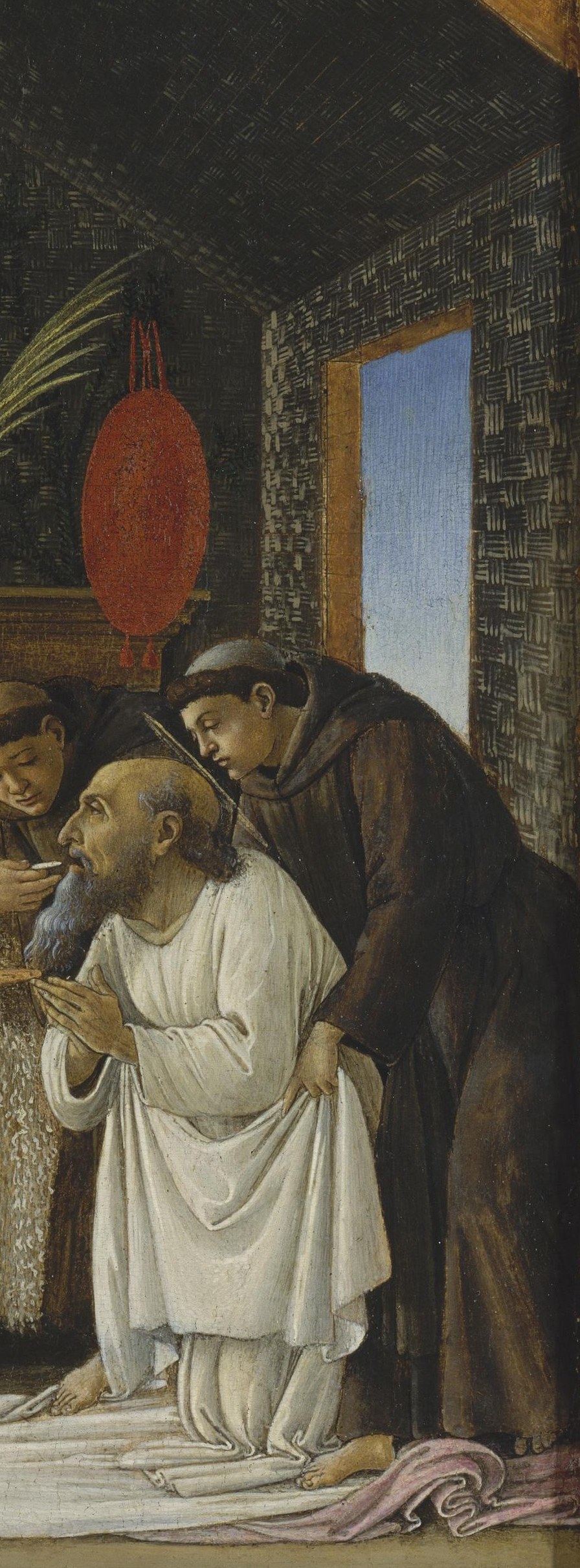
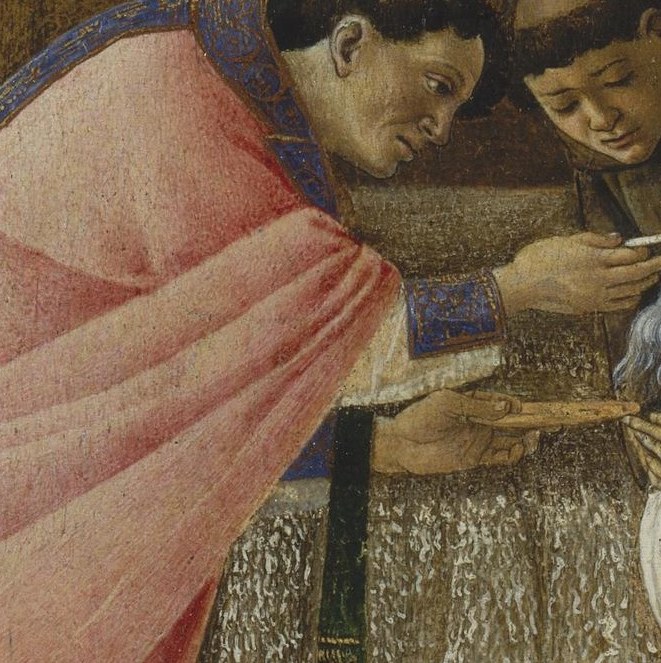
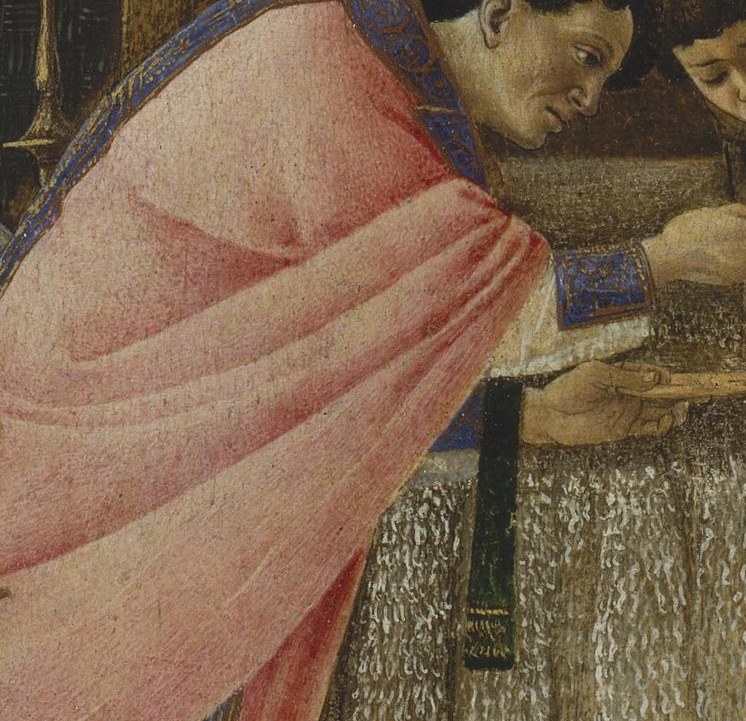
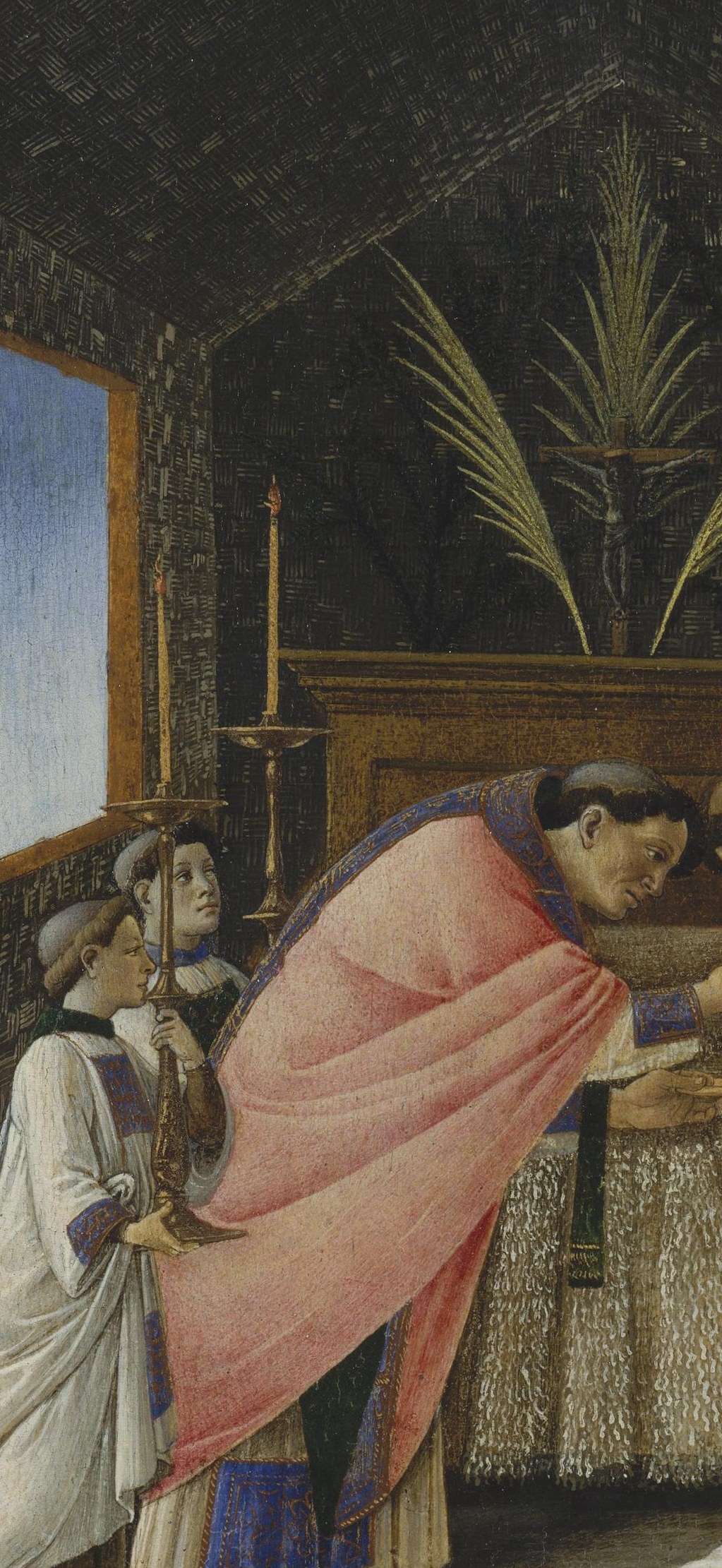
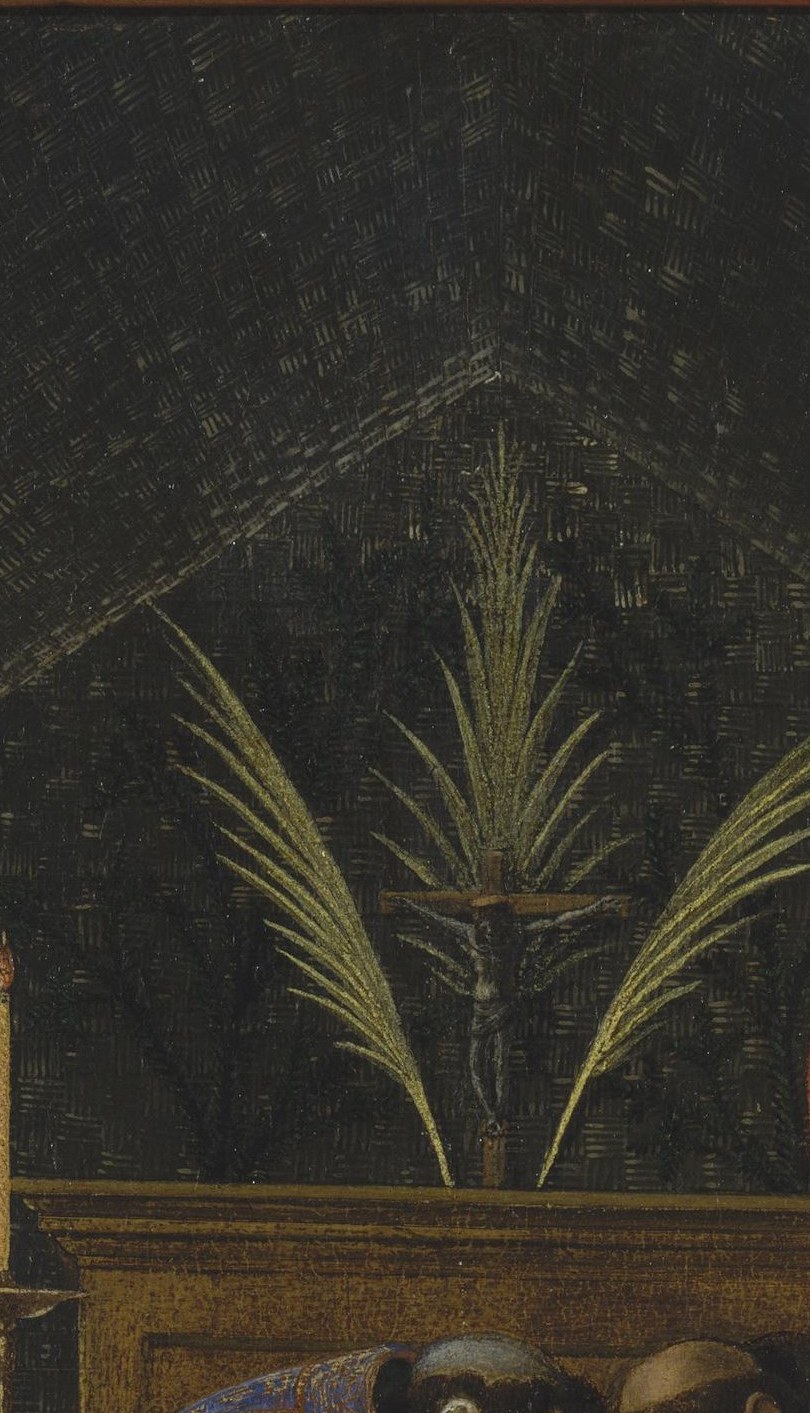
The scene itself, showing Jerome being assisted to kneel for the host, emphasizes his profound faith. Botticelli's detailed rendering, from the cascading drapery of the priest to the strained face of Jerome, brings this poignant moment to life.
Commissioned by Francesco del Pugliese, a known supporter of the controversial preacher Girolamo Savonarola, the painting reflects the religious climate of its time. The story of Jerome's last communion, derived from a popular medieval text, resonated deeply with Savonarola's followers who viewed it as a blueprint for true Christian belief. Del Pugliese likely saw a powerful contemporary parallel between Saint Jerome and Savonarola himself.
What do you notice about the expressions of the monks witnessing this moment?
Details
Transcript
This painting shows a dying saint receiving his last communion. Its patron, Francesco del Pugliese, was a follower of Savonarola. Savonarola was a fiery preacher, then active in Florence. Del Pugliese saw a parallel between this saint and Savonarola. Jerome's story had recently become popular in Italy. It was seen as a guide to authentic early Christianity. And this painter made it real for his patron.