The Road from Moret to Saint-Mammès by Alfred Sisley
Alfred Sisley's 'The Road from Moret to Saint-Mammès' (1892) is a view down a quiet country lane in the Île-de-France region, now held at The Metropolitan Museum of Art. Sisley was the most dogged of the Impressionists, a British-born painter who spent nearly his entire career in France and remained devoted to painting outdoors, or en plein air, long after some of his colleagues moved back into the studio.
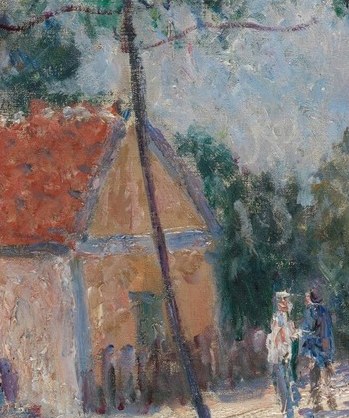
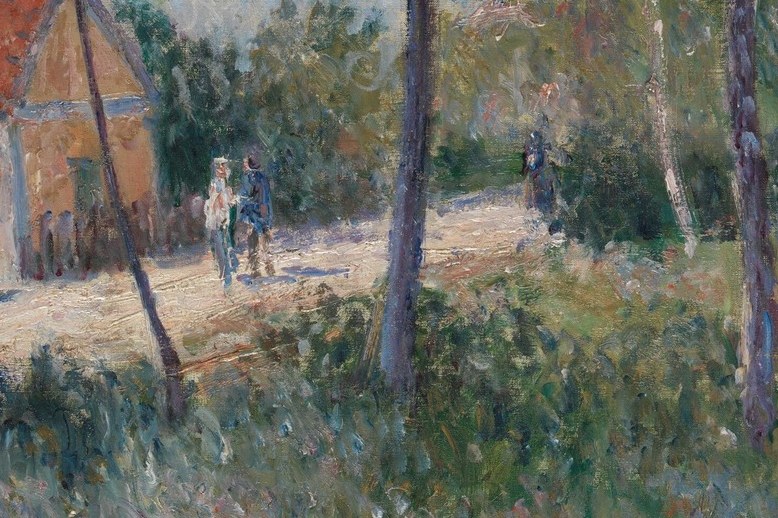
Look at the dappled shadows falling across the pale dirt road. Sisley didn't paint shadow as a darker version of the earth tone underneath. He saw it as a shift in colour, using cool lavender and grey strokes laid directly against warm ochre. The single figure, small against the house and poplars, is not a portrait but a scale marker, showing how fully the landscape absorbs human presence.
This is a late-career work. By 1892, Sisley had been living in the Moret-sur-Loing area for over a decade, painting its rivers, canals, and roads with a quiet persistence that never brought him financial security in his lifetime. The poplars lining the right side of the road act like a screen, a structural device he borrowed in part from Japanese woodblock prints, parcelling the view into bays of light and shade.
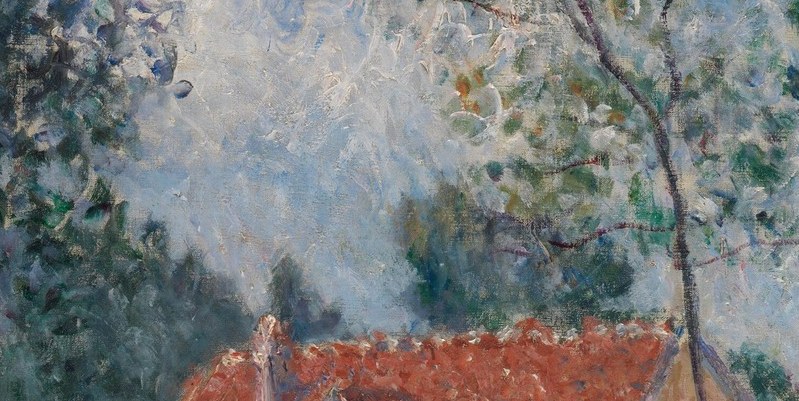
What moves me about this painting is how little it asks for attention and how much it rewards it. Every patch of green in the canopy above is a slightly different mix of pigment, and the whole thing holds together as a record of an ordinary afternoon that someone stood still long enough to see.
Details
Transcript
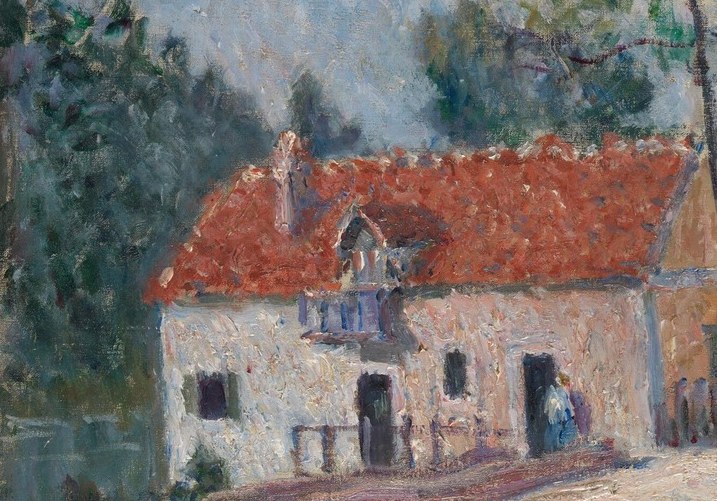
1892. The road from Moret to Saint-Mammès. A single figure stands in the road. A small chimney confirms this is a home, not a ruin. Sisley painted these shadows not with black, but with cool lavender and grey. He was the most consistent Impressionist, painting outdoors his whole life. In this quiet lane, the French countryside itself is the subject.