Doubting Thomas by http://www.wikidata.org/.well-known/genid/fc96234a363e4040e526d3e2c9e68711
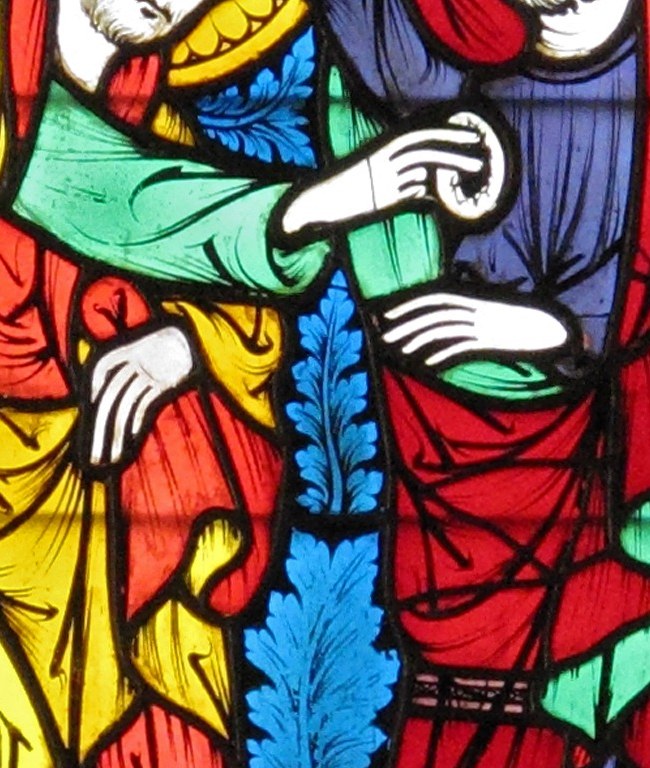
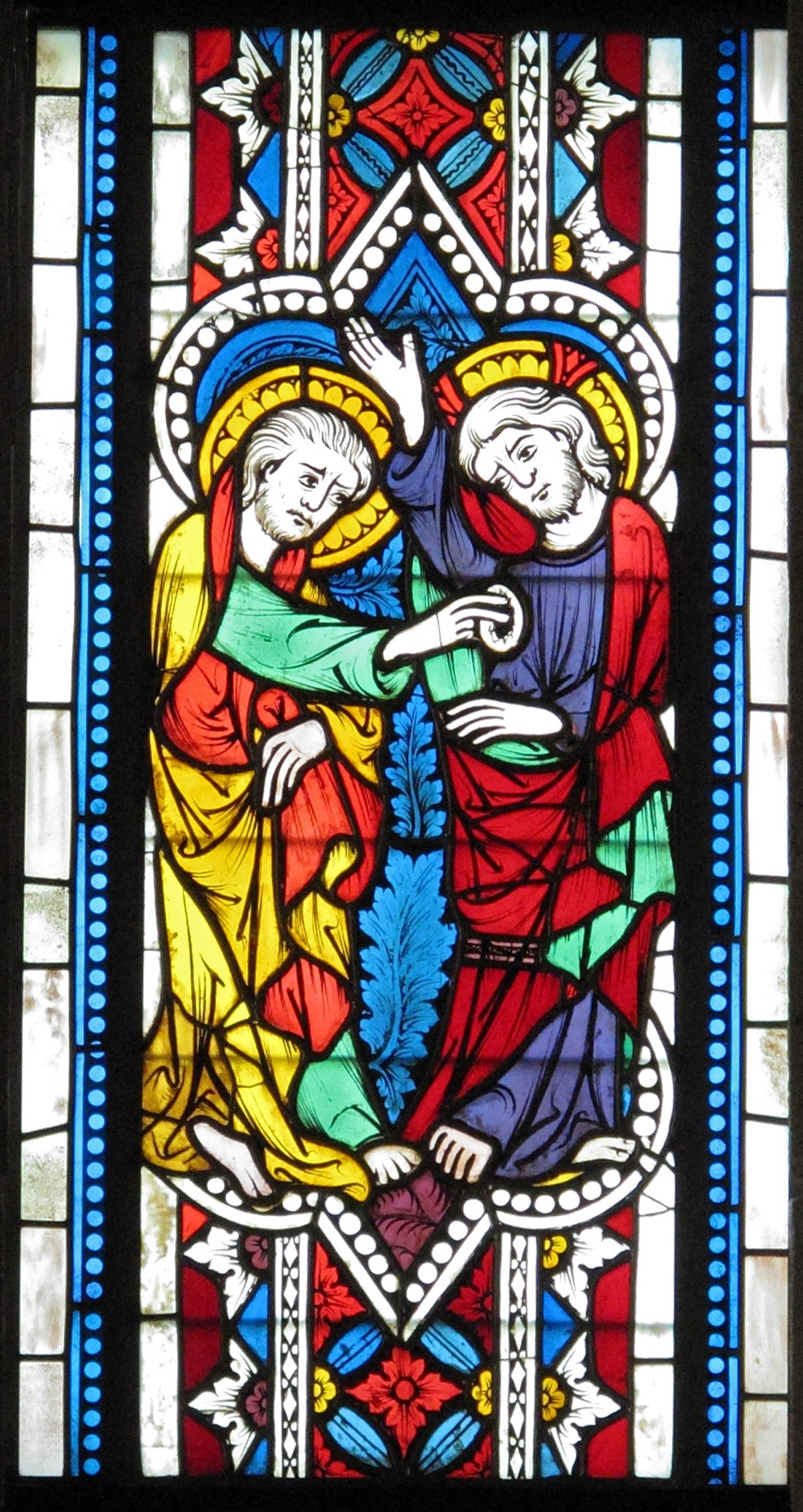
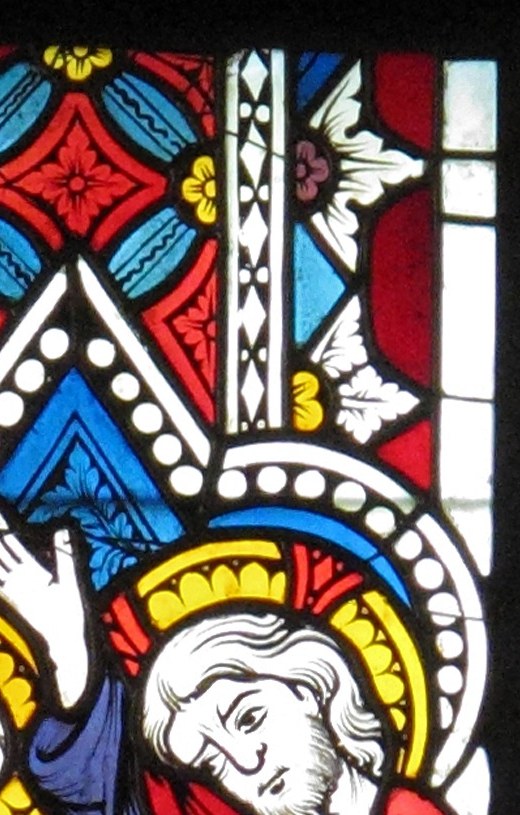
This is the Doubting Thomas, a stained glass panel made around 1350 by an unknown German master, now in a museum collection. It shows the resurrected Christ appearing before his apostle Thomas, who famously refused to believe in the resurrection until he could physically touch Christ's wounds.
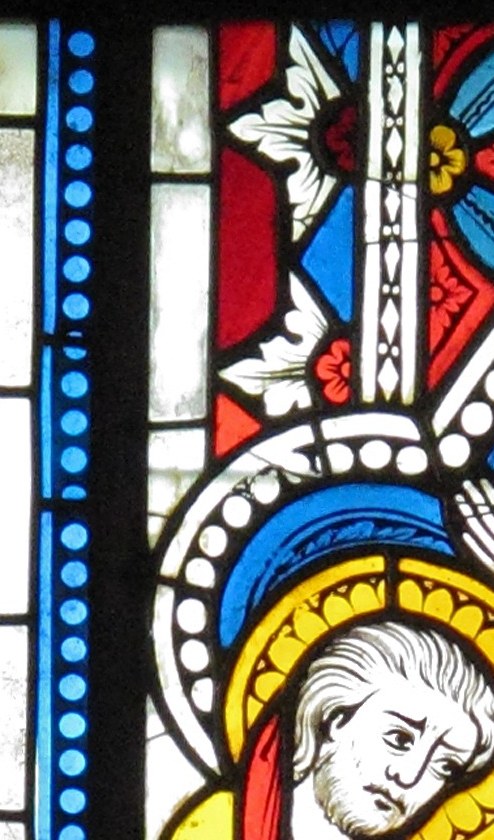
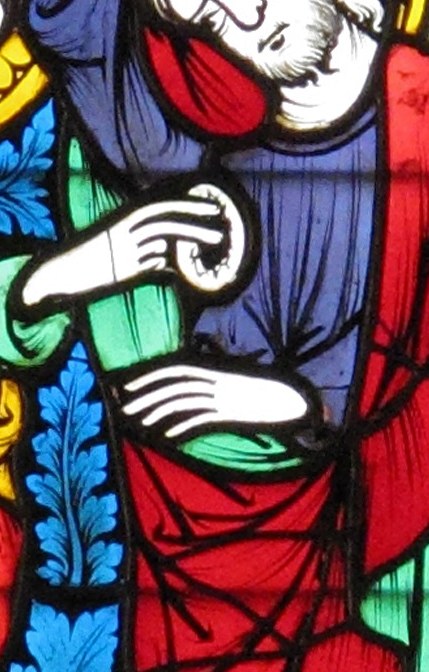
The composition centers entirely on the joined hands at the middle of the frame. Thomas, on the left, wears a deep blue robe and stares with wide, uncertain eyes. Christ, robed in royal purple and red, gestures toward his open wound with an expression of calm authority. He is not scolding. He is offering evidence. The lead lines do double work here: they hold the glass together, and they draw every fold of fabric, every facial feature, with astonishing medieval economy.
This panel was made in the wake of the Black Death, which had killed a third of Europe just a few years earlier. In that context, a scene about touching something true, verifying it with your own hands, carried a weight we can only partly imagine. Stained glass at this date was wildly expensive, often commissioned for cathedrals and monastic houses. The plain white background glass is a deliberate choice, keeping the focus on the two haloed figures and the single, irreducible moment of contact between them.
It is a window about doubt that has itself survived nearly seven centuries of history. What do you notice first: the faces, or the hands?
Details
Transcript
Two men in a room. Gold halos. One is asking for proof. 1350. Europe has been shattered by plague. People want to touch what is true. Look at his face. Wide eyes. Unconvinced. This is Thomas. Now look at the center. A hand touches an open wound. Christ does not demand belief. He simply offers his hand. The artist used lead not just for structure, but for drawing. Every fold, every feature, a thin line of black leading the eye. This window was made when glass was rarer than parchment.