Untitled by Manak
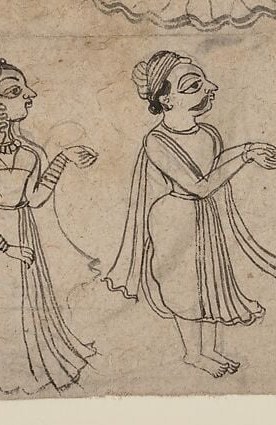
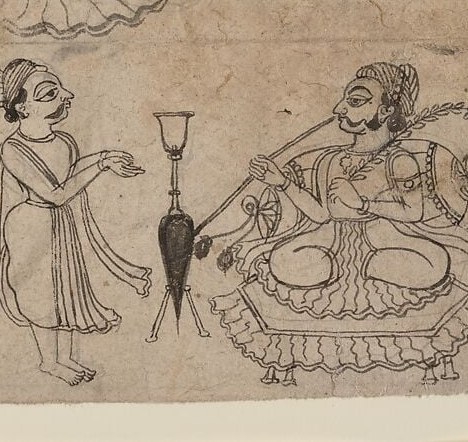
This untitled ink-and-wash drawing by the Pahari master Manak fuses a lively court scene with a sly structural trick. At first glance it presents what we expect from Indian court painting: elegantly dressed figures sharing a tall hookah, attendants at the margins, elephants standing nearby. It reads as a single bustling social moment.
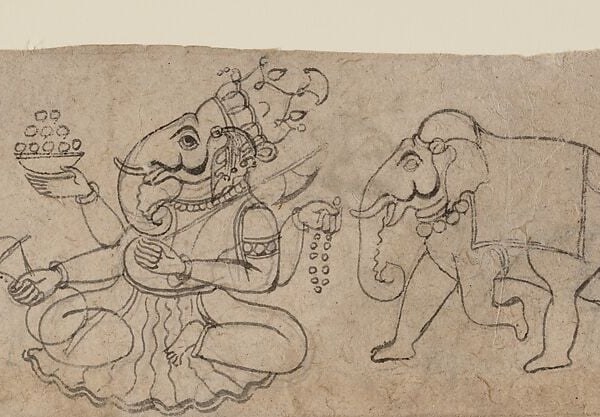
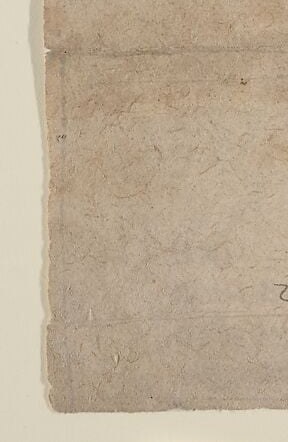
The secret sits in the middle. A deliberate empty band divides the page into two registers, and once you see it, the painting reorganizes itself. Below the gap: the earthly world of leisure, status, and human exchange. Above it: a multi-armed Ganesha placed beside a living elephant, a visual rhyme between the deity and his animal counterpart.
Manak came from the Seu family of Guler, a small Himalayan kingdom. He trained in an atelier that absorbed late Mughal naturalism and later carried the idiom into the Kangra court under Raja Sansar Chand. His work often embeds devotional meaning inside seemingly secular scenes, a Gita Govinda series from 1730, Bhagavata Purana folios, and drawings like this one where the sacred and the everyday share the same sheet of paper.
Most people scroll past the gap. Once you notice it, you cannot unsee the cosmology Manak drew into the composition. What other divisions are hiding in the paintings you love?
#arthistory #indianminiature #paharipainting
Details

Transcript
A lively court scene. Hookah, elephants, conversation. The rotund nobleman anchors the earthly pleasures on the right. A refined woman anchors the left, directing our eye inward. But the painting has an organizing secret most people scroll past. Look at that empty horizontal band running across the whole page. Above it: a deity. Not just any deity, it's Ganesha. The artist split the cosmos: divine realm above, earthly leisure below.