Artwork
Untitled
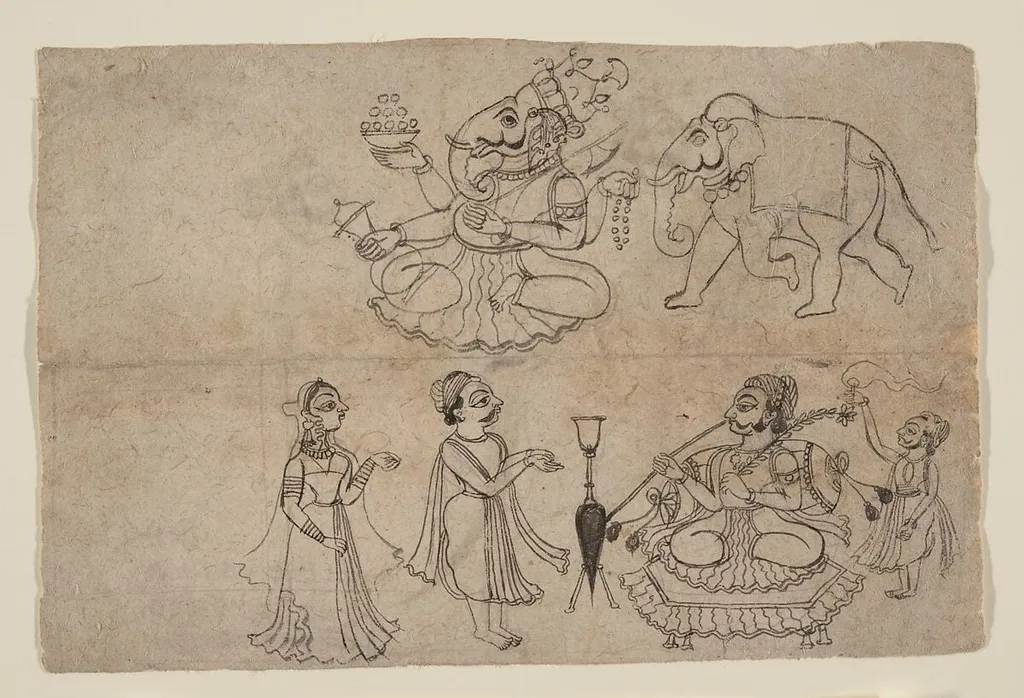
Untitled is an ink painting by the Mughal Painting artist Manak. It dates from 1783 and is held in the collection of the Metropolitan Museum of Art.
About this work
Subject & Meaning
The figures are shown engaging in the act of smoking from a hookah, a detail that anchors the work in a specific cultural and social context of 1783 India.
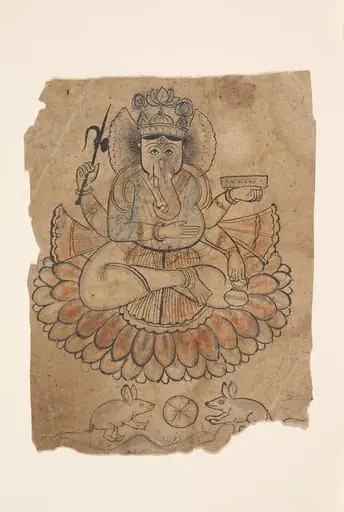
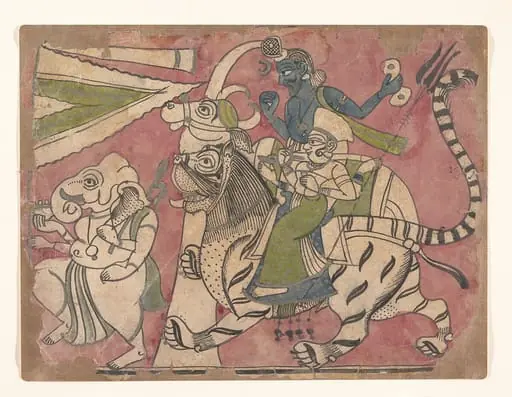
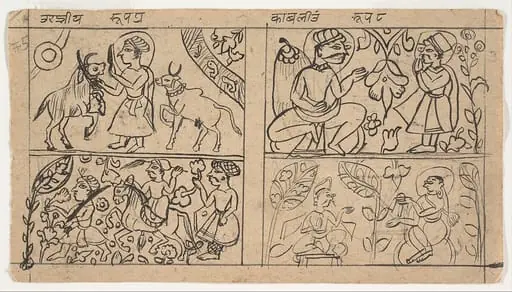
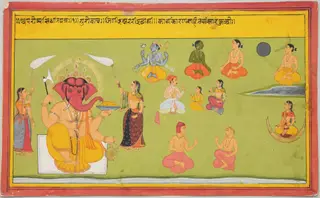
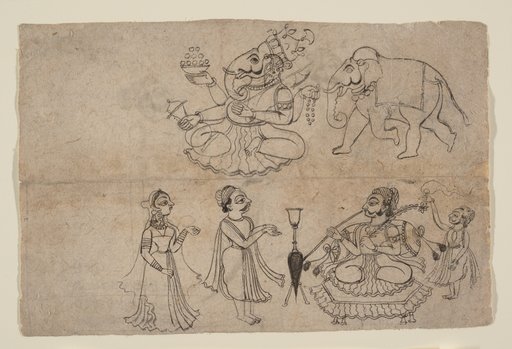
The artwork depicts a portrait scene featuring the Hindu deity Ganesha alongside a man and a woman. Central to the composition is an elephant, visually linked to Ganesha, who is traditionally associated with the animal. The figures are shown engaging in the act of smoking from a hookah, a detail that anchors the work in a specific cultural and social context of 1783 India.
While the title is generic, the iconography clearly identifies the divine presence of Ganesha within a domestic or courtly setting involving human figures. The inclusion of the hookah and the specific interaction between the deity and the humans suggests a representation that blends religious reverence with contemporary daily life or portraiture conventions of the period.
Technique & Style
The work Untitled (1783) is executed in ink and wash on paper, a support typical of Indian miniature traditions. Its modest dimensions, approximately 15.9 × 24.1 cm, are recorded by the Metropolitan Museum of Art. The painting portrays the elephant-headed deity Ganesha alongside a smoking man and woman, rendered with delicate line work and subtle tonal washes that emphasize contour and narrative detail.
As a portrait genre piece, the composition balances figural clarity with decorative patterning, reflecting the stylistic conventions of 18th-century Indian court art.
History & Provenance
The work was created by the artist Manak in 1783 in India. It entered the collection of the Metropolitan Museum of Art, where it is currently held. The painting depicts a scene involving Ganesha, an elephant, a hookah, and figures of a man and a woman.
Technical details from the museum's records specify its dimensions as 15.9 cm in height and 24.1 cm in width. No records of specific exhibitions are available in the consulted sources.
Legacy
The painting's inclusion in the Metropolitan Museum of Art positions it as a reference for scholars examining 18th-century Indian portraiture and the visual representation of Hindu deities. Its depiction of Ganesha alongside a man, woman, and hookah offers an example of syncretic iconography in Indian art, and its presence in a major public collection ensures ongoing scholarly access to the work.
Overview
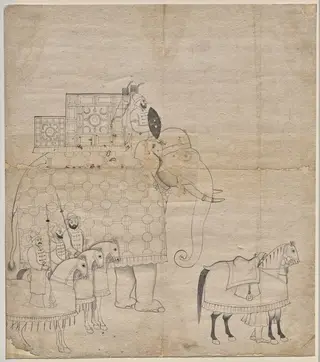
This untitled work, executed in ink and wash on paper, depicts a lively gathering within a natural setting. Figures are shown relaxing under a tree, engaged in smoking, while elephants stand nearby. The painting originates from the royal courts of India, reflecting the artistic traditions patronized by kings. Its delicate medium allows for nuanced visual effects, capturing a moment of communal activity.
Context
The inclusion of the deity Ganesha, even in a minor detail, places this artwork within a broader cultural and religious framework prevalent in India. Paintings from this era often incorporated elements of Hindu mythology and iconography, reflecting the spiritual landscape of the time. This work can be understood as part of a rich tradition of Indian court painting that frequently blended everyday life with symbolic or religious references.
Artist & collection
Artist
Manak, also called Manaku, was an Indian painter born around 1700 into the Seu family of Guler, a small Pahari kingdom in the Himalayan foothills of present-day Himachal Pradesh.