James-Jacques-Joseph Tissot (1836–1902) by Edgar Degas

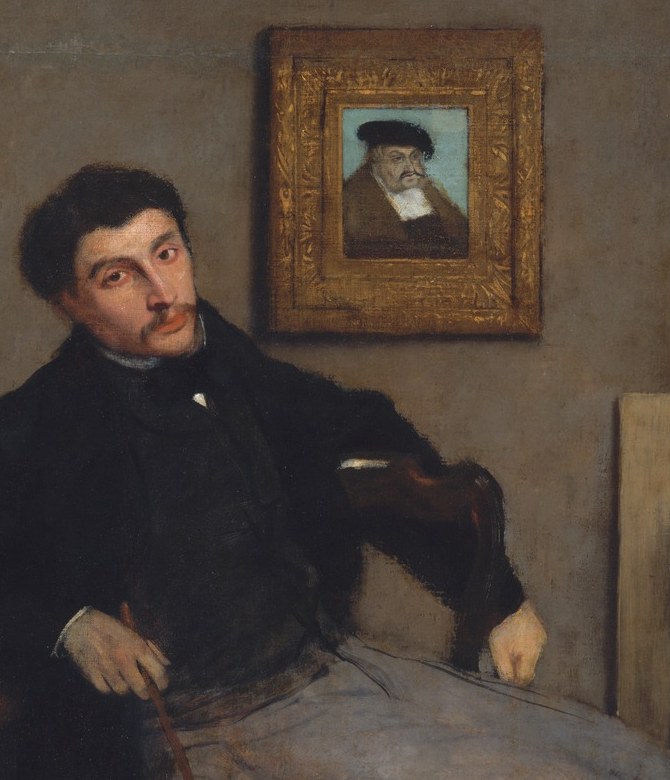
Edgar Degas painted this full-length portrait of his friend and fellow artist James Tissot around 1867. Tissot is shown as the perfect Parisian dandy, top hat and satin cape at his side, surrounded by the paintings they both admired. It is a portrait of a young man on the rise, painted by someone who knew him intimately.

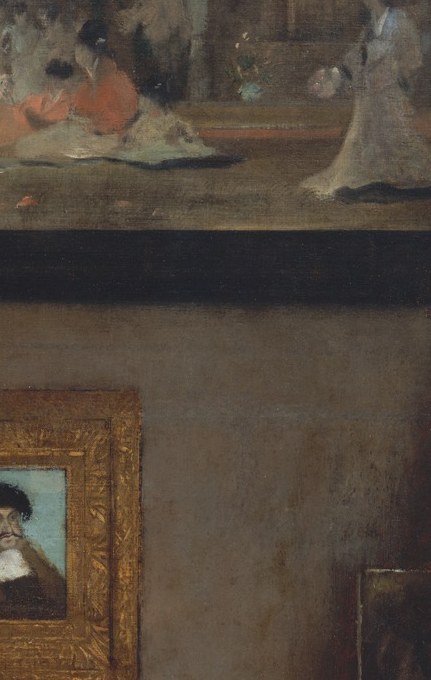
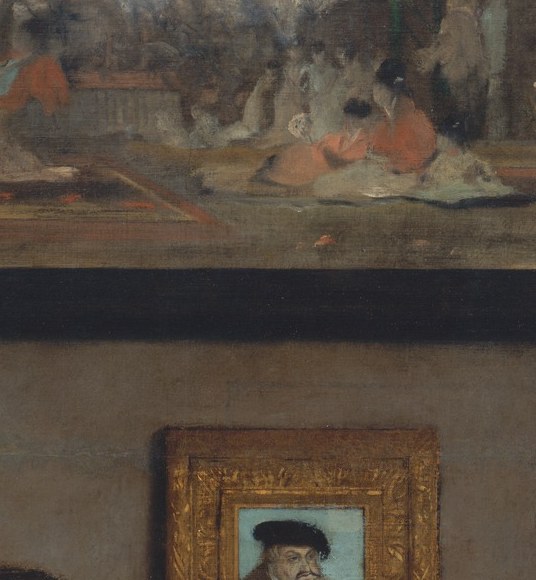
Look at the care Degas poured into Tissot's face and hands, and the precision of that tailored jacket. Then notice the background: a studio crammed with canvases, including a Japanese-style picture and a copy of a Northern Renaissance portrait. These weren't random props. They were a shared language between two ambitious painters.

Degas and Tissot's friendship collapsed just a few years after this was painted. The precise reason remains a matter of scholarly debate, but the break was permanent. What we do know is that Degas never exhibited this portrait and never sold it. It stayed in his private collection for five decades, passing through his estate sale only after his death in 1917.

It eventually made its way to New York, and the Metropolitan Museum of Art acquired it in 1939. A portrait begun as a tribute to a friendship became a private memento of something lost.

#arthistory #edgardegas #metmuseum

Details
The sitter's composed, self-assured expression, half-turned toward the viewer, anchors the portrait; Degas captures his friend's ambition in the set of his jaw.
This is Degas's copy of the portrait of Frederick the Wise then attributed to Cranach the Elder; its deliberate placement signals both men's reverence for Northern Renaissance painting, a hidden art-historical argument embedded in the background.
The close, academic rendering of fabric shows Degas's early training; the precision of the lapels and cravat against the looser background reveals where his attention was most concentrated.
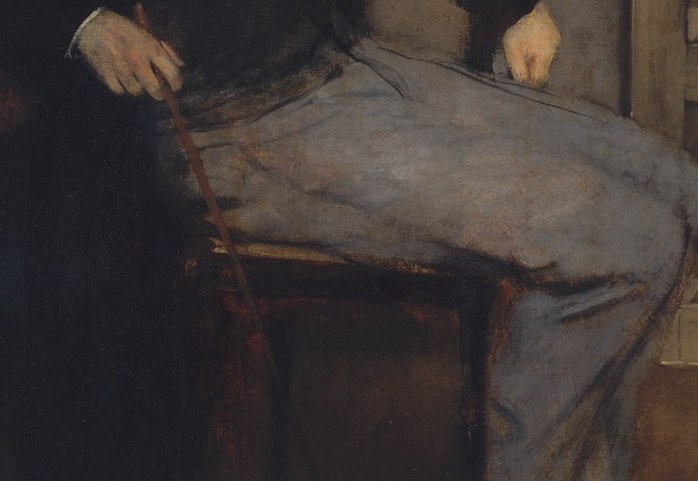
Rendered with individual care amid otherwise loose handling; the stillness of idle hands conveys ease and social confidence, contrasting with the busy studio around him.
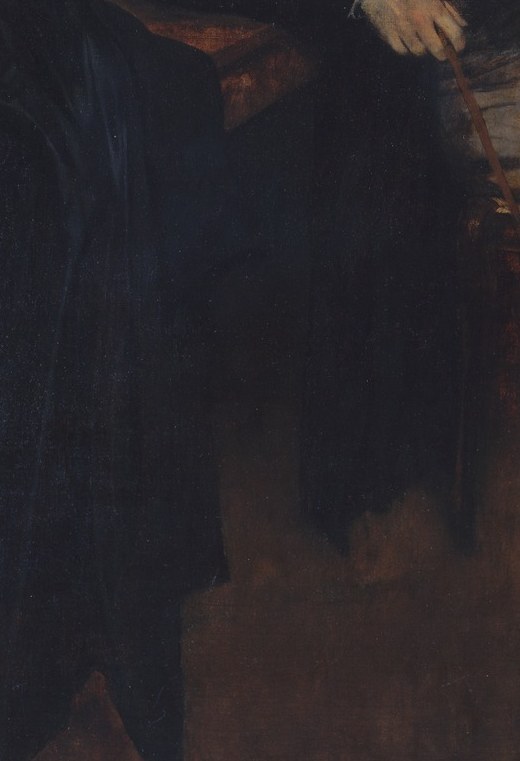
Accessories of Parisian dandyism; the satin catch of light in dark surroundings is a small virtuoso passage and signals Tissot's fashionable self-presentation.
Transcript

He looks like a man with everything ahead of him. Top hat, satin cape. The uniform of a Parisian dandy. Degas painted his friend James Tissot around 1867. But a few years later, the friendship ended. Badly. Degas never sold it. He kept it in his studio until he died. For fifty years, this portrait was his secret.