Cow by Geo Poggenbeek
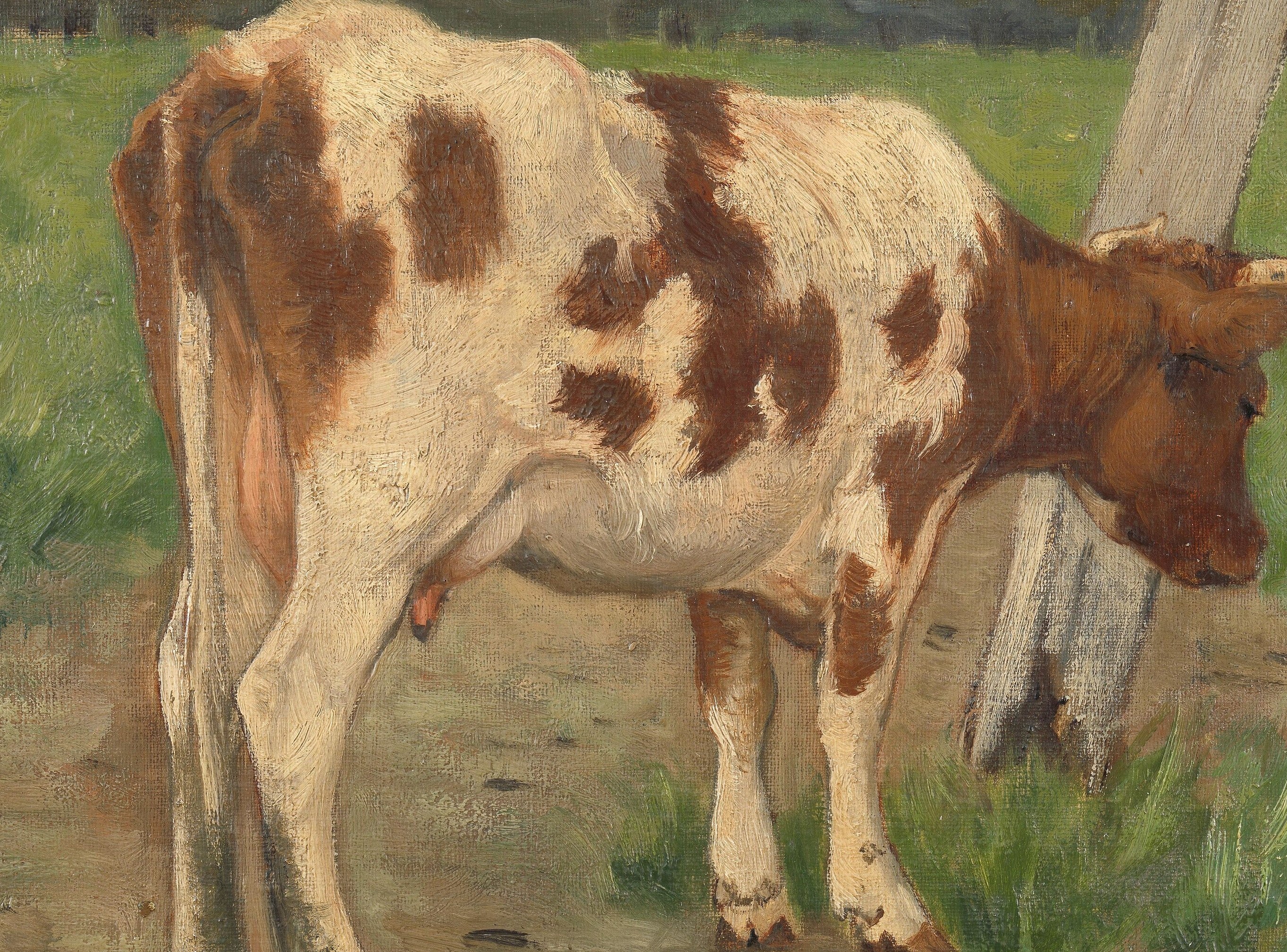
This serene painting, "Cow" by Geo Poggenbeek, offers a glimpse into late 19th-century Dutch rural life. Created in 1894, it exemplifies the naturalistic approach of the Hague School, an artistic movement that valued direct observation of nature and everyday subjects.
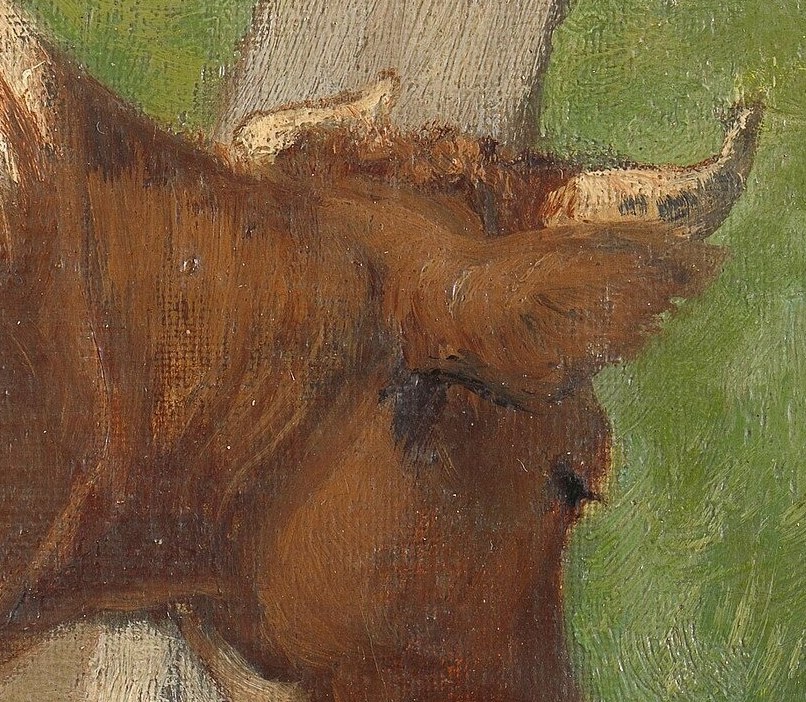
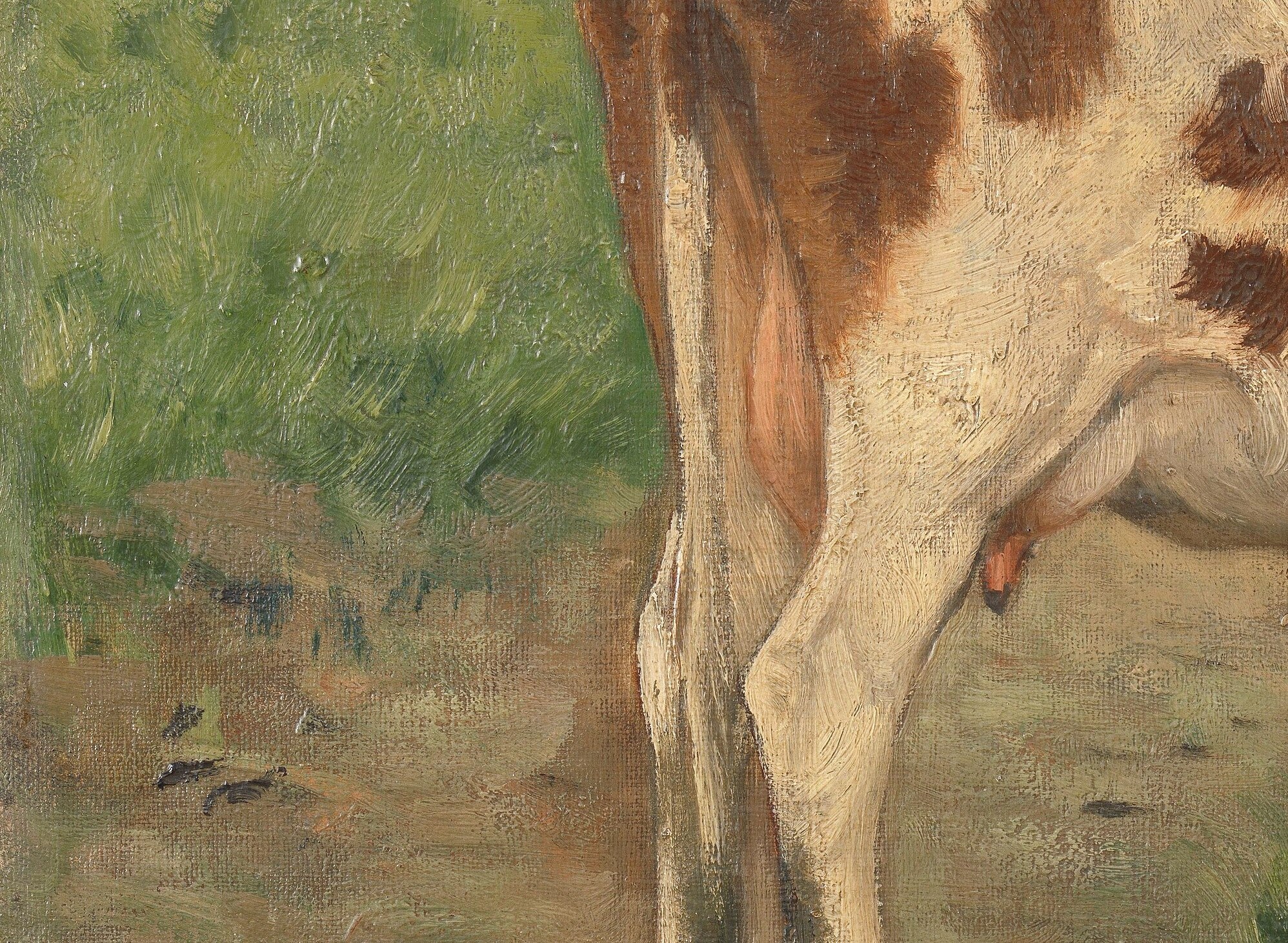
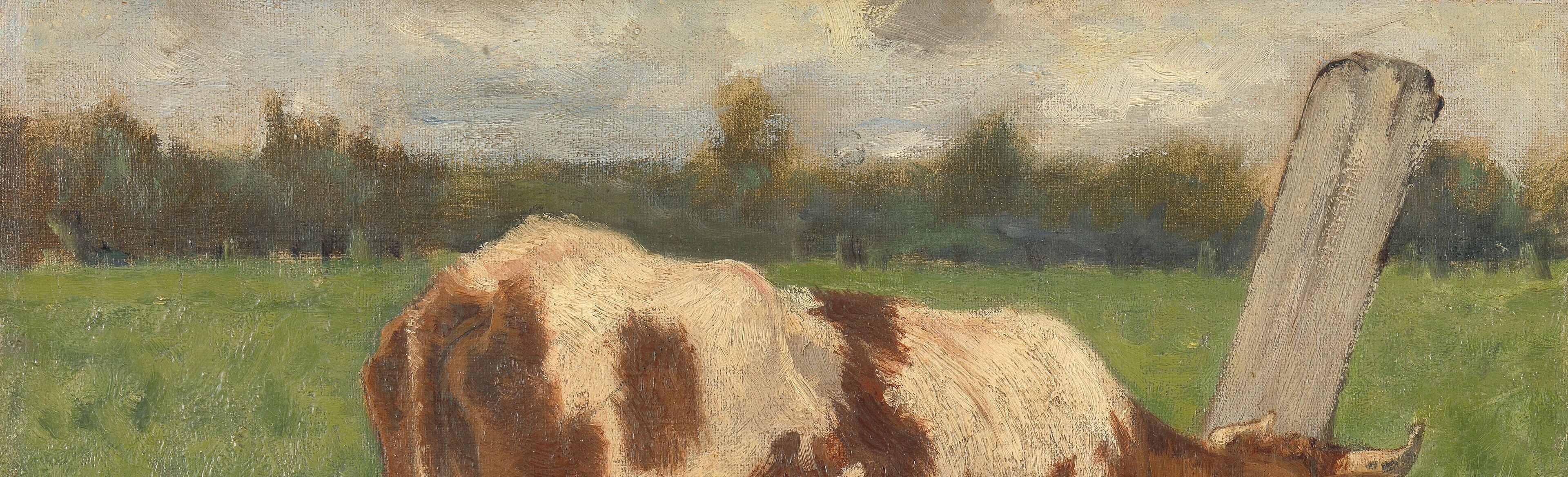
Poggenbeek's focus on atmosphere over intricate detail is evident in the loose brushwork of the cow and its surroundings. The artist captures the quiet dignity of farm life, a common theme for his contemporaries.
Geo Poggenbeek, an Amsterdam painter, maintained close ties with the Hague School. This oil painting is now housed in the esteemed collection of the Rijksmuseum, underscoring its significance in Dutch art history.
What details in this painting resonate most with you?
Details
Transcript
In 1894, Dutch painters often looked to rural life. This quiet cow was a typical sight in the Netherlands. Artists of the Hague School captured its dignity. They focused on atmosphere, not perfect detail. Notice the loose brushwork in the grass and sky. A simple scene, but full of life.