Watermelon by American 19th Century
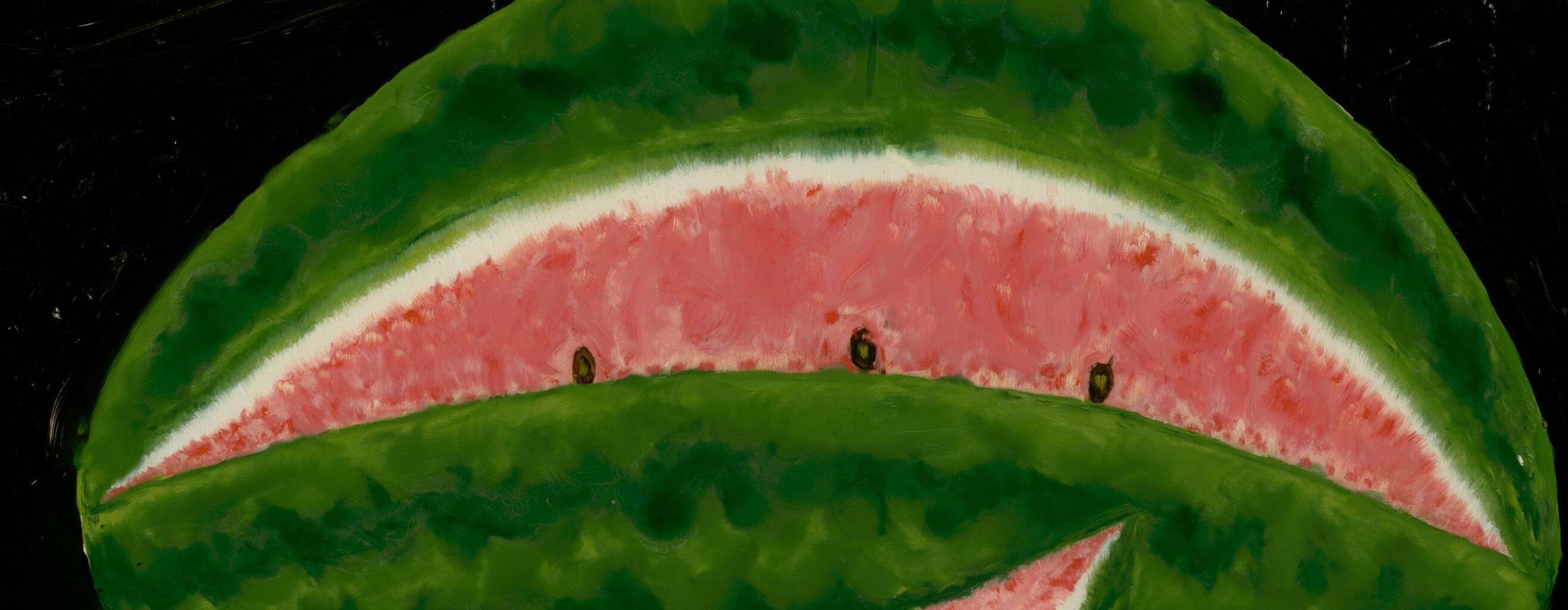
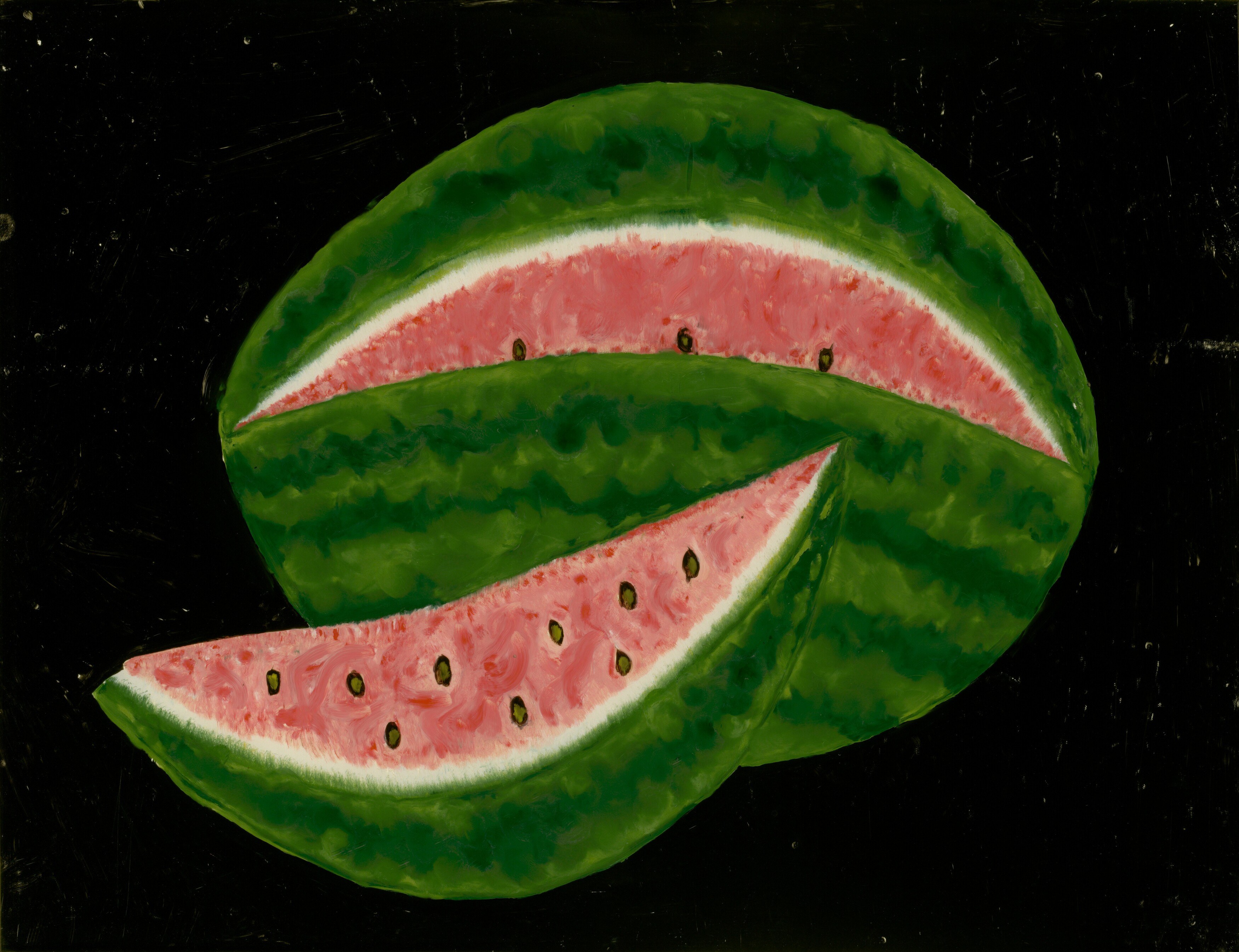
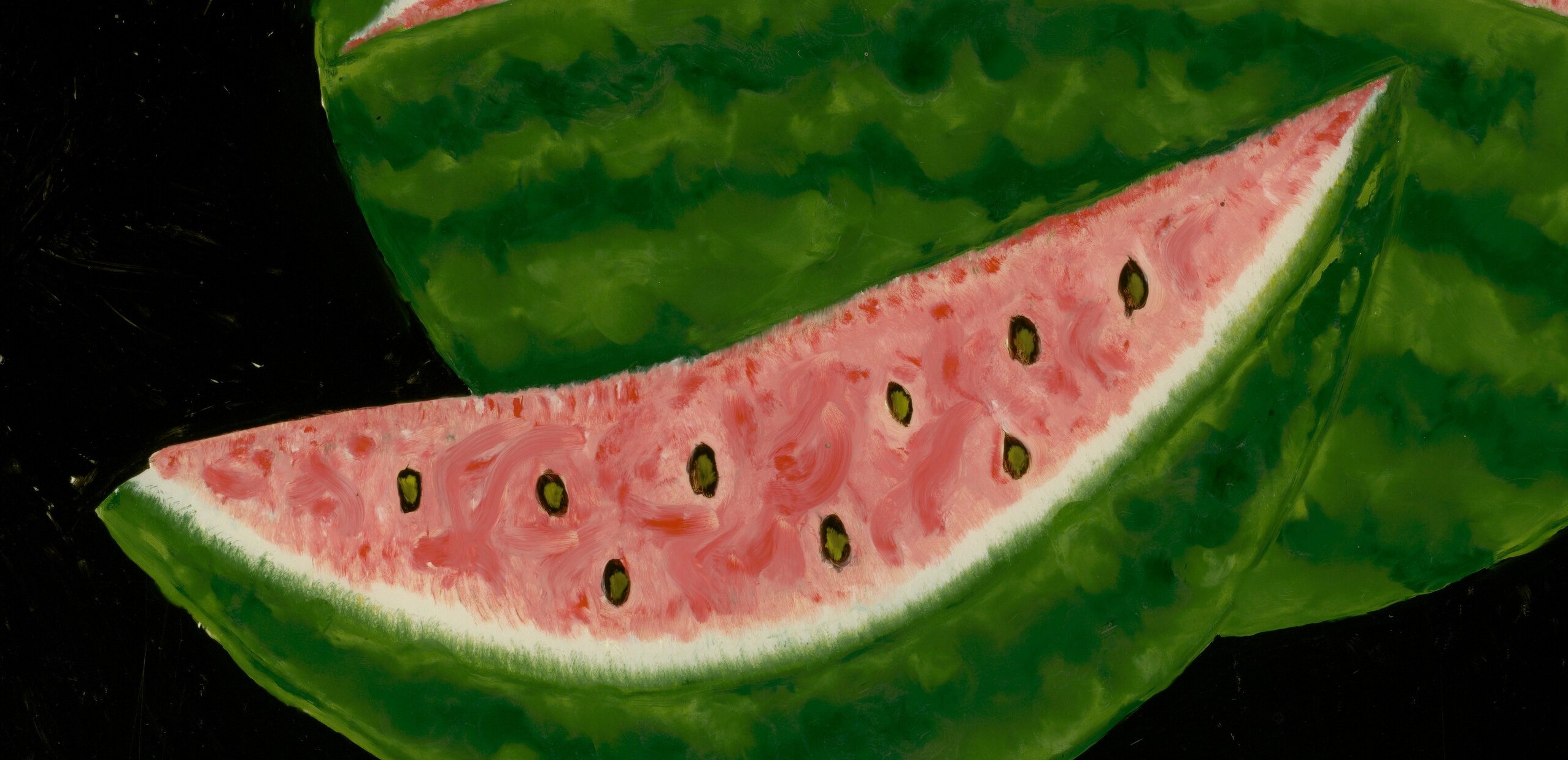
This is 'Watermelon' by an unknown American artist, painted sometime in the mid-19th century. It is now in the collection of the National Gallery of Art. The single most interesting thing about it is that it was painted entirely backward.
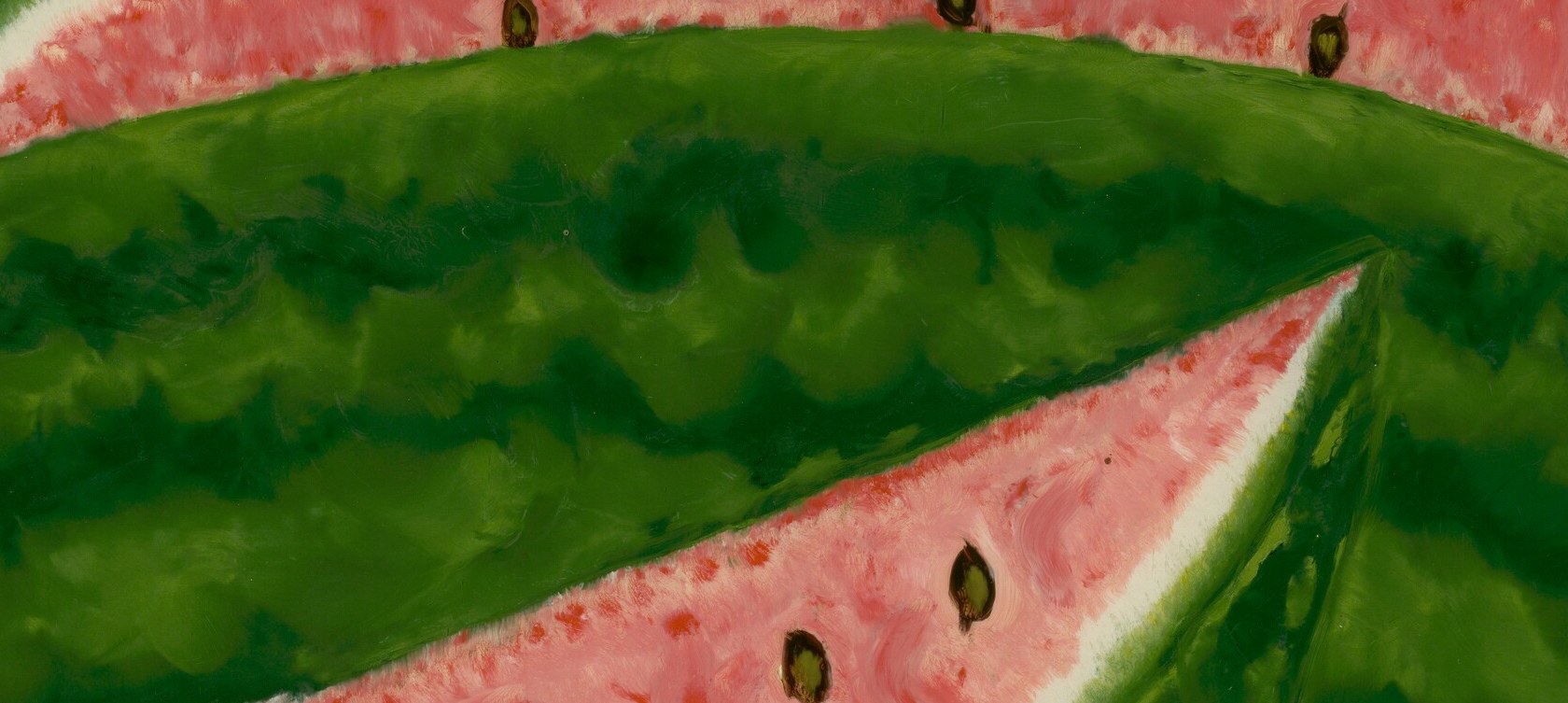
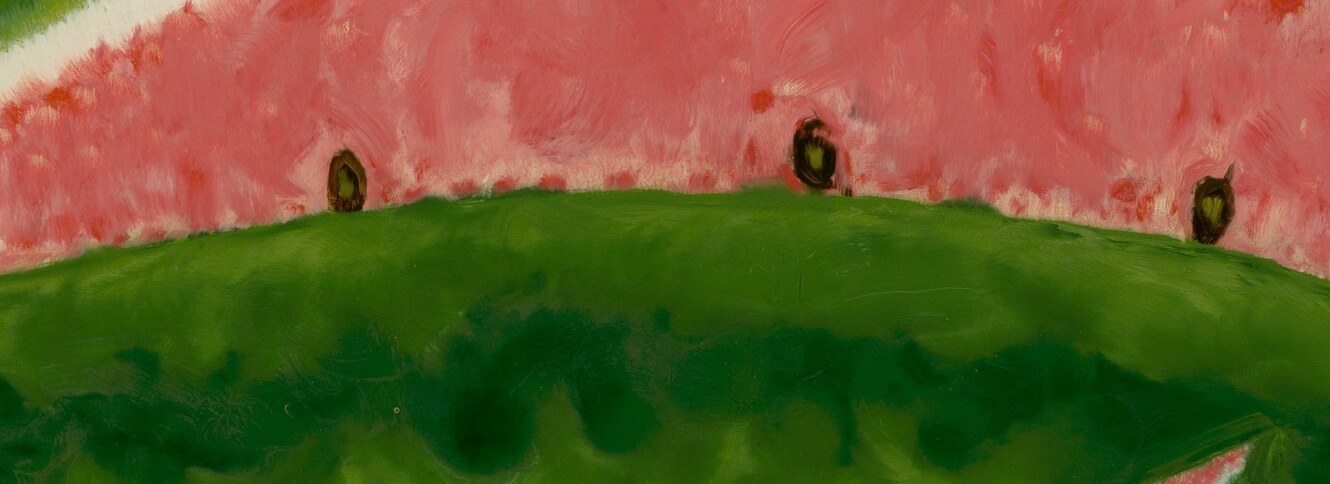
Before you see the glossy green rind or the bright pink flesh, the painter laid down the tiny white highlights and the dark background. They worked on the back of a pane of glass, so every layer had to be conceived in reverse. The seeds went in before the pink surrounding them.
Reverse painting on glass was a popular decorative art in the mid-1800s. This piece focuses entirely on the visual pleasure of a common summer fruit, isolating it against a dark, textured void. There is no record of who painted it, or for whom.
It asks you to look at a familiar thing and stay a while. What everyday object would you paint in reverse, if you could only see the final picture from the other side of a window?
Details
Transcript
It looks like a simple summer watermelon. But every brushstroke was painted in total reverse. The artist applied highlights first, then the pink flesh. The dark background was laid down before the seeds. They could only see the finished image from the other side of the glass. A mid-century American painter made this, and we still don't know their name.