Sunlight by Rousseau, Théodore
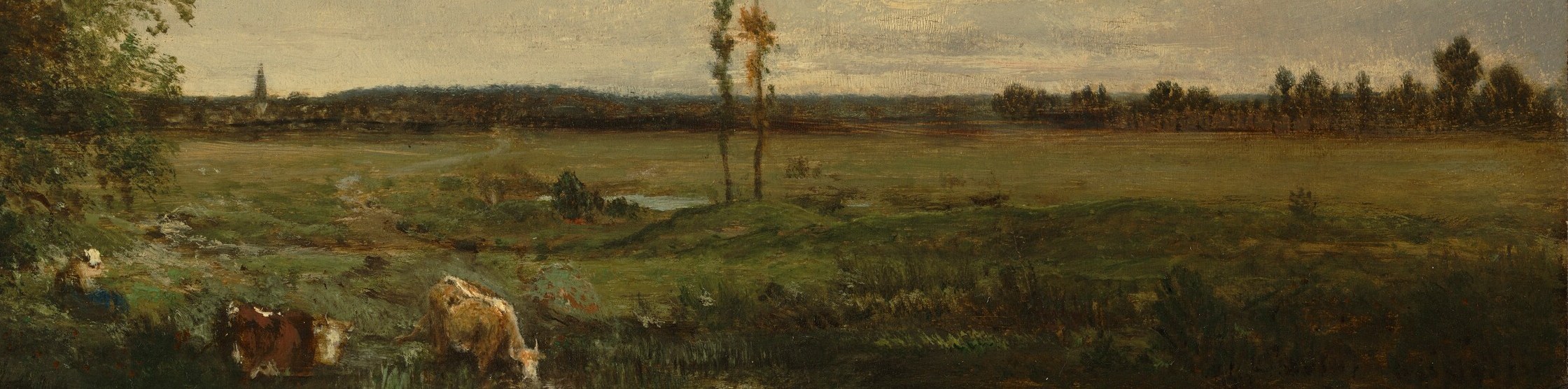
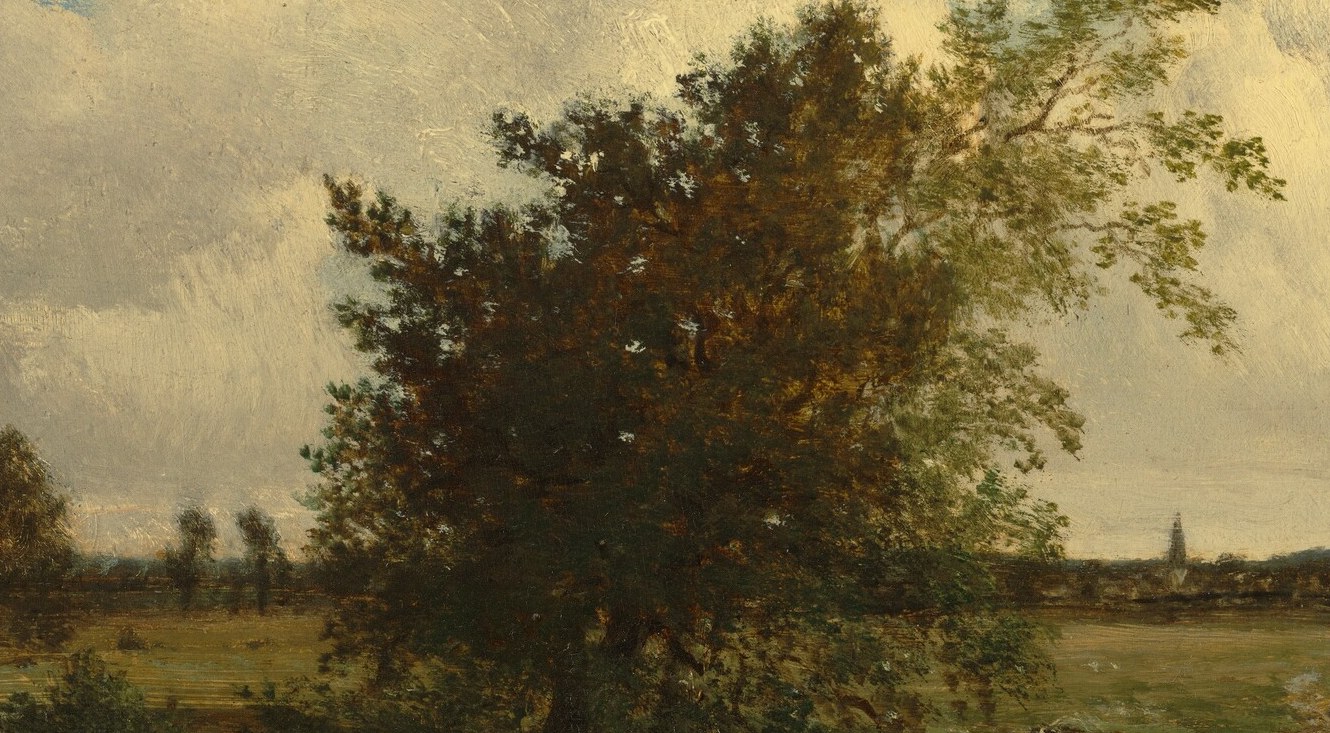
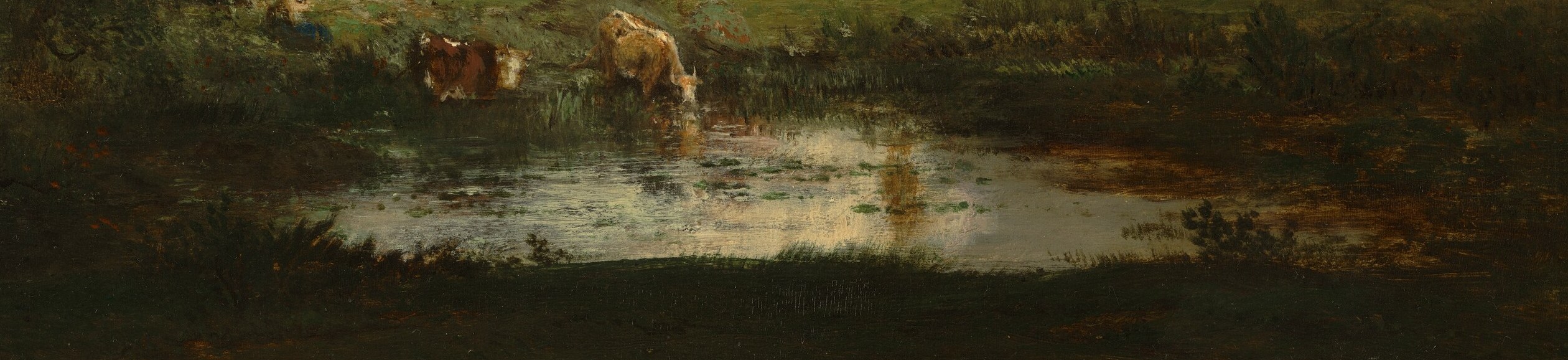
Théodore Rousseau painted Sunlight around 1848 or 1849, and on first glance, it is easy to see it as just a calm woodland pond. But the painting is built around a secret: a tiny church steeple, nearly swallowed by the horizon, that changes the scale of everything.
Look at the cows in the middle ground, then let your eye travel across the field. The steeple is so small you can cover it with a fingertip. That is Rousseau's point. He spent countless hours alone in the forests of Fontainebleau, and his work is never about grand drama. It is about accurate, patient attention to how distance and light actually feel.
Rousseau was a central figure of the Barbizon School, painters who left Paris studios to work directly from nature. This modest oil on wood panel predates Impressionism by two decades, yet its soft, diffused sunlight and honest rural silence predict everything that was coming. The painting is held by the National Gallery, London.
The steeple is not a religious statement here. It is the painter's quiet way of telling you that you are standing on the edge of something enormous and peaceful, and that it goes on much further than you thought.
Details
Transcript
They called it a simple woodland pond. Look past the cows. Into the depth of the field. Keep going. Where the land meets the sky. There. A single church steeple. Rousseau painted this around 1849. He lived for these hours alone in the forest. The steeple isn't a symbol. It's a measurement. It tells you how vast this quiet world really is.